
PFF demands audit of 2026 elections
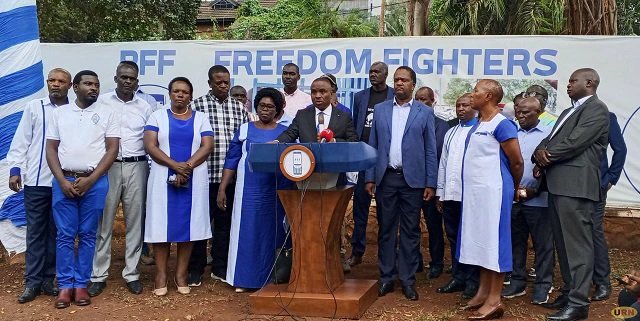

Kampala, Uganda | THE INDEPENDENT | The People’s Front for Freedom has called for an independent audit of Uganda’s 2026 general elections. They accuse the Electoral Commission (EC), the military and state security agencies of presiding over what it described as an “industrial-scale electoral failure†characterised by violence, abductions and systemic fraud.
Addressing journalists at the party’s headquarters on Katonga Road on Monday, PFF president Erias Lukwago said the elections were conducted in an atmosphere of “military terror,†undermining their credibility and placing the country on what he warned was a dangerous constitutional path.
“As the country comes to terms with the industrial-scale election failure we have all witnessed, we, as the People’s Front for Freedom, demand a comprehensive audit of the 2026 general election,†Lukwago said.
Lukwago said PFF entered the electoral process under exceptional constraints, having been registered by the EC only on June 5, 2025, following what he described as an 11-month struggle that began in August 2024.
“The People’s Front for Freedom was reluctantly registered when the 2026 general election had already started,†Lukwago said.
The party’s formation, he added, coincided with the continued detention of several senior figures, including its founding leader Col. (Rtd) Dr. Kizza Besigye and party elder Obed Lutale, whom Lukwago said were abducted in Nairobi in November 2024 and later detained at Luzira Prison.
The government has previously stated that detained opposition figures are facing lawful charges, a position disputed by their lawyers and supporters.
Lukwago also cited the July 2024 arrest of 36 PFF leaders, commonly known as the “Chisom 36,†who were detained while attending a leadership training and later charged with terrorism. Another senior party figure, Sam Mugumya, he said, remains under military detention.
Human rights organisations, including Amnesty International and Human Rights Watch, have in recent years raised concerns about enforced disappearances, prolonged pre-trial detention and use of military courts to try civilians in Uganda.
In probably his strongest public comments ever, Lukwago accused senior military leadership of presiding over widespread abuses during the election period.
“Kidnaps, abductions and arbitrary arrests have become the hallmark of the 2026 general elections,†he said, alleging that senior military officials had publicly acknowledged the killing of civilians, claims that could not be independently verified at the time of publication.
The Uganda People’s Defence Forces (UPDF) has consistently denied involvement in unlawful killings and maintains that its operations comply with the law. Lukwago directed particular criticism at the EC, accusing it of incompetence and subservience to security agencies. “This Electoral Commission will go down in history as the most compromised and subversive group ever to occupy a state institution,†he said.
Among the failures cited were non-functional biometric voter verification machines, which Lukwago said were procured at enormous cost but failed on polling day, delaying voting in many areas.
He also accused authorities of deliberately shutting down the internet, a practice witnessed during previous elections, thereby hampering communication and election observation.
Under Article 61 of the 1995 Constitution, the Electoral Commission is mandated to organise and conduct free and fair elections. Critics argue that persistent logistical failures, security interference and lack of institutional independence undermine this constitutional duty.
Lukwago also cited Article 3 of the Constitution, which obliges citizens to defend the Constitution against unlawful abrogation. “This is a command under Article 3. We must rise up and defend the constitutional order,†he said, calling for renewed mobilisation beyond electoral participation.
Despite the risks, Lukwago said PFF’s participation in the elections was a strategic decision aimed at mobilising citizens during what he described as the only period when limited political space is tolerated.
He cited the party’s July 2, 2025 cooperation agreement with the Alliance for National Transformation and outreach to the National Unity Platform as part of efforts to form a united front against what he termed “military family rule.â€
“The country had another chance to choose between a constitutional order and a military dynasty bur once again, that opportunity was missed,†Lukwago said.
Lukwago concluded by declaring that PFF’s immediate priority is pursuing the release of all political prisoners, both in gazetted prisons and ungazetted detention sites. “Our agenda number one is to rescue our country and to rescue our comrades who are imprisoned for their political beliefs,†he said.
Uganda’s elections have long been contested, with polls in 2001, 2006, 2011, 2016 and 2021 drawing criticism from domestic and international observers over violence, intimidation and misuse of state resources. The disputed 1980 elections, also referenced by Lukwago, are widely regarded as a turning point that plunged the country into years of political instability.
In a separate interview by EC’s Spokesperson, the Electoral Commission acknowledged that mistakes are human, and errors are inevitable, urging those who aggrieved by the electoral process to seek redress in the courts of law.
Meanwhile, Leader of the Opposition in Parliament Joel Ssenyonyi has issued a parallel call, urging Parliament to confront what he described as grave constitutional, human rights and accountability failures during the 2026 elections.
Ssenyonyi has asked lawmakers to examine reports from accredited observers, including the African Union and the Inter-Religious Council of Uganda which flagged concerns about electoral credibility and the conduct of security forces.
He also raised alarm over the failure of biometric voter verification and ballot-scanning machines valued at over UGX 300 billion, procured through a supplementary budget approved by Parliament.
“We spent hundreds of billions of shillings of taxpayers’ money to procure 109,142 BVVKs, training and operations, yet on election day, the machines failed,†Ssenyonyi said, questioning why the same equipment appeared to function during subsequent local government elections.
Under Article 164 of the Constitution and the Public Finance Management Act, public funds must be used efficiently and accountably.
Following Ssenyonyi’s intervention, Speaker of Parliament Anita Among last week directed the Minister of Justice and Constitutional Affairs, Norbert Mao, under whose docket the Electoral Commission falls, to present a comprehensive report explaining the failure of biometric voter verification kits deployed across 50,739 polling stations polling stations nationwide during the January 15, 2026 presidential and parliamentary polls.


 Government will not gazette Kijanangoma as King of Tooro for now - Attorney General insists
Ultimate Uganda
Government will not gazette Kijanangoma as King of Tooro for now - Attorney General insists
Ultimate Uganda
 King Oyo’s Body to Arrive Thursday
Ultimate Uganda
King Oyo’s Body to Arrive Thursday
Ultimate Uganda
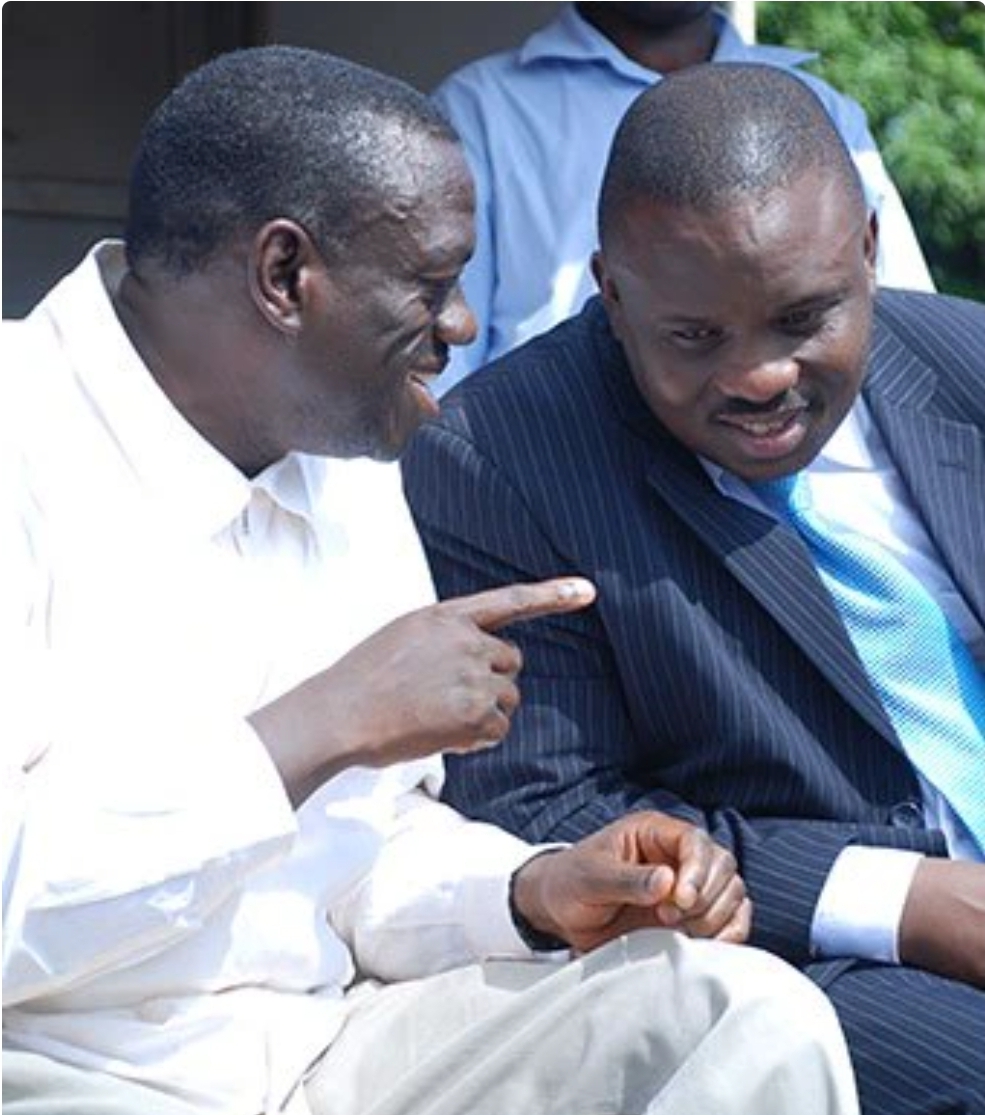 Besigye, Lukwago expected to meet Gen. Salim Saleh today at Kapeeke
Ultimate Uganda
Besigye, Lukwago expected to meet Gen. Salim Saleh today at Kapeeke
Ultimate Uganda
 Rwabwogo Advised to ‘Eat His Bishop’ As MK Prepares to Enter State H’se: PREZ MUSEVENI ON HIS WAY OUT
Ultimate Uganda
Rwabwogo Advised to ‘Eat His Bishop’ As MK Prepares to Enter State H’se: PREZ MUSEVENI ON HIS WAY OUT
Ultimate Uganda
0 Comments