
Trade Order Chaos: Vendors’ livelihoods hang in the balance
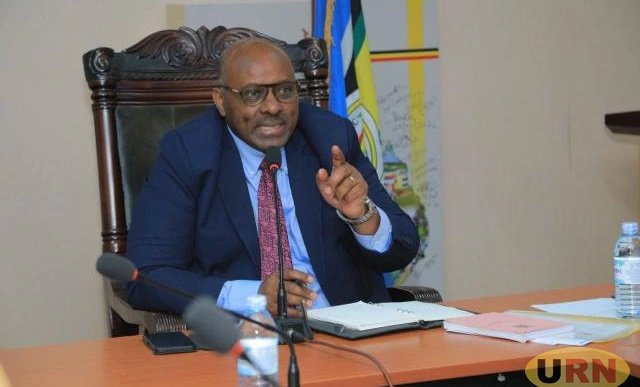

After months of tense evictions and confiscated merchandise, the Ministry of Local Government has promised a reset. Permanent Secretary Ben Kumumanya told traders’ leaders on Wednesday that government will secure “enough alternative trading spaces†and that enforcement of the nationwide Trade Order operations must be “fair and humaneâ€.
The pledge came during a consultative meeting with the Federation of Uganda Traders Association, FUTA, led by President John Kabanda, convened to review complaints that the policy, while lawful, has been marred by demolitions without notice and alleged brutality by some enforcement teams.
Trade Order operations are the government’s urban management drive to relocate street vendors, hawkers, and roadside kiosks into gazetted markets and approved trading areas.
The legal anchor is Section 27 of the Markets Act, Cap 94 and Section 95 of the Local Governments Act, Cap 243, which empower urban authorities to designate trading areas, license vendors, and prohibit street trade that obstructs traffic or sanitation.
The campaign intensified in February 2026 across Kampala, Wakiso, and 10 secondary cities. Kampala Capital City Authority, KCCA, data presented at Wednesday’s meeting shows licensed traders in the capital rose from 12,536 to over 20,000 in two months, a 59.5 percent jump that officials cite as proof of formalization.
Yet the rollout has sparked protests from vendors who say they were evicted before alternative stalls were ready. Videos of KCCA and municipal council enforcement officers seizing tomatoes, clothes, and charcoal stoves have circulated widely, fueling claims that the policy targets the urban poor.
The Trade Order falls under the Local Government Ministry’s annual performance contract, which Parliament reviews through the Public Accounts Committee, Local Government, and the Committee on Trade and Industry.
MPs have previously queried why Shs8.3 billion allocated for market construction in FY2024/25 delivered only 3 of 12 planned facilities, per the Auditor General’s December 2025 report. The promise of “appropriate alternative trading spaces†now becomes a test of executive accountability.
FUTA’s Kabanda told URN after the meeting: “We will ask Parliament to track the number of stalls delivered against evictions conducted. Order without options is displacement.â€
Uganda’s informal sector employs 87 percent of the non-agricultural workforce, per Uganda Bureau of Statistics, UBOS, 2024 Labour Force Survey. In Kampala alone, an estimated 230,000 people earn from street vending, hawking, and boda-boda-linked micro-retail, according to a 2023 EPRC study.
Sanitation data underscores the state’s concern: KCCA’s 2025 Solid Waste Report attributes 42 percent of downtown drainage blockages to market waste and kiosk overflow. Traffic police link 31 percent of peak-hour gridlock on arterial roads to roadside trading. But eviction without relocation carries costs.
KCCA’s 20,000 licences are progress, but Kampala has a deficit of 65,000 stalls, per our 2023 market audit. The PS’s promise of ‘enough spaces’ must be quantified and timed,†the economist added.
The inhumane enforcement cited by PS Kumumanya violates Section 24 of the Police Act on reasonable force and the Local Government (Markets) Regulations requiring 14-day notice before eviction.
“Government should publish standard operating procedures for enforcement and train officers. Otherwise, you criminalize poverty. Community barazas are a good start, but they must be followed by a publicly available relocation schedule,†Leader of Opposition Joel Ssenyonyi argued.
Kumumanya conceded that “the issue is not with the Trade Order policy, but improving how it is implementedâ€. He condemned “forceful evictions, confiscation of goods, and demolition of business structures without proper noticeâ€, calling them “against the intended purposeâ€.
KCCA spokesperson David Nuwabine framed the 59.5 percent licence surge as “positive impact in formalizing businessesâ€. Yet he did not disclose how many of the 7,464 newly licensed traders were relocated versus existing stallholders who regularized papers.
The PS announced three next steps: A follow-up meeting in two weeks after wider consultations; Nationwide sensitization campaigns and community barazas; Coordination with Ministry of Trade Commissioner Jones Makula Mukasa and Presidential Advisor on Markets Winnie Atwine to align Trade Order with the National Trade Policy, 2022, which emphasizes MSME growth.
In global context, Ghana’s 2021 decongestion exercise in Accra faced similar backlash until the AMA built 5 new satellite markets before evictions, cutting vendor resistance by 70 percent, per UN-Habitat 2022.
Rwanda’s City of Kigali pairs enforcement with Agakiriro artisan centers and a vendor ID system linked to mobile tax payments, a model Ministry of Local Government has studied, according to Commissioner for Urban Administration Charles Magumba.
The ILO’s Recommendation 204 on Transition from Informal to Formal Economy urges “progressive realization†with social protection. Uganda’s NDP III 2020/21–2024/25 commits to “organizing informal sector actors into area-based associations,†a clause FUTA says has been underused.
Trade Order operations are constitutionally grounded and economically rational. But as Article 20 of the Constitution guarantees economic rights, implementation must not extinguish livelihoods.


 NSSF sets September 24 for Annual Members Meeting as savers await interest rate declaration
Ultimate Uganda
NSSF sets September 24 for Annual Members Meeting as savers await interest rate declaration
Ultimate Uganda
 Boda boda riders launch e-commerce, digital loans platform
Ultimate Uganda
Boda boda riders launch e-commerce, digital loans platform
Ultimate Uganda
 Rwanda: We Cannot Sit and Watch As Illicit Alcohol Kills People - Kagame
Ultimate Uganda
Rwanda: We Cannot Sit and Watch As Illicit Alcohol Kills People - Kagame
Ultimate Uganda
 Local traders in Kansanga cry foul over refugee-owned businesses
Ultimate Uganda
Local traders in Kansanga cry foul over refugee-owned businesses
Ultimate Uganda
0 Comments