
Commissioner Crispin Kaheru Vehicle and Generator Theft Allegations: UHRC Breaks Silence
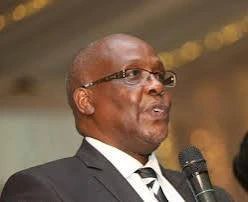

For years, Crispin Kaheru occupied a rare space in Uganda’s public life. As the longtime coordinator of the Citizens’ Coalition for Electoral Democracy in Uganda (CCEDU), he became one of the country’s most recognizable voices on elections, governance and democratic accountability. Politicians across the divide quoted him. Diplomats sought his assessments. Civil society regarded him as one of its own.
Years ago, he was appointed Commissioner at the Uganda Human Rights Commission (UHRC).
And this week, however, the man who once scrutinized those in power found himself under scrutiny.
Allegations raised during a July 21 appearance by the Uganda Human Rights Commission (UHRC) before Parliament’s Legal and Parliamentary Affairs Committee quickly escaped the committee room and spread across social media, where they took on a life of their own.
Among the claims was that Kaheru, now a commissioner at UHRC, had irregularly retained a Commission vehicle and generator.
The accusations landed with particular force because they involved a figure whose career had long been associated with transparency and public accountability.
Few reactions captured that sense of disbelief more vividly than that of former Kampala Capital City Deputy Lord Mayor Doreen Nyanjura.
“Heavens! What became of Crispin Kaheru? He was once such a vocal and respected human rights advocate during his leadership of the Citizens’ Coalition for Electoral Democracy in Uganda – CCEDU. Now at the Uganda Human Rights Commission, he is being accused of stealing the Commission’s vehicle and generator. Disheartening,†wrote Nyanjura.
Her remarks reflected how quickly the allegations had reshaped public conversation—not because they had been proven, but because they involved a man whose public image had been carefully built over many years.
Within days, the Uganda Human Rights Commission moved to answer.
In a statement issued by Public Affairs Manager Alex Bukumunhe, the Commission categorically rejected the allegations and accused critics of attempting to damage Kaheru’s reputation.
“Our attention has been drawn to videos circulating on social media arising from an interface between members of the Uganda Human Rights Commission and the Legal and Parliamentary Affairs Committee of Parliament on 21 July 2026,†Bukumunhe wrote
The Commission acknowledged that questions had indeed been raised before Parliament but argued that the narrative emerging online was misleading.
“During that interface, some members alleged that Commissioner Crispin Kaheru was irregularly in possession of a generator and a motor vehicle belonging to the Commission. We wish to clarify that these allegations are false, malicious and intended to tarnish the Commissioner’s reputation,†he added.
The response sought not only to deny wrongdoing but also to explain how the assets came into Kaheru’s possession in the first place.
According to UHRC, both the vehicle and generator had been assigned to him through official channels while he was carrying out his duties as commissioner.
“Hon. Kaheru received the generator and motor vehicle in the course of executing his official duties, through established internal administrative procedures,†continued Bukumunhe.
The Commission further said the assets are no longer with him.
“The generator and motor vehicle in question are no longer in his possession. He voluntarily returned both items to the custody of the Commission in the interest of institutional harmony.â€
The choice of words was notable.
Rather than saying the items had been reclaimed, confiscated or recovered, the Commission emphasized that Kaheru had “voluntarily returned†them—a formulation seemingly intended to underscore that no improper resistance or concealment had occurred.
It ended with an appeal aimed at countering the growing public narrative.
“We therefore call upon the public to disregard these false and baseless allegations,†noted Bukumunhe.
The controversy has unfolded against the backdrop of wider parliamentary scrutiny of the Uganda Human Rights Commission itself.
During the committee proceedings, legislators questioned the management of Commission assets and finances, with concerns extending beyond Kaheru to include Chairperson Mariam Wangadya and other officials. Those proceedings have become part of a broader examination of governance within one of Uganda’s constitutional bodies charged with promoting and protecting human rights.
For Kaheru, the episode represents an unusual reversal.
For much of his professional life, he was better known for evaluating elections, commenting on constitutional governance and urging public institutions to uphold accountability. His transition from civil society activist to constitutional office holder altered his role from independent observer to public official—bringing with it a different kind of scrutiny.
That transformation may explain why the allegations resonated so widely.
Public figures who build reputations around integrity often face especially intense public reaction when allegations of misconduct emerge, regardless of whether those allegations are ultimately substantiated. In Kaheru’s case, the debate has become as much about reputation as about government property.
The Commission’s statement is its clearest attempt yet to draw a line under the matter, insisting that the allegations are “false†and “malicious†while maintaining that the assets were officially assigned, have since been returned, and should no longer form the basis of public speculation.
Whether Parliament’s accountability Committees will pursue additional inquiries remains to be seen.
For now, the dispute has become a test not only of the facts surrounding a vehicle and a generator, but also of how quickly reputations can be challenged—and defended—in an era when parliamentary proceedings are clipped into viral videos long before official explanations catch up.
Meanwhile, UHRC chairperson Mariam Wangadya has apologized to President Museveni after she shed tears before MPs, as reported Here.


 Museveni steps into Mulago land dispute
Ultimate Uganda
Museveni steps into Mulago land dispute
Ultimate Uganda
 HIV Alarm in Kampala: 211 New Infections Weekly Linked to Massage Parlours, Spas & Lodges
Ultimate Uganda
HIV Alarm in Kampala: 211 New Infections Weekly Linked to Massage Parlours, Spas & Lodges
Ultimate Uganda
 Uganda: ‘Delayed land acquisition stalling road works’
Ultimate Uganda
Uganda: ‘Delayed land acquisition stalling road works’
Ultimate Uganda
 Fearless Former Minister Criticizes M7 For Always Betraying Sr Colleagues While Claiming to Be Fighting Corruption, Urges Barugahara & Nameere to Watch their Back
Ultimate Uganda
Fearless Former Minister Criticizes M7 For Always Betraying Sr Colleagues While Claiming to Be Fighting Corruption, Urges Barugahara & Nameere to Watch their Back
Ultimate Uganda
0 Comments