
Africa CDC, WHO Call for Urgent Community-Led Action as Ebola Outbreak Worsens in DRC
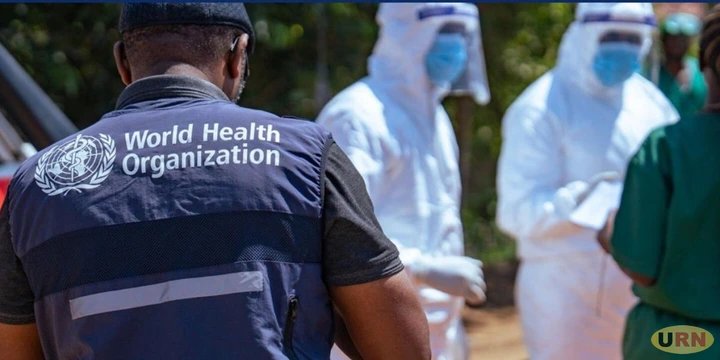

The Africa Centres for Disease Control and Prevention (Africa CDC) and the World Health Organisation (WHO) have called for an urgent expansion of community-led efforts to contain the worsening Ebola outbreak in the Democratic Republic of the Congo (DRC), warning that the epidemic is outpacing response efforts in parts of the country.
The appeal follows a joint high-level mission to Uganda and the DRC on August 4 and 5, during which officials assessed the outbreak response, drew lessons from Uganda’s successful containment of Ebola, and held discussions with government leaders, frontline health workers, community representatives and response partners.
The mission was led by WHO Director-General Dr Tedros Adhanom Ghebreyesus, Africa CDC Director-General Dr Jean Kaseya and WHO Regional Director for Africa Dr Mohamed Janabi.
The delegation first visited Kampala, where they reviewed Uganda’s response after the country officially declared the end of its Ebola outbreak on July 28, 2026. Uganda recorded 20 confirmed cases and two deaths before successfully interrupting transmission. Africa CDC and WHO credited the country’s success to early detection of cases, rapid contact tracing, coordinated government action, strong community engagement and effective cross-border surveillance.
While commending Uganda’s achievement, the two organisations cautioned that the continued transmission of Ebola in the DRC means neighbouring countries remain at risk and must maintain high levels of surveillance, laboratory readiness and cross-border coordination.
The delegation later travelled to Bunia in Ituri Province, the epicentre of the outbreak, where they met provincial authorities, response teams, health workers and community leaders. They also visited the Rwangole Ebola Treatment Centre to assess its readiness to provide timely and quality care to patients.
Following the visit, the officials concluded that containing the outbreak will largely depend on the active participation of affected communities. They stressed that people need access to accurate information delivered by trusted local leaders, early testing, prompt referral and treatment, and safe and dignified burial services. They also underscored the important role of religious, cultural, women’s and youth leaders in building public trust, addressing misinformation and encouraging people to report symptoms early.
During the mission, health workers and community representatives highlighted several obstacles hampering the response, including insecurity, population displacement, poor road infrastructure, delayed case detection, limited access to healthcare, shortages of essential medical supplies and inadequate support for frontline health workers.
As of August 4, 2026, the DRC had recorded 3,973 confirmed Ebola cases, 1,801 deaths and 776 recoveries across 51 health zones in five provinces. In the previous 24 hours alone, the country reported 99 new confirmed cases and 52 deaths, reflecting the continued spread of the virus.
Ituri Province accounts for nearly 90 per cent of all confirmed infections, with Bunia, Rwampara and Mongbwalu among the worst-affected health zones.
Health officials expressed concern that only 75 per cent of identified contacts are currently being monitored, significantly below the minimum operational target of 95 per cent required to quickly identify new infections and break chains of transmission.
At the same time, 674 patients are currently receiving care, while Ebola treatment centres in North Kivu are operating at 139 per cent of their capacity, placing severe pressure on hospital beds, health workers and other response resources.
In response, Africa CDC and WHO called for faster case detection, stronger contact tracing, expanded laboratory and treatment capacity, and improved access to testing, referral and isolation services within affected communities.
They also urged authorities to strengthen infection prevention and control in health facilities, protect and adequately support frontline health workers, maintain essential health services, improve access to insecure areas and ensure that funding reaches frontline operations without delay. The organisations further emphasised the need for continued cross-border surveillance and stronger community engagement at every stage of the response.
The mission concluded in Kinshasa, where the delegation briefed President Félix Tshisekedi and senior government officials on their findings from Uganda and eastern DRC. Discussions focused on strengthening government leadership, improving operational coordination, enhancing community engagement, supporting frontline health workers, maintaining essential health services and mobilising additional financial and technical resources.
Dr Tedros warned that in some parts of eastern DRC, the Ebola outbreak is spreading faster than response efforts can contain it, making it critical to urgently scale up every aspect of the response. He called for sustained international support, increased resources and secure humanitarian access to protect health workers, affected communities and civilians.
Dr Kaseya said communities remain the key to ending the outbreak, noting that when people receive trusted information, report symptoms early and seek treatment without fear, every chain of transmission can be broken. He stressed that response efforts must be brought closer to affected communities while ensuring frontline teams receive the support they need-URN.


 DRC opposition urges Tshisekedi to abandon constitutional changes
Ultimate Uganda
DRC opposition urges Tshisekedi to abandon constitutional changes
Ultimate Uganda
 US military transport plane lands in Moscow
Ultimate Uganda
US military transport plane lands in Moscow
Ultimate Uganda
 Putin puppet slaps UK with terrifying 2-word warning over drone factories
Ultimate Uganda
Putin puppet slaps UK with terrifying 2-word warning over drone factories
Ultimate Uganda
 China develops hypersonic weapon to hunt US command aircraft thousands of miles away
Ultimate Uganda
China develops hypersonic weapon to hunt US command aircraft thousands of miles away
Ultimate Uganda
0 Comments