
Belgium Paid an al-Qaeda Terrorist €350,000 After He Tried to Kill U.S. Soldiers — Then Released Him to Live Illegally in the Country

Belgium has now crossed into a realm that would once have seemed impossible even in Europe’s increasingly unstable political climate. The Belgian state has paid €350,000 in court-ordered compensation to convicted Tunisian jihadist Nizar Trabelsi, and then released him onto Belgian territory illegally, unable to deport him, unable to detain him, and unable to control him. The case exposes far more than bureaucratic incompetence. It reveals a nation — and a continent — that has lost the ability and even the will to defend itself, its allies, or its citizens.
It is also a direct betrayal of the United States, whose soldiers were the explicit target of Trabelsi’s planned suicide attack.
A Terrorist Who Sought to Kill Americans
Trabelsi, a former professional footballer, embraced militant Islam, joined al-Qaeda, and prepared a suicide bombing targeting the Kleine-Brogel NATO airbase, which houses U.S. servicemembers and nuclear-capable American aircraft. His plot was not symbolic. His objective was mass casualties among both Belgian civilians and American personnel. Belgium convicted him in 2004, and under any sane legal order, that should have been the end of his presence on Western soil.
Instead, what followed was a decade-long demonstration of European self-sabotage.
How an al-Qaeda Operative Became €350,000 Richer
In 2013, the United States requested his extradition. Belgium agreed. But the European Court of Human Rights (ECHR) immediately intervened and prohibited Belgium from transferring him, claiming he might face a sentence or conditions in the U.S. that would violate “European human-rights standards.â€
Belgium ignored the ruling and extradited him anyway — and the ECHR retaliated. The fines were not paid into a victims’ fund or an international mechanism. They were paid directly to Trabelsi:
€300,000 in penalties
€50,000 in legal costs
€350,000 in total
And because the U.S. did not immediately return him, the penalties escalated until they reached the maximum allowed under EU law.
When the U.S. finally sent him back in 2025, Trabelsi returned not only a convicted al-Qaeda operative — but a man enriched by Europe’s legal system.
Belgium Tried to Deport Him. The Courts Forbade It.
Upon his return, Belgian authorities attempted the obvious: they sought to hold him in a detention center and expel him to Tunisia. Belgian courts blocked both steps. The state was instructed that Trabelsi may not be detained, may not be deported, and must be released.


 DRC opposition urges Tshisekedi to abandon constitutional changes
Ultimate Uganda
DRC opposition urges Tshisekedi to abandon constitutional changes
Ultimate Uganda
 US military transport plane lands in Moscow
Ultimate Uganda
US military transport plane lands in Moscow
Ultimate Uganda
 Putin puppet slaps UK with terrifying 2-word warning over drone factories
Ultimate Uganda
Putin puppet slaps UK with terrifying 2-word warning over drone factories
Ultimate Uganda
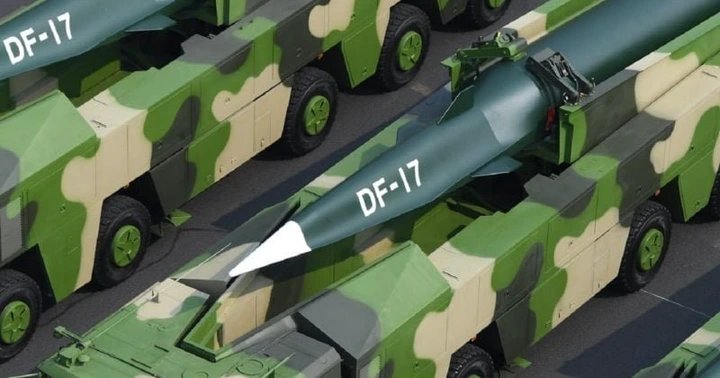 China develops hypersonic weapon to hunt US command aircraft thousands of miles away
Ultimate Uganda
China develops hypersonic weapon to hunt US command aircraft thousands of miles away
Ultimate Uganda
0 Comments