
My husband slept with our daughpjter and I’m yet to heal’
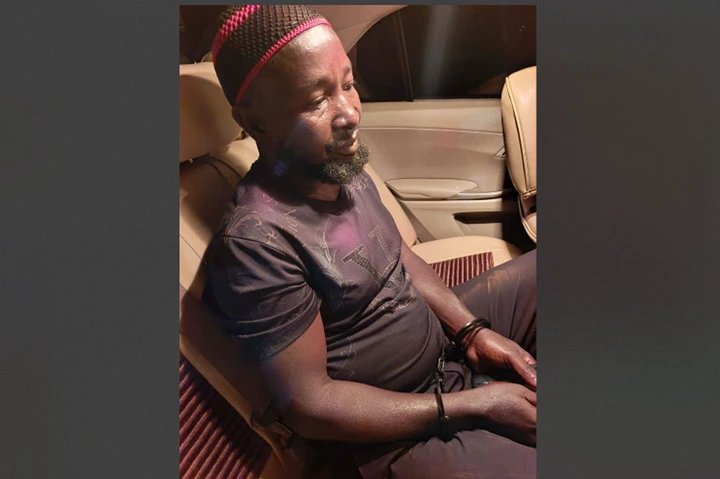

When Nakagwa speaks about the darkest chapter of her life, her voice trembles, but her resolve remains firm.
“I still cannot believe a father could do that to his own child,†she says quietly, wiping tears as she recalls the years her daughter was sexually abused by the person meant to protect her, her biological father when she was 10 years old.
Her testimony, shared during a community meeting in Kijabijo, Wakiso District, on November 28, has become a rallying cry during the 16 Days of Activism Against Gender-Based Violence, an annual global campaign highlighting the urgent need to protect women and girls.
A house of secrets
Before the 2020 Covid-19 lockdown, Paul Sserunjogi, then a resident of Kampala, began subjecting his young daughter to sexual abuse.
Ms Nakagwa said Sserunjogi routinely intoxicated the entire family ; his wife, the girl he abused, and other children to render them unconscious before committing the acts.
“But on the first day, my daughter saw him and asked what he was doing between her legs,†Nakagwa told the gathering.
“He lied that he had come to cover her.†The family lived in two cramped rooms, forcing the children to sleep in the sitting room.
Each time Sserunjogi sneaked in at night, he offered absurd excuses that he had come to pick up shoes or check on them.
He would also place saucers in such a way that when his wife woke up to look for him while he was in the act, the saucers would alert him by making noise.
But the signs were soon too glaring to ignore.
“My daughter would ask me why she wakes up feeling tired, why her knickers are removed,†Nakagwa recalls.
“I had no answers.†Three months later, the child began passing smelly pus from her private parts. Alarmed, her mother rushed her to the hospital, where doctors delivered a shattering verdict: the child had been repeatedly defiled by a mature man, leaving her private parts and uterus ruptured. When asked who was abusing her, the little girl said the unspeakable: “Daddy.â€
Fear and first attempt at justice
The doctors urged Ms Nakagwa to report to the police, but she hesitated, weighed down by fear of her in-laws, the possible breakdown of her marriage, and community stigma.
Still, with encouragement from medical staff and a village defence officer who feared arresting the suspect, she sought help from a Uganda Peoples’ Defence Forces (UPDF) officer at a nearby barracks.
The UPDF officer took swift action, arresting Sserunjogi and handing him over to Namugoona Police Station before he was transferred to Old Kampala.
Ms Nakagawa says medical examinations on both father and daughter confirmed the sexual abuse.
Sserunjogi was charged with aggravated defilement at Buganda Road Chief Magistrates Court and remanded to Luzira Prison. But what followed was another injustice. For five years, his case remained unheard. Then, one day, a female village leader approached Ms Nakagwa with papers, pressuring her to sign for his release.
Sserunjogi walked free, without trial. Determined not to let her daughter’s suffering go unpunished, Ms Nakagwa contacted the Centre for Health, Human Rights and Development (CEHURD), a social justice organisation situated in Gayaza, Wakiso District.
With their support, authorities traced Sserunjogi in Wobulenzi, where he had reportedly vowed to burn the family home, and re-arrested him. This time, the justice system acted. After the trial, he was convicted of aggravated defilement and sentenced to 30 years in prison. The victim had hoped he would receive a life sentence. When asked in court why he defiled his own child, Sserunjogi claimed his wife had “stopped giving birthâ€.
Ms Nakagwa explains: “I could not continue having children with a man who never provided. Even when I gave birth to our last child, he did not pay any medical bills. He stole even the little money I kept at home.â€
Lingering trauma
Years later, the effects of the abuse remain deeply etched in the young survivor’s body and mind. “Smelly pus still comes out of her private parts. She has persistent abdominal pains. She is withdrawn and hardly talks,†her mother says.
The family’s troubles did not end with the conviction. Within their community, they have become a target of mockery. “People laugh at my daughter. Some mockingly ask her to prove that her father really slept with her,†Ms Nakagwa says, her voice cracking with emotion.
The small two-room house where the abuse occurred continues to haunt her. She longs to move her children to a new environment, but cannot afford to.
Ms Noor Nakibuka Musisi, the deputy executive director of CEHURD, says the magnitude of violence in homes is alarming.
“Most of the cases in our legal aid clinic are violence-related. By sharing these stories in community dialogues, we hope families will recognise the signs and speak out,†she says.
Ms Musisi adds that CEHURD had to work with the police to protect Nakagwa after learning that Sserunjogi was threatening to burn down the home to revenge.
National efforts to end the vice
The Ministry of Gender, Labour and Social Development reports progress in reducing GBV, with physical violence decreasing from 56 percent in 2016 to 44 percent in 2022, and sexual violence decreasing from 26 percent to 17 percent within the same period.
Domestic violence against men fell from 44 percent to 34 percent. The ministry said about 46,481 survivors have received help from the ministry’s 21 GBV shelters, yet, with more than 14,000 sex-related offences recorded in 2024, the fight is far from over.
The 16 Days of Activism against GBV, running from November 25 to December 10, continues to mobilise communities globally to end violence against women and girls.
In Uganda, stories like Ms Nakagwa’s are a testament to both the suffering endured and the resilience of survivors. For Ms Nakagwa, justice came but healing is still a long road. “I want my daughter to have peace,†she says softly. “I pray that one day we can leave that house that brings bad memories, and start again.â€
This year’s theme is “Unite to end violence against women and girls: Empower, consolidate and sustain the gains.â€
What the law says
Section 116 of the Penal Code Act, 1950 states:
(1)‘‘Any person who performs a sexual act with another person who is below the age of 18 years, commits a felony known as defilement and is liable, on conviction, to life imprisonment.
(2)Any person who attempts to perform a sexual act with another person who is below the age of 18 years commits an offence and is liable, on conviction, to imprisonment for a term not exceeding 18 years.
(3)Any person who performs a sexual act with another person who is below the age of 18 years in any of the circumstances specified in subsection (4) commits a felony called aggravated defilement and is liable, on conviction by the High Court, to suffer death.
The circumstances referred to are as follow:
(a)where the person against whom the offence is committed is below the age of 14 years;
(b)where the offender is infected with Human Immunodeficiency Virus (HIV);
(c)where the offender is a parent or guardian of or a person in authority over, the person against whom the offence is committed;
(d)where the victim of the offence is a person with a disability; or
(e)where the offender is a serial offender.
(c)where the offender is a parent or guardian of or a person in authority over, the person against whom the offence is committed;
(d)where the victim of the offence is a person with a disability; or
(e)where the offender is a serial offender.


 Government will not gazette Kijanangoma as King of Tooro for now - Attorney General insists
Ultimate Uganda
Government will not gazette Kijanangoma as King of Tooro for now - Attorney General insists
Ultimate Uganda
 King Oyo’s Body to Arrive Thursday
Ultimate Uganda
King Oyo’s Body to Arrive Thursday
Ultimate Uganda
 Besigye, Lukwago expected to meet Gen. Salim Saleh today at Kapeeke
Ultimate Uganda
Besigye, Lukwago expected to meet Gen. Salim Saleh today at Kapeeke
Ultimate Uganda
 Rwabwogo Advised to ‘Eat His Bishop’ As MK Prepares to Enter State H’se: PREZ MUSEVENI ON HIS WAY OUT
Ultimate Uganda
Rwabwogo Advised to ‘Eat His Bishop’ As MK Prepares to Enter State H’se: PREZ MUSEVENI ON HIS WAY OUT
Ultimate Uganda
0 Comments