
Big story: Uganda to Borrow $2bn (Shs7.6 tn) from Oil Trading Giant Vitol for Oil, Roads Projects

“UNOC will be able to generate revenues of up to USD 5.6 billion†(about Shs21.3 trillion) from the projects when implemented," the ministry said, adding that the loan would reduce pressure on the consolidated fund and enable quicker realisation of revenues from the oil and gas sector
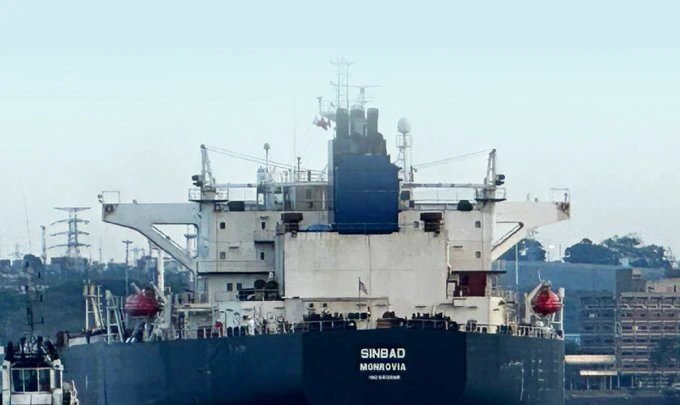
Sinbad from Kuwait arriving in Mombasa in July 2024 with 80,000 metric tonnes of diesel destined to Uganda
Uganda’s government has asked parliament to approve a plan allowing the state-owned Uganda National Oil Company (UNOC) to borrow up to $2 billion (about Shs7.6 trillion) from Vitol Bahrain E.C. to finance oil-sector investments and key national infrastructure, according to a finance ministry brief seen by ChimpReports.
“This brief is about the proposal by Uganda National Oil Company (UNOC) to borrow up to USD 2 billion from Vitol Bahrain E.C. (VBA) to finance Government infrastructure projects,†the document prepared by the Ministry of Finance, Planning and Economic Development states.
Under the proposal, about $1.2 billion (roughly Shs4.6 trillion) would be allocated to UNOC projects across the petroleum value chain.
These include development of Kampala Storage Terminal, development of pipeline jetty and associated terminal enhancement at Jinja Storage Terminal, acquisition of Mombasa storage to handle gasoil through purchase of a terminal, and extension of the finished products pipeline from Eldoret to Kampala.
Funds would also cover “at least the first year of construction of the Uganda Refinery†and the “acquisition of shares in Kenya Pipeline Company.â€
A further $800 million (about Shs3.0 trillion) would be used to finance national roads infrastructure to support oil and gas logistics and broader economic activity.
Returns
Experts have previously warned against Kampala’s increased appetite for borrowing, warning the sovereign debt would be unsustainable in the long-run.
However, the Finance Ministry said once implemented, the projects financed under the facility could generate significant returns.
“UNOC will be able to generate revenues of up to USD 5.6 billion†(about Shs21.3 trillion) from the projects when implemented,†the ministry said, adding that the loan would reduce pressure on the consolidated fund and enable quicker realisation of revenues from the oil and gas sector.
The proposed facility would run for 84 months, or seven years, including a two-year grace period during which interest would accrue but not be paid.
Vitol Bahrain E.C. would be the lender, while UNOC would be the borrower, with repayments supported through government capitalisation of the national oil company.
The government argues the financing has become necessary as “sources of financing for infrastructure have become increasingly expensive and several infrastructure projects have experienced a slow-down or stoppage due to limited funding.â€
UNOC entered into a petroleum products supply agreement with Vitol Bahrain in August 2023, granting the firm sole responsibility for importing Uganda’s fuel. The arrangement commenced in July 2024.
According to the finance ministry, the sole-importation model has delivered “the principal objectives of market supply stability and competitive prices while generating revenue,†with UNOC having “generated a net USD 150 million†(about Shs570 billion) from the arrangement as of December 2025.
The document places the loan request within the context of the global energy transition, noting that since the 2015 Paris climate agreement, “global energy systems have experienced a policy shift… away from fossil fuels,†contributing to reduced capital flows into petroleum projects.
It cites Uganda’s flagship East African Crude Oil Pipeline (EACOP) as an example, saying the project faced “significant environmental activism and challenges in raising finance,†even as it maintained “the highest international environmental and social standards†and retained the backing of the governments of Uganda and Tanzania and investors including TotalEnergies and CNOOC.
To secure the loan, the government plans to channel petroleum revenues through dedicated escrow-style “rules-based accounts.â€
“The petroleum proceeds and project revenues that will flow through the above-mentioned accounts shall act as security in case the Government defaults on loan repayments when they fall due,†the brief states.
Parliament is being asked to authorise the borrowing under Article 159 of the constitution and approve the opening and operation of the special accounts to manage revenues and loan repayments, according to the document.


 Starlink goes live in Uganda; price comparisons against MTN, Airtel
Ultimate Uganda
Starlink goes live in Uganda; price comparisons against MTN, Airtel
Ultimate Uganda
 NSSF sets September 24 for Annual Members Meeting as savers await interest rate declaration
Ultimate Uganda
NSSF sets September 24 for Annual Members Meeting as savers await interest rate declaration
Ultimate Uganda
 Boda boda riders launch e-commerce, digital loans platform
Ultimate Uganda
Boda boda riders launch e-commerce, digital loans platform
Ultimate Uganda
 Rwanda: We Cannot Sit and Watch As Illicit Alcohol Kills People - Kagame
Ultimate Uganda
Rwanda: We Cannot Sit and Watch As Illicit Alcohol Kills People - Kagame
Ultimate Uganda
0 Comments