
Inside Uganda’s billion-dollar struggle to quit charcoal
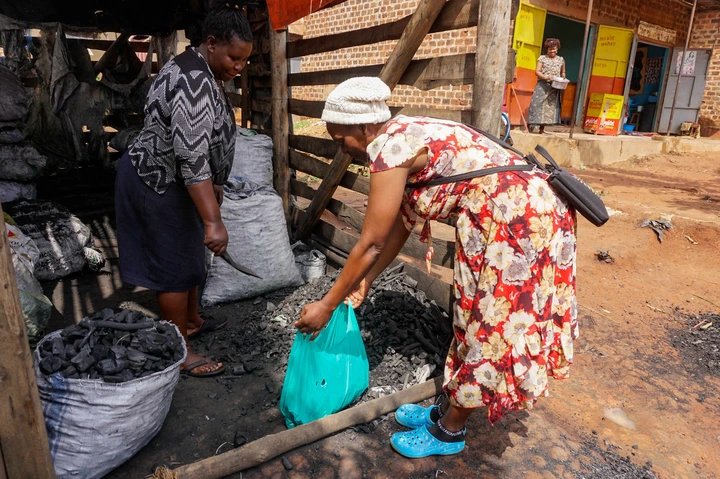

Uganda faces a multibillion-dollar deadlock as charcoal remains the primary fuel for 82 percent of Kampala households.
KAMPALA, Uganda — Behind the heavy scent of woodsmoke that hangs over Kampala every evening lies a multibillion-dollar economic deadlock. Despite a flurry of executive orders and international climate pledges, Uganda is finding that weaning its population off charcoal is a challenge that money alone has yet to solve.
The scale of the crisis is written in the landscape. Between 2001 and 2024, Uganda lost 1.2 million hectares of tree cover—a 15 percent decline in just over two decades. This environmental toll translates to 540 million tonnes of carbon dioxide emissions, fueled by a charcoal industry that remains the primary energy source for 82 percent of households in the capital.
The affordability gap
At the heart of the struggle is a stark disconnect between infrastructure and accessibility. Uganda has successfully surged its installed electricity capacity from 1,268 megawatts in 2020 to 2,200 megawatts today. Yet, for the average family, the glow of a lightbulb has not replaced the heat of a cookstove.
Data from the Economic Policy Research Centre reveals that while power is more available, it is not being used for cooking. Similarly, liquefied petroleum gas (LPG) remains a luxury, utilized by only 1.5 percent of the population. For many, the transition to clean energy is not a matter of will, but of a wallet that cannot yet stretch to meet the costs of equipment and monthly bills.
The failure of bans
The government has attempted to legislate the problem away. In 2023, President Yoweri Museveni issued an executive order prohibiting charcoal burning and trade in northern sub-regions like Acholi and West Nile. By early 2025, Energy Minister Ruth Nankabirwa hinted at expanding these bans to cities.
However, these measures have largely pushed the trade into a sophisticated grey market. Dealers have abandoned open trucks for more discreet transportation to bypass checkpoints.
“It is technically impossible to remove the 90 percent population out of charcoal use in five years,†says Michael Tebere of Kijani Forestry. He argues that the charcoal industry is too deeply woven into the regional economy, with Uganda serving as a hub for transit into neighboring Kenya.
Financing the transition
The price tag for a green transition is immense. Estimates from the World Bank suggest Uganda requires $2.5 billion annually to meet its climate goals, yet domestic sources can only provide about 30 percent of that figure.
To bridge this gap, the government is turning to the global carbon market. Last month, at COP30 in Brazil, the country launched the Uganda Pearl Carbon Platform, an online registry for sovereign carbon credits. The goal is to turn standing forests into a financial asset that can fund clean energy alternatives.
The Uganda Development Bank is also stepping in, with a pipeline of projects including a $100 million solar project equipped with battery storage. Denis Ochieng, the bank’s director of finance, says the lender is prioritizing a 22 percent reduction in greenhouse gas emissions by 2030.
A bridge to the future
While the country waits for large-scale solar and hydro to become affordable, some are betting on “sustainable†charcoal. Kijani Forestry has partnered with 45,000 farmers across the north to plant 10 million trees, creating a renewable source of biomass that does not rely on the destruction of endangered indigenous species like mahogany and mvule.
For millions, the path to a smoke-free kitchen remains blocked by the high cost of the alternatives. Until the “clean†option becomes the “cheap†option, Uganda’s billion-dollar struggle is likely to continue.


 Government will not gazette Kijanangoma as King of Tooro for now - Attorney General insists
Ultimate Uganda
Government will not gazette Kijanangoma as King of Tooro for now - Attorney General insists
Ultimate Uganda
 King Oyo’s Body to Arrive Thursday
Ultimate Uganda
King Oyo’s Body to Arrive Thursday
Ultimate Uganda
 Besigye, Lukwago expected to meet Gen. Salim Saleh today at Kapeeke
Ultimate Uganda
Besigye, Lukwago expected to meet Gen. Salim Saleh today at Kapeeke
Ultimate Uganda
 Rwabwogo Advised to ‘Eat His Bishop’ As MK Prepares to Enter State H’se: PREZ MUSEVENI ON HIS WAY OUT
Ultimate Uganda
Rwabwogo Advised to ‘Eat His Bishop’ As MK Prepares to Enter State H’se: PREZ MUSEVENI ON HIS WAY OUT
Ultimate Uganda
0 Comments