
Silent Crisis: Uganda’s rising Lake Nalubale (Victoria) water levels
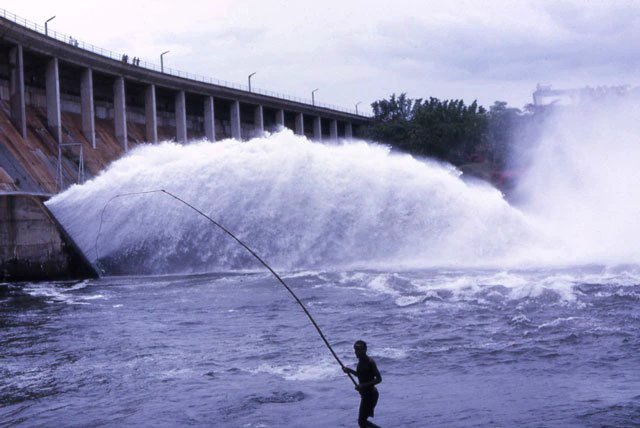

The water levels of Lake Victoria – that the locals call Lake Nalubale – have risen dramatically in recent years, displacing communities, destroying livelihoods, and causing ecological damage – yet public awareness and policy responses remain weak.
Despite an article in the New Vision on 3rd January 2025, arguing that people living in the riparian belt are the ones causing the ecological catastrophe, a look at the available facts and information indicates something much bigger is destroying the lake.
Information about Nalubale is admittedly scarce. Scouting the government websites and publications over the past few years, we have been unable to find reliable statistics on water levels and water releases at Nalubale Dam in Jinja. To understand why consistent release is essential, we need to go back in history to the agreement between the United Kingdom and Egypt to build the dam to provide electricity for industries in Uganda and to retain the water in Nalubale as a safety net for Egyptian agriculture. In the end, Queen Elizabeth travelled to Uganda in 1954 to cut the ribbon, and Egypt placed a permanent military presence at Jinja and Kololo.
The dam submerged Jinja (Rippon) Falls to create an accumulation of water, but it was not producing electricity at the expected capacity. It was then decided they remove a portion of Jinja Falls to increase water pressure and raise the water level by 1-2 metres. Displaced people were supposedly compensated, but no clear record of the compensation is available online.
Flooding by one metre vertically in a shallow lake like ours means flooding by 10-30 metres horizontally, so settlements that flood today were at a fair distance from the water before dam construction. A rough estimate is that Nalubale today sits up to three metres higher than its natural state when Jinja Falls regulated the lake level.
Water release from the dam was controlled by a simple mathematical calculation that produced a graph known as “The Agreed Curveâ€.
The more water in the lake, the more is being released out of Nalubale Dam. Around 2005, we released too much water, causing the lake to recede significantly. Since then, the lake has been steadily rising, causing consistent flooding.
We know, but choose to ignore, the fact that the first ecological catastrophe occurred in the last century, when the lake was artificially raised above its natural level, flooding vast areas along its shores and causing silting and erosion.
Since then, we have done nothing to correct this, and in the same breath, we are not releasing sufficient water from Nalubale Dam to keep the lake level under control. The impact is that there are over 50,000 displaced people in Kisumu alone, who have sued the Ugandan Government at the East African Court of Justice.
Statistics on the displacement of fishing villages and homesteads in riparian areas in Uganda over the past five years are not readily available.


 Government will not gazette Kijanangoma as King of Tooro for now - Attorney General insists
Ultimate Uganda
Government will not gazette Kijanangoma as King of Tooro for now - Attorney General insists
Ultimate Uganda
 King Oyo’s Body to Arrive Thursday
Ultimate Uganda
King Oyo’s Body to Arrive Thursday
Ultimate Uganda
 Besigye, Lukwago expected to meet Gen. Salim Saleh today at Kapeeke
Ultimate Uganda
Besigye, Lukwago expected to meet Gen. Salim Saleh today at Kapeeke
Ultimate Uganda
 Rwabwogo Advised to ‘Eat His Bishop’ As MK Prepares to Enter State H’se: PREZ MUSEVENI ON HIS WAY OUT
Ultimate Uganda
Rwabwogo Advised to ‘Eat His Bishop’ As MK Prepares to Enter State H’se: PREZ MUSEVENI ON HIS WAY OUT
Ultimate Uganda
0 Comments