
Shocking Reasons Why America Cannot Topple President Museveni
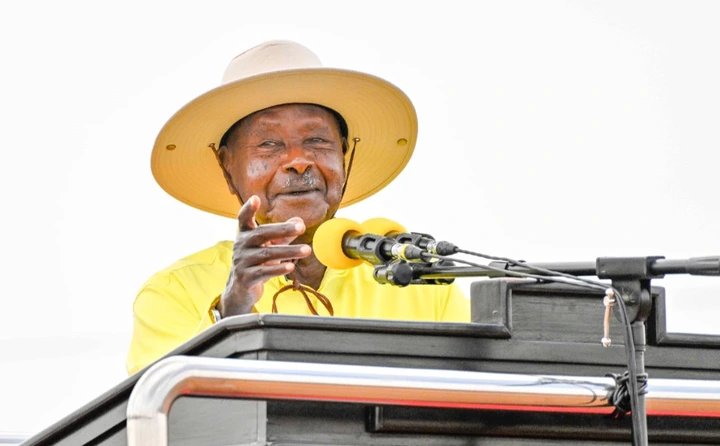

In the intricate dance of international diplomacy, the relationship between the United States and Uganda under President Yoweri Museveni has proven to be a masterclass in strategic alignment.
Diplomat Buyinza Adam Luzindana, a key figure in Museveni’s diplomatic circle, articulates the reasons why the United States will not intervene to disrupt Museveni’s presidency. Particularly in the wake of the U.S. invasion of Venezuela, there has been a surge of hope among some Ugandan opposition youth, who mistakenly believe that the Trump administration will replicate that military action in Uganda. However, as Luzindana poignantly points out, this narrative lacks a solid foundation in reality.
The opposition’s strategy has revolved around sustaining mass protests and calling upon the Trump administration for military intervention. Yet, Luzindana firmly contests that notion, emphasizing that the U.S. has established a long-standing relationship with Museveni that has never been antagonistic to U.S. foreign policy. From the very start of his governance in 1986, Museveni has aligned with U.S. interests, supporting national security goals and counterterrorism efforts, particularly in combating terrorism in Somalia. This collaborative spirit has only solidified Uganda’s status as a top ally of the United States.
At the heart of U.S. foreign policy are three main goals: national security, advancing democracy, and promoting economic prosperity. Museveni’s leadership has not only facilitated Uganda’s alignment with these objectives but has also positioned Uganda as a critical partner in maintaining stability in the East African region. Luzindana argues that Museveni has consistently supported U.S. foreign policy initiatives, making him an asset rather than an adversary. The Ugandan government has actively contributed to efforts like the African Union Mission in Somalia, directly aligning with U.S. counterterrorism goals.
Moreover, the U.S. foreign policy aims to protect American citizens from threats, ensure access to natural resources, and advance democratic values globally. Luzindana notes that Museveni’s policies have never posed a threat to U.S. interests; instead, they have fostered cooperation that promotes both regional stability and U.S. economic goals. As the U.S. continues to navigate its geopolitical landscape, Museveni’s balanced approach to governance has been a boon, allowing the U.S. to pursue its objectives without encountering resistance from Uganda.
Luzindana further elaborates on the U.S.-Uganda relationship, highlighting the significance of Museveni’s contributions to U.S. foreign policy. By providing troops for peacekeeping missions and aiding in humanitarian efforts, Uganda has played a crucial role in supporting American strategic interests. The U.S. has been heavily invested in health initiatives, committing significant resources to combat diseases like HIV/AIDS and malaria, which directly benefits Ugandan citizens while enhancing U.S. standing in the region.
The depth of cooperation between the United States and Uganda extends beyond mere military and health initiatives. Economic growth and trade are also pivotal components of this partnership. The U.S. has actively promoted regional economic integration, aligning with Uganda’s agricultural sectors and encouraging trade. Though challenges such as human rights concerns have arisen, the overarching theme remains one of collaboration. Museveni’s government has consistently engaged in dialogues to enhance economic ties while working towards a more stable and prosperous Uganda.
Luzindana emphasizes Museveni’s successful balancing act in international relations. By fostering a constructive relationship with the U.S. while prioritizing national development, Museveni has crafted a diplomatic narrative that speaks to both domestic and international audiences. This alignment with U.S. interests is underscored by the substantial military and humanitarian support Uganda has received, showcasing the trust and reliance the U.S. places on Museveni’s leadership.
The importance of Museveni’s role in promoting peace and stability cannot be overstated. His administration’s commitment to countering violent extremism and supporting international peacekeeping efforts resonates with U.S. foreign policy objectives. Luzindana points out that Uganda’s military contributions to missions in Somalia and elsewhere reflect a shared commitment to combatting terrorism, a long-standing pillar of U.S. policy. As such, Museveni’s leadership is seen not as a liability but as a strategic asset in a region fraught with conflict.
In conclusion, as Buyinza Adam Luzindana articulates, the U.S. is unlikely to involve itself in Uganda’s internal politics with the intention of removing President Museveni. Instead, the relationship stands as a testament to effective diplomacy and mutual benefit. Museveni’s ability to navigate the complexities of foreign relations while advancing Uganda’s national interests is commendable. His rapport with the Trump administration, characterized by shared goals and collaborative efforts, further underscores why Museveni remains a pivotal figure in Uganda’s political landscape. As Luzindana, a passionate advocate for diplomacy and strategic engagement, illustrates, the narrative of opposition hope for U.S. intervention is not only misguided but fundamentally detached from the realities of international relations.
This perspective is brought forth by Luzindana Adam Buyinza who is passionate on diplomacy, strategic engagement and international relations, he is one of the few people mentored by former premier Amama Mbabazi and he is deeprooted in the Uganda’s foreign policy and diplomacy apparatus belived to operate directly under General yoweri Kaguta museveni.
He cherishes US Foreign policy but he also Advocates for a more democratic world that respect international laws.


 Government will not gazette Kijanangoma as King of Tooro for now - Attorney General insists
Ultimate Uganda
Government will not gazette Kijanangoma as King of Tooro for now - Attorney General insists
Ultimate Uganda
 King Oyo’s Body to Arrive Thursday
Ultimate Uganda
King Oyo’s Body to Arrive Thursday
Ultimate Uganda
 Besigye, Lukwago expected to meet Gen. Salim Saleh today at Kapeeke
Ultimate Uganda
Besigye, Lukwago expected to meet Gen. Salim Saleh today at Kapeeke
Ultimate Uganda
 Rwabwogo Advised to ‘Eat His Bishop’ As MK Prepares to Enter State H’se: PREZ MUSEVENI ON HIS WAY OUT
Ultimate Uganda
Rwabwogo Advised to ‘Eat His Bishop’ As MK Prepares to Enter State H’se: PREZ MUSEVENI ON HIS WAY OUT
Ultimate Uganda
0 Comments