
Sudhir Ruparelia Loses Shs 40bn Case Against dfcu Bank
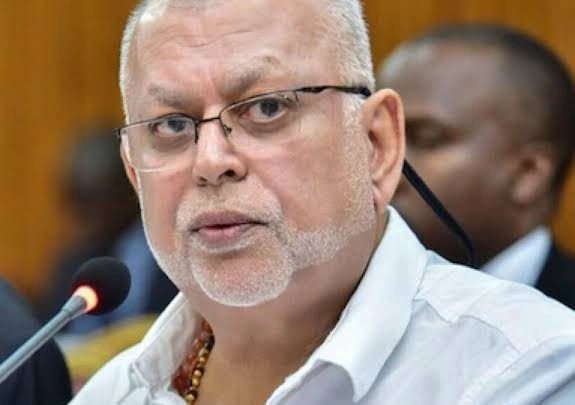

Sudhir Ruparelia
Kampala — The High Court has dismissed an application by Meera Investments Ltd, led by businessman Dr. Sudhir Ruparelia, seeking to have dfcu Bank cited for contempt of court over failure to restore dozens of properties, ruling that the bank was protected by a valid court stay pending appeal.
In a ruling delivered on January 2, 2026, Justice Samuel Emokor said the threshold for contempt of court had not been met because enforcement of the earlier judgment had been lawfully suspended.
“The failure to comply was lawful as there was an application halting further execution of the orders pending determination of the appeal,†Justice Emokor ruled.
Background to the dispute
The case stems from a long-running land dispute filed in 2017, in which Meera Investments sued dfcu Bank and the Commissioner for Land Registration over ownership and occupation of more than 40 properties across Uganda.
On October 24, 2023, the High Court ruled in favour of Meera, holding that dfcu’s continued occupation of the properties amounted to trespass.
The court ordered the bank to vacate the premises and restore them to a tenantable condition within three months, and directed the cancellation of leasehold titles held by dfcu.
In his judgment at the time, the trial court ordered that:
Header advertisement
“The 1st Defendant is hereby ordered to vacate all the suit properties and render vacant possession to the Plaintiff within three months from the date of judgment after restoring them in a tenable position.â€
dfcu later handed over 47 of the 48 properties, but Meera complained that they were returned in a damaged and unrestored state.
Meera’s contempt application
Meera returned to court seeking to have dfcu declared in contempt, arguing that the bank had deliberately ignored the restoration order. The company asked court to impose UGX 200 million in punitive damages and compel dfcu to pay about Shs 40.1 billion in restoration costs, based on bills of quantities prepared by its surveyor.
Meera argued that dfcu had knowledge of the court order and selectively complied with it.
“The Respondent cannot choose to grant possession and adamantly renege on the attendant order of restoration of the suit premises,†Meera’s lawyers submitted.
dfcu’s response
dfcu opposed the application, saying it had appealed the judgment and obtained a court-ordered stay of execution, first through an administrative interim stay issued in November 2023, and later through a substantive stay granted in July 2024.
The bank argued that once the stay was in place, it was not required to carry out any remaining obligations under the judgment.
“The payment of restoration costs was stayed, and the Applicant’s prayers are an attempt to circumvent the order of stay,†dfcu told court.
Court’s findings
Justice Emokor agreed with dfcu, outlining the legal test for contempt and stressing that contempt must involve wilful and deliberate disobedience of a court order.
“Contempt of court connotes the wilful disregard or disobedience of the orders issued by court,†the judge said.
He added that while there was no dispute that a valid order existed and dfcu knew about it, the critical issue was whether the bank’s failure to restore the properties was intentional and unlawful.
“The granting of an interim and later substantive stay of execution suspended the positive obligation of the Respondent to comply with the decree,†Justice Emokor ruled.
He further dismissed Meera’s argument that dfcu had appealed only part of the judgment, stating:
“Any decision made by the Court of Appeal on the grounds raised would affect the entirety of the judgment, including the orders on restoration.â€
Final decision
The court concluded that contempt had not been proved and declined to issue any consequential orders.
“The third ground for contempt of court for wilful refusal to comply cannot be established,†Justice Emokor ruled.
The application was dismissed, with each party ordered to bear its own costs.
What next
The dispute now shifts to the Court of Appeal, where dfcu’s appeal against the original judgment is still pending.
Until that appeal is determined, enforcement of the restoration orders — and the Shs 40.1 billion compensation claim — remains suspended.
The case continues to draw public attention due to the scale of the properties involved, the huge financial sums at stake, and the high-profile business interests on both sides.


 Government will not gazette Kijanangoma as King of Tooro for now - Attorney General insists
Ultimate Uganda
Government will not gazette Kijanangoma as King of Tooro for now - Attorney General insists
Ultimate Uganda
 King Oyo’s Body to Arrive Thursday
Ultimate Uganda
King Oyo’s Body to Arrive Thursday
Ultimate Uganda
 Besigye, Lukwago expected to meet Gen. Salim Saleh today at Kapeeke
Ultimate Uganda
Besigye, Lukwago expected to meet Gen. Salim Saleh today at Kapeeke
Ultimate Uganda
 Rwabwogo Advised to ‘Eat His Bishop’ As MK Prepares to Enter State H’se: PREZ MUSEVENI ON HIS WAY OUT
Ultimate Uganda
Rwabwogo Advised to ‘Eat His Bishop’ As MK Prepares to Enter State H’se: PREZ MUSEVENI ON HIS WAY OUT
Ultimate Uganda
0 Comments