
Robert Kyagulanyi Ssentamu: From Kamwokya’s Ghetto to the Ballot
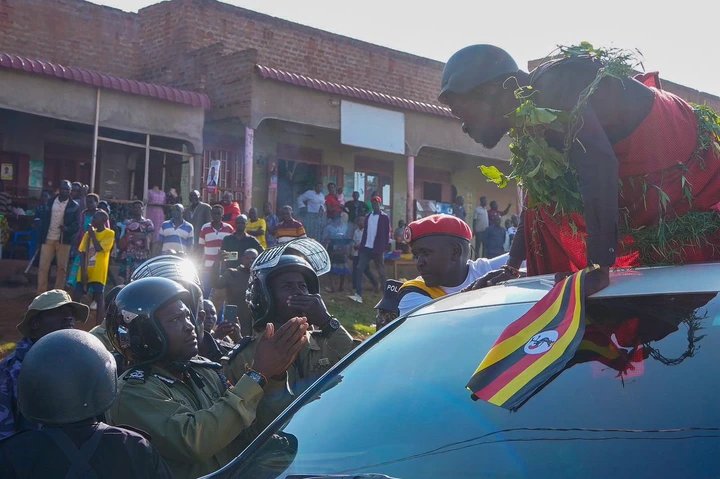

As Uganda heads to the polls on January 15, one of the clearest fault lines in the presidential race is not merely political; it is generational, philosophical, and moral.
On one side stands President Yoweri Museveni, in power for four decades, a former guerrilla commander who once preached against overstaying in office.
On the other hand is Robert Kyagulanyi Ssentamu, the former ghetto youth, pop star-turned-politician, who says Uganda has become a “lawless society†where “the law is nothing more than the paper on which it is written.â€I grew up in Kamokya,â€
Kyagulanyi tells a gathering of lawyers, his voice steady but forceful.
“Apart from poverty, ignorance, and disease, there was one prevalent problem in the ghetto—injustice.â€
That injustice, he says, shaped everything that followed.
The other candidates are Nandala Mafabi, Gregory Oyera Mugisha Muntu Frank Bulira, Robert Kasibante, Mubarak Munyagwa, and Joseph Mabirizi.
Many believe Kyagulanyi is the main challenger to the ruling NRM candidate as he promises to reform the governance in Uganda.
One of these is Engineer Winnie Byanyima, the wife of Dr. Kiiza Besigye. She thinks Kyagulanyi has gained popularity over Museveni.
“You have disarmed that man who thinks he is so powerful, Museveni. You have taken the flag saying don’t carry my picture, carry the flag. And what does the dictator say? No, don’t the flag.â€
Kyagulanyi entered the current campaign seeking a protest vote against Museveni.
“I’m representing the common people of our country. As a person who rose from the ghetto. I cannot take any pride other than that. But also, I’m aware that we are in a nation that is at a crossroads.â€
Long before music stages, parliamentary chambers, and presidential ballots, Kyagulanyi wanted to be a lawyer.
He believed the law could be a weapon for the powerless.
As a young boy growing up in Kamokya, it was always my dream to become a lawyer,†he recalls.
“I thought I would be better positioned to address injustice if I became one.â€
But poverty stood in that dream. Government sponsorship eluded him. Private sponsorship was impossible.
“In the year 2000, studying law on private sponsorship was simply out of the question for a person like myself,†he says.
“Tuition fees for one semester were enough to buy a plot of land in Nansana. Only the rich could afford it.â€
The dream died , temporarily.
Decades later, in his forties, after prison cells, parliamentary battles, and presidential contests, Kyagulanyi returned to law school and graduated.
“For me, that was my first major realistic encounter with social injustice,†he says.
“When the rich are the only ones who can afford to dream, society ceases to be society. It becomes just a market.â€
Until recently, little was known about what finally compelled Robert Kyagulanyi Ssentamu to walk away from a lucrative music career that had given him fame, wealth, and a national platform.
Kyagulanyi has now revealed that the turning point came in 2016, during a visit to the home of detained opposition politician Dr Kizza Besigye.
He had gone, he says, simply to sing for Besigye at a time when the veteran opposition leader was under intense state pressure.
“I went to sing for Dr Besigye,†Kyagulanyi recalls, “but I came back with something much bigger than a song.â€
Watching Besigye endure repeated arrests and detention for challenging President Yoweri Museveni forced Kyagulanyi to confront the limits of protest music in the face of entrenched power.
Kyagulanyi says some of his trusted confidants, including his long-time aide Eddie Mutwe, were opposed to the move, fearing the personal cost.
Years later, those fears would prove prescient: Eddie Mutwe was recently abducted on the orders of President Museveni’s son, a stark reminder of the risks Kyagulanyi embraced when he stepped into a political lineage that runs from Besigye’s defiance to his own challenge against a four-decade-old regime.
Before politics, Kyagulanyi was already speaking for the marginalized, through music.
As Bobi Wine, he used his celebrity to spotlight police brutality, corruption, and youth exclusion. In 2017, he formally entered politics, winning a parliamentary seat as an independent and later founding the People Power movement, which evolved into the National Unity Platform (NUP).
Since then, he has emerged as Museveni’s most persistent challenger, popular among the youth, feared by the state, and repeatedly arrested.
He and his supporters have been abducted, illegally detained, persecuted, subjected to inhumane treatment,†one introduction to his speech notes.
“And yet they continue.â€I studied law for seven years, in two universities,†he says. “In and out of the classroom. In and out of prison.â€
At the heart of Kyagulanyi’s candidacy is a frontal assault on Museveni’s governance record, particularly the rule of law.
“In Uganda today, the law is used as a weapon. If it serves the regime, they praise it. If it stands in their way, like term limits or age limits, they kick it down the drainâ€
He cites enforced disappearances, prolonged detention without trial, and the routine defiance of court orders.
“They abduct citizens and even boast about it,†he says. “They keep them in incommunicado detention for days, weeks, months.â€
One of the “ironies,†he notes, is Museveni himself.“General Museveni once said, ‘The law can be an instrument of oppression or an instrument of social justice,†Kyagulanyi recalls.
“And yet today, it is his regime that manipulates the law against the people.â€The contrast between the two men is stark.
Museveni, now in his eighties, came to power promising fundamental change. Kyagulanyi, now in his forties, says Museveni has become the very thing he once opposed.
“I agree with him,†Kyagulanyi says. “The problem with Uganda, and Africa, is leaders who overstay in power,†he adds pointedly.
“General Museveni was saying exactly what I’m saying when he was my age. He just doesn’t want to be reminded.
â€Unlike Museveni, Kyagulanyi insists leadership must be temporary and institutional.“I don’t want to be the big boss, the strongman,†he says.
“That syndrome must be flushed into the dustbins of history.â€
Electoral Justice and ‘Judicial Cowardice’Few Ugandan politicians speak as sharply about the judiciary.
Kyagulanyi does.“Overturning a presidential election in Uganda,†he says, “is harder than a camel passing through the eye of a needle.â€
He condemns the Supreme Court’s reliance on the “substantiality test,†which requires proof that irregularities affected results in a “substantial manner.
“No one rigs an election for fun,†he says. “They rig it to win.â€What he calls the judiciary’s failure is bluntly named:
“Judicial cowardice dressed as legal doctrine.â€He points to judges forced into exile, ignored rulings, and military trials of civilians.“When courts choose doctrine over truth,†he warns, “we go back to 1966.â€Kyagulanyi’s speech is as much a call to action as it is a personal story.
He warns lawyers that neutrality offers no safety.“No one is safe in a lawless society,†he says.
“Not even you, the lawyers.â€Degrees, wealth, and titles, he insists, provide no immunity.“If the country burns,†he says, “it will burn you as hot as it burns a boda boda rider in Kamokya.
â€The same warning extends to voters who have lost hope.“Freedom comes to those who fight,†he says.
“Not those who cry or give up.â€He challenges young Ugandans directly:“You are giving up on a guy who is 84? Your future is ahead of you. His is behind him.â€
As Uganda approaches election day, Kyagulanyi presents himself not merely as a candidate but as a generational reckoning.
“This is the most consequential time in Uganda’s history,†he says.
“Either we all become safe, or no one is safe.â€Against Museveni’s promise of stability through continuity, Kyagulanyi offers risk, resistance, and renewal.
“When history is written,†he tells his audience, “the question will be simple: Did you stand on the right side of history or did you choose convenience?†On January 15, Ugandans will answer that question at the ballot.


 Government will not gazette Kijanangoma as King of Tooro for now - Attorney General insists
Ultimate Uganda
Government will not gazette Kijanangoma as King of Tooro for now - Attorney General insists
Ultimate Uganda
 King Oyo’s Body to Arrive Thursday
Ultimate Uganda
King Oyo’s Body to Arrive Thursday
Ultimate Uganda
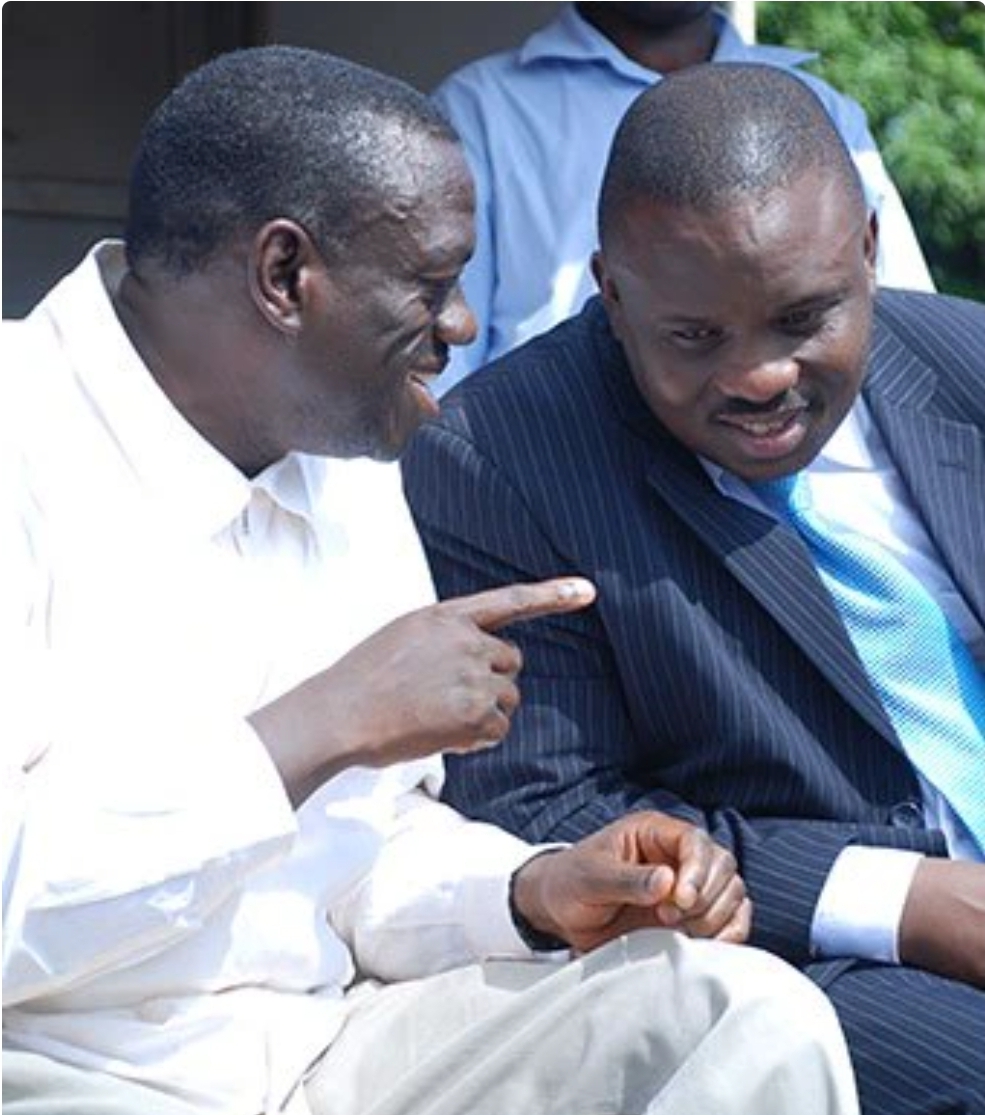 Besigye, Lukwago expected to meet Gen. Salim Saleh today at Kapeeke
Ultimate Uganda
Besigye, Lukwago expected to meet Gen. Salim Saleh today at Kapeeke
Ultimate Uganda
 Rwabwogo Advised to ‘Eat His Bishop’ As MK Prepares to Enter State H’se: PREZ MUSEVENI ON HIS WAY OUT
Ultimate Uganda
Rwabwogo Advised to ‘Eat His Bishop’ As MK Prepares to Enter State H’se: PREZ MUSEVENI ON HIS WAY OUT
Ultimate Uganda
0 Comments