
Understanding Hon. Nameere’s Election Saga: The Iron Lady Who Withstood the Opposition Storm to Emerge Masaka City Woman MP
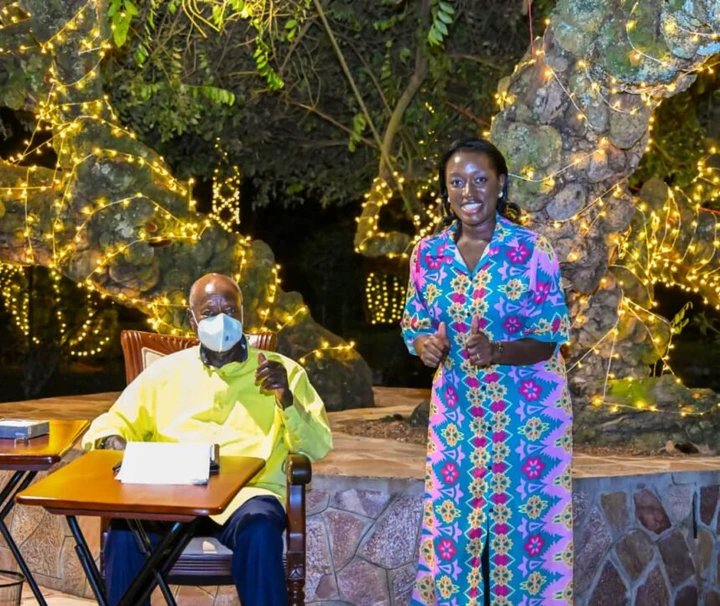

Hon Justine Nameere’s journey to Parliament has been anything but ordinary. Following a bruising political contest and an intense legal battle, she has emerged victorious as Masaka City’s first elected Woman Member of Parliament under the National Resistance Movement (NRM).
Upon her declaration on 1 February 2026 by Masaka City Chief Magistrate Albert Asiimwe, Nameere attributed her success to God, family, and the people of Masaka City—particularly traders, small-scale business owners, and NRM supporters.
“I thank the Lord for this achievement. I am grateful to my family and friends, and most especially the people of Masaka City. This victory belongs to them,†she said after her declaration.
A Recount That Changed the Political Script
The declaration followed a court-supervised vote recount conducted at the Electoral Commission headquarters in Kizungu. The exercise, which lasted two days, arose from a petition filed by Nameere challenging the initial results.
In the final tally, Nameere polled 25,502 votes, defeating Hon Rose Nalubowa of the National Unity Platform (NUP), who garnered 23,721 votes. Other contenders included Sauya Nanyonga (Independent) and Juliet Kakande (Democratic Front).
The outcome reversed earlier provisional results that had favoured the opposition candidate, triggering sharp political debate and heightened public interest across Masaka City.
Grassroots Campaign and Early Mobilisation
Nameere launched her campaign on 10 November 2025 in Kimanya village, proceeded through Ssenya, and concluded her citywide mobilisation in Kyamuyimbwa on 30 November 2025, covering all divisions of Masaka City.
Her campaign focused on grassroots engagement, particularly among traders and small business owners, and gained traction due to her strong working relationship with President Yoweri Museveni and Speaker of Parliament Anita Among.
Despite early setbacks, Nameere maintained a steady message.
“I want to address the issue of heavy taxes on traders and producers. I will work for all people without segregation,†she said during the campaign.
Background and Political Profile
Hon Nameere is the daughter of Vincent Bamulangaki Ssempijja, former Minister for Agriculture, Animal Industry and Fisheries. She is a lawyer by profession, a vocal advocate for informal traders, and the proprietor of TMTV, a local television station based in Kizungu.
From a young age, she aspired to serve in Parliament, a pursuit marked by resilience in the face of criticism, intimidation, and stiff political opposition.
She has been instrumental in strengthening the NRM’s presence in Masaka City, supporting party flag bearers such as Moses Mulinde (Kimanya-Kabonera Division Mayor), Frederick Dembe (NRM flag bearer for Masaka City Mayor), and several councillors—helping revive the party’s influence in a traditionally opposition-leaning city.
The Museveni Rally Moment
On 22 January 2026, during a presidential rally at Masaka Liberation Square, Nameere raised concerns directly with President Museveni over insecurity affecting NRM supporters and increasing corruption within Masaka City administration.
The President responded by directing the Masaka City Town Clerk, Christopher Daniel Kaweesi, to scrap certain taxes levied on traders operating around Masaka Central Market—a move that significantly boosted Nameere’s popularity among business communities.
She has since been widely recognised for her stance against corruption and land grabbing, issues that have long plagued residents of Masaka City.
A Historic Win with Political Implications
Masaka City was elevated to city status in 2023 and has for decades been considered an opposition stronghold. Nameere’s victory therefore represents a notable political shift.
She becomes the first elected Woman MP for Masaka City, reviving an NRM legacy last symbolised by the late Fredda Kase Mubanda in Masaka District.
Despite her win, Nameere faces the challenge of uniting NRM supporters and opposition voters alike to ensure the city fully benefits from government programmes.
Legal Storm Before the Declaration
The victory was preceded by serious legal contestation. During preliminary proceedings, one ballot box was reportedly found with a broken seal, raising questions about the integrity of the electoral process.
More significantly, Nameere alleged that the Electoral Commission failed to declare results from 11 polling stations, affecting more than 5,000 voters.
The dispute arose from the 15 January 2026 elections and placed both the declared results and the Electoral Commission under judicial scrutiny.
Nature of the Dispute
At the heart of Nameere’s petition were allegations that:
Declaration of Results (DR) forms were altered without mandatory counter-signatures
Vote totals in some polling stations exceeded the number of registered voters
Multiple DR forms existed for the same polling station
Results from 11 polling stations were completely omitted
She argued that these irregularities cumulatively favoured the respondent and materially affected the final outcome.
Court’s Assessment
In a prima facie ruling, Chief Magistrate Albert Asiimwe found that the evidence raised substantial questions of law and fact, warranting a recount.
The court noted that failures in the handling and transmission of electoral materials could implicate not only individual polling officials but also the Electoral Commission as an institution.
The magistrate urged calm, emphasising that electoral disputes must be resolved through lawful judicial mechanisms rather than public agitation.
The Applicant’s Case
Hon Nameere maintained that the irregularities were systematic rather than clerical. She stated that she was denied access to tally sheets and result transmission forms after declining to sign disputed results.
She argued that:
The court had proper jurisdiction and the petition was filed in time
A strong prima facie case had been established through documentary evidence
The irregularities were precisely pleaded and material
Electoral materials were intact and traceable, making a recount practical
The court agreed, paving the way for the recount that ultimately confirmed her victory.
Conclusion
Hon Justine Nameere’s ascent to Parliament marks a defining moment in Masaka City’s political history. Her victory—secured through resilience, grassroots mobilisation, and judicial intervention—signals a shift in the city’s political landscape and sets the stage for a new chapter under NRM leadership.
Whether she succeeds in uniting a historically divided electorate will define not only her tenure, but the future political direction of Masaka City.


 Government will not gazette Kijanangoma as King of Tooro for now - Attorney General insists
Ultimate Uganda
Government will not gazette Kijanangoma as King of Tooro for now - Attorney General insists
Ultimate Uganda
 King Oyo’s Body to Arrive Thursday
Ultimate Uganda
King Oyo’s Body to Arrive Thursday
Ultimate Uganda
 Besigye, Lukwago expected to meet Gen. Salim Saleh today at Kapeeke
Ultimate Uganda
Besigye, Lukwago expected to meet Gen. Salim Saleh today at Kapeeke
Ultimate Uganda
 Rwabwogo Advised to ‘Eat His Bishop’ As MK Prepares to Enter State H’se: PREZ MUSEVENI ON HIS WAY OUT
Ultimate Uganda
Rwabwogo Advised to ‘Eat His Bishop’ As MK Prepares to Enter State H’se: PREZ MUSEVENI ON HIS WAY OUT
Ultimate Uganda
0 Comments