
UBOS Signs MoU with Teso and Lango Cultural Institutions to Boost Use of Official Statistics
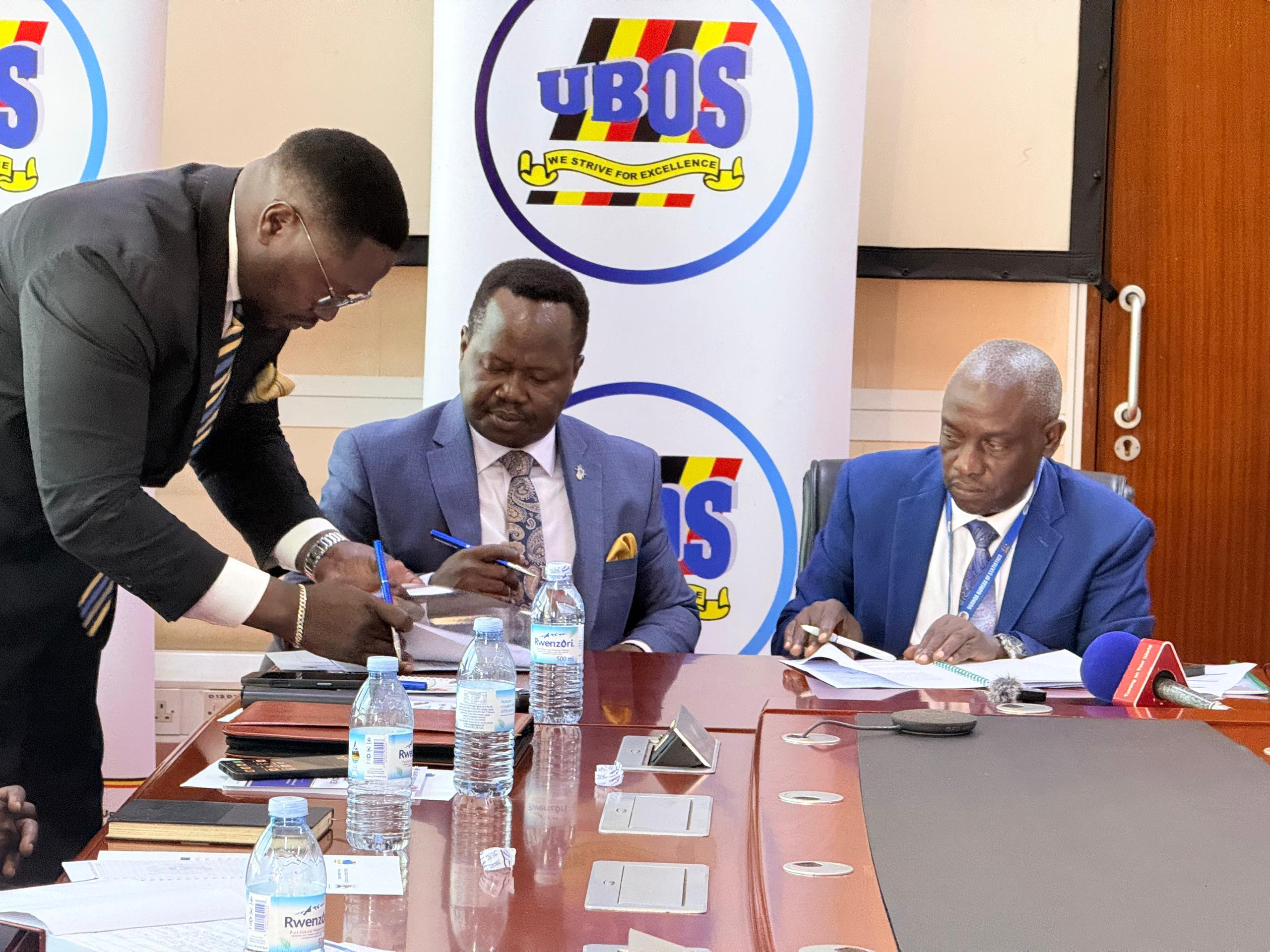

The Uganda Bureau of Statistics (UBOS) has signed a memorandum of understanding (MoU) with the cultural institutions of Teso and Lango to strengthen collaboration in producing, sharing, and using official statistics for planning and decision-making.
The signing ceremony, held on Thursday, brought together UBOS officials and leaders from the two cultural institutions.
UBOS described the agreement as a crucial step toward improving the use of credible statistics in policy formulation.
Speaking at the event, UBOS Deputy Executive Director Dr. Vincent Fredi Senono said the MoU aims to promote statistical production and use among cultural institutions.
“Today we are privileged to host cultural institutions of Iteso and Lang'o to sign a memorandum of understanding for the promotion of production, dissemination, and use of statistics for policy formulation,†Dr Senono said.
He emphasized that the initiative was driven by the cultural institutions themselves, recognizing the value of statistics in their planning.
Dr. Senono noted that the MoU follows a rigorous review of areas of cooperation and standards that data must meet to qualify as official statistics.
“Many people, as cultural institutions, may be using statistics, but they don’t know how these statistics are collected. This memorandum is helping them understand the process of producing official statistics,†he explained.
Leaders from the Iteso Cultural Union (ITU) welcomed the partnership, highlighting earlier concerns over national census results that prompted them to conduct an independent population assessment in Teso.
“We went through the draft and are comfortable with all areas of collaboration stated in the MoU,†said ITU Deputy Prime Minister John Stephen Okiror.
The Lango Cultural Institution also pledged full support toward official statistical work. Speaking at the ceremony, Prof Willy Okullo, Prime Minister of Won Nyaci me Lango, said the partnership was initiated by the institution and they are committed to fulfilling its terms.
He added that cultural institutions’ strong grassroots structures and direct access to communities make them effective partners for data collection and dissemination.
“This gives us a strong advantage. Collecting data will not be a challenge because we already work closely with communities and district structures,†Prof Okullo said, noting that the institution operates across nine districts and one city in the Lango sub-region.
Dedicated offices will be used for data collection, processing, and storage, ensuring timely access to information.
The partnership is expected to enhance the use of official statistics at the community level, supporting evidence-based planning and policy formulation in the Teso and Lango regions.


 Starlink goes live in Uganda; price comparisons against MTN, Airtel
Ultimate Uganda
Starlink goes live in Uganda; price comparisons against MTN, Airtel
Ultimate Uganda
 NSSF sets September 24 for Annual Members Meeting as savers await interest rate declaration
Ultimate Uganda
NSSF sets September 24 for Annual Members Meeting as savers await interest rate declaration
Ultimate Uganda
 Boda boda riders launch e-commerce, digital loans platform
Ultimate Uganda
Boda boda riders launch e-commerce, digital loans platform
Ultimate Uganda
 Rwanda: We Cannot Sit and Watch As Illicit Alcohol Kills People - Kagame
Ultimate Uganda
Rwanda: We Cannot Sit and Watch As Illicit Alcohol Kills People - Kagame
Ultimate Uganda
0 Comments