
Rigging aside, why are we still voting from basins?
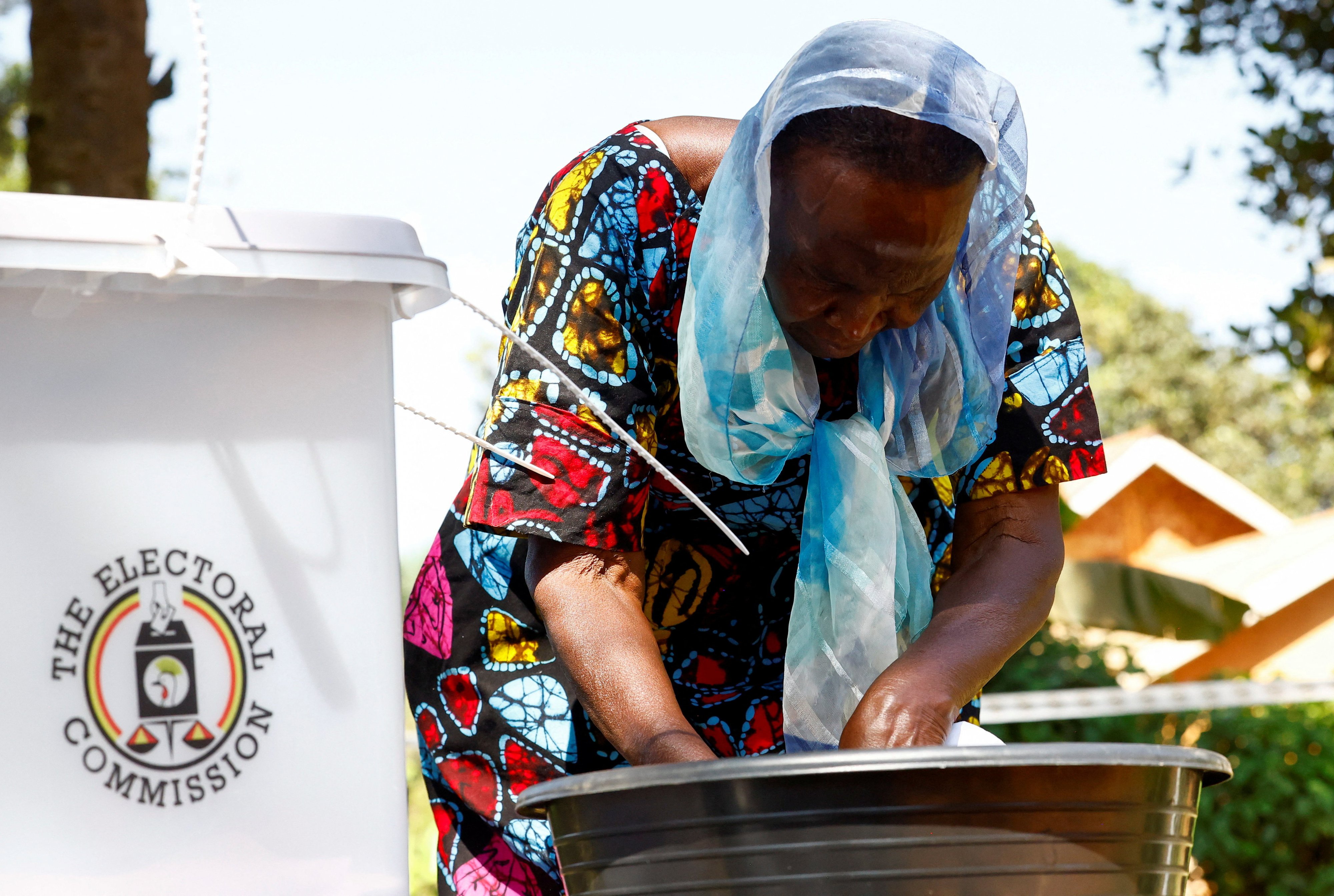

Uganda’s elections are often discussed through the familiar vocabulary of irregularities: Intimidation, militarisation, ballot stuffing, voter bribery, and contested results. These are serious concerns. But beneath the headline controversies lies a quieter, almost embarrassing question that rarely receives sustained attention: Why, in 2026, are Ugandans still voting from plastic basins?
This is not a metaphor. Across the country, ballots are routinely ticked from open plastic basins, and cast into transparent containers, occasionally labelled, often not. In an era of biometric verification, digital transmission of results, and electronic voter registers, Uganda’s most sacred democratic act still ends in household plasticware.
The issue is not merely aesthetic. It is institutional, symbolic, and deeply political.
At its core, the use of basins reflects the absence of electoral seriousness. Elections are meant to inspire confidence—among voters, candidates, and observers—that the process is credible even when outcomes are disputed. The tools of voting matter because they signal intent. A state that invests in secure ballot boxes, tamper-proof seals, and standardised polling infrastructure communicates respect for the voter and for the process. A state that relies on basins communicates improvisation, indifference, or worse, convenience.
Defenders argue that basins are cheap, readily available, and functional. But this argument collapses under minimal scrutiny. Uganda has conducted elections continuously for nearly four decades. If the state can procure teargas, armoured vehicles, biometric kits (which failed to work on presidential and parliamentary elections thus rendering this whole article a joke but someone’s gotta say it) and campaign logistics nationwide, it can certainly procure durable, standardised voting booths. Cost, therefore, is not the binding constraint. Political will is.
The basin also undermines the secrecy of the ballot, one of the most fundamental principles of democratic voting. In many polling stations, ballots are ticked from open basins that are visible to polling officials, party agents, and sometimes security personnel.
In a political environment already saturated with fear and surveillance, this visibility is not neutral. It reinforces voter self-censorship and weakens the notion of free choice.
More troubling still is the basin’s role in normalising electoral fragility. When citizens repeatedly vote using makeshift equipment, they internalise the idea that elections are inherently chaotic, provisional, and unserious.
This breeds apathy. Why defend a process that does not even bother to defend itself? Why believe in outcomes produced through systems that look temporary, negotiable, and easily manipulated?
There is also a symbolic contradiction at play. Uganda’s electoral authorities frequently emphasise order, discipline, and legality. Campaign activities are heavily regulated, sometimes violently so. Yet the state appears remarkably relaxed about the physical integrity of the vote itself. The basin becomes an emblem of misplaced priorities: maximum force before voting, minimum care during voting.
Globally, elections are rituals of legitimacy. Their power lies not only in counting votes but in persuading citizens that counting has meaning.
Infrastructure is part of that persuasion. From indelible ink to sealed ballot boxes and voting booths, every material detail communicates trustworthiness. Uganda’s reliance on basins does the opposite. It visually reinforces the suspicion that elections are procedural performances rather than genuine competitions.
Importantly, abandoning basins will not, by itself, solve Uganda’s electoral crisis. Technology can be abused, systems can be compromised, and fraud can migrate. But process credibility is cumulative. It begins with basics. No democracy serious about reform begins by cutting corners at the ballot box, literally.
As Ugandans debate electoral reform, constitutionalism, and political transition, the basin should not be dismissed as a minor detail. It is a quiet confession. It tells us that while we loudly argue about results, we have silently accepted a system that refuses to modernise the vote itself.
Until we take elections seriously enough to retire the basin, we should not be surprised when voters, too, struggle to take them seriously.


 Government will not gazette Kijanangoma as King of Tooro for now - Attorney General insists
Ultimate Uganda
Government will not gazette Kijanangoma as King of Tooro for now - Attorney General insists
Ultimate Uganda
 King Oyo’s Body to Arrive Thursday
Ultimate Uganda
King Oyo’s Body to Arrive Thursday
Ultimate Uganda
 Besigye, Lukwago expected to meet Gen. Salim Saleh today at Kapeeke
Ultimate Uganda
Besigye, Lukwago expected to meet Gen. Salim Saleh today at Kapeeke
Ultimate Uganda
 Rwabwogo Advised to ‘Eat His Bishop’ As MK Prepares to Enter State H’se: PREZ MUSEVENI ON HIS WAY OUT
Ultimate Uganda
Rwabwogo Advised to ‘Eat His Bishop’ As MK Prepares to Enter State H’se: PREZ MUSEVENI ON HIS WAY OUT
Ultimate Uganda
0 Comments