
Uganda Airlines delays expose cracks in passenger protection
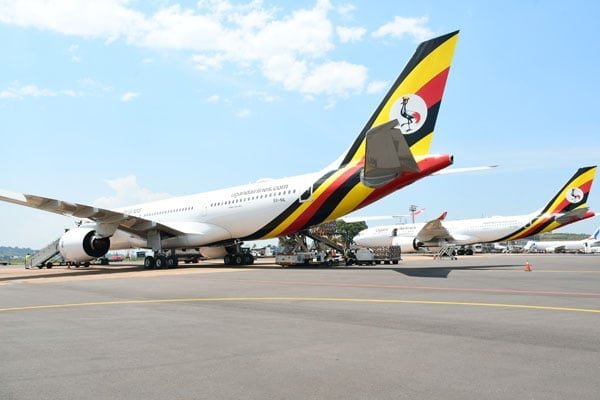

Uganda’s flag carrier has this week made headlines for all the wrong reasons after it was revealed that Jenifer Bamuturaki, the Chief Executive Officer, will not serve in the position beyond July. The departure comes after the national carrier received a bad rap following a string of governance scandals. One of the scandals revolved around something seemingly simple—what the law says when Uganda Airlines leaves passengers stranded. Air travel, like diplomacy, depends on trust. Passengers agree to arrive early, queue patiently and obey instructions. Airlines promise, at the very least, to take them where they paid to go, roughly when advertised.
Over the recent December holiday period, that compact frayed badly for travellers using several airlines, including Uganda Airlines. Passengers reported prolonged and, in many cases, unexplained flight delays, some stretching beyond 48 hours. Others endured the loss or significant delay of luggage and cargo. What should have amounted to seasonal inconvenience instead hardened into something closer to institutional failure. In a statement issued on December 13, 2025, Uganda Airlines acknowledged “disruptions to its scheduled operations†and said it was working to restore regular service. The reassurance did little to calm agitated travellers, many of whom took to online platforms to air their grievances, where frustration spread faster than official updates.
One Uganda Airlines aircraft was stranded in Lagos, Nigeria and another in London, England. Videos circulated showing stranded passengers accusing airline staff of abandoning them after complaints about poor service. For more than a week, travellers described what they saw as ‘persistent mismanagement.’
The Airline’s spokesperson, Ms Shakila Rahim Lamar, later attributed the disruption to “regrettable technical disruptions with one of its aircraft,†which she said had caused delays and wider operational challenges, even as remedial efforts were underway. As a stopgap, the airline downgraded from a larger Airbus aircraft to a smaller one and adopted a first-come, first-served boarding policy. The deeper problem, she conceded, was structural.
“The major problem is that we don’t have a fleet. When one is down, it causes ripple effects to the next one. That’s the problem, and right now, we have so many people travelling,†she said. Uganda Airlines, which operates roughly 25 flights per day, was consequently forced to rely on leased aircraft to stabilise operations amid technical difficulties, something that brought on enormous costs. Families were separated during the festive season; business opportunities were lost; unplanned expenses mounted; and critical personal and professional commitments were missed.
Public frustration was compounded by what appeared to be an absence of timely communication or meaningful explanation from airline management. Instead of clarity and reassurance, passengers encountered repeated postponements and uncertainty. Some responded by seeking alternative carriers, an outcome that raises uncomfortable questions about accountability, particularly for a national airline funded by public resources and yet to record a profit since its relaunch.
A fragile carrier
Those questions are sharpened further by the Auditor General’s latest report for the year ended December 31, 2025, which suggests that the holiday disruptions were less an aberration than a symptom of deeper financial and operational fragility. The carrier, which is registered as Uganda National Airlines Company Limited, recorded a net loss of Shs230.816 billion in the 2024/2025 financial year, only a marginal 0.33 percent improvement from the previous year.
Management pointed to revenue growth of 19.2 percent and early stabilisation arising from an investment and strategic expansion phase, particularly new routes such as London, whose financial benefits are yet to mature. Even so, the airline remains firmly loss-making. That fragility sits uneasily alongside the scale of public support. Government investment now totals Shs1.984 trillion, yet only Shs200 million has been formally recognised as share capital.
The balance remains parked as share application funds and government capitalisation, pending conversion, an accounting arrangement that blurs ownership structure and complicates financial transparency. In practical terms, this means that despite the scale of taxpayer funding committed to the airline, most of it has not yet been formally converted into equity. By recognising only a small fraction as share capital, the airline’s balance sheet reflects an ownership structure that is still legally incomplete.
The bulk of government funding sits in a holding category; neither debt nor equity, pending formal conversion. This complicates assessments of the airline’s true capital base, weakens balance-sheet clarity for auditors and creditors, and obscures accountability for how public funds are deployed. Liabilities continue to mount. Trade and other payables climbed to Shs235.703b by June 30, 2025, up from Shs171.685b a year earlier.
A steep price to pay
The Auditor General also flagged delays in closing out an A320 wet-lease agreement, leaving a $930,000 (Shs3.3 billion) security deposit outstanding and subject to legal recovery. Operational controls appear no stronger. Cash collections of $103,491.70 (Shs366.2m) at the Juba country office were not banked as required and remain under criminal and legal investigation. Aviation fuel penalties totalling $1.78m (Shs6.3b) were imposed without adequate supporting documentation, while fuel worth $17.39m (Shs61.5b) was uplifted and paid for without a valid supply contract—$9.29m (Shs33b) of it during the 2024/2025 financial year alone.
These weaknesses have direct operational consequences. A physical inspection revealed that one CRJ900 aircraft, 5X-KNP, had been grounded since September 2025 due to the unavailability of a critical spare part. With a small fleet already stretched thin, reduced aircraft availability increased the risk of flight disruptions and customer dissatisfaction, risks that materialised publicly during the holiday period. This made performance against plans sobering. The airline achieved just 68.49 percent of its approved revenue target. Of 29 planned outputs, covering 34 activities, only one was fully implemented.
Governance lapses extended to procurement, where the airline failed to comply with reservation requirements for women, youth and persons with disabilities, and neglected to account for obsolete inventory identified the previous year. The Auditor General further disclosed that a separate verification is underway into domestic arrears amounting to $78.56m (Shs278b) reported to the Ministry of Works and Transport. Taken together, these findings place the passenger disruptions in a broader context.
The delays, cancellations and communication failures experienced over the holiday season were not merely the product of seasonal pressure or bad luck.
They reflect structural constraints, financial strain and governance weaknesses within a national airline heavily reliant on public funding; raising uncomfortable questions about sustainability, accountability and the true cost of keeping a flag carrier airborne.
Passenger protection
Against this backdrop, the question shifts from outrage to remedy. Passenger rights in cases of flight delay are governed by three overlapping legal regimes. Internationally, the Montreal Convention of 1999 establishes a uniform system of liability for international carriage of passengers, baggage and cargo. Regionally, the Common Market for Eastern and Southern Africa (COMESA) Competition and Consumer Commission imposes consumer-protection obligations on airlines operating within its market. Domestically, national aviation law governs procedure, enforcement and jurisdiction.
Each regime addresses a different type of harm; together they form a patchwork of passenger protection. Understanding how these regimes interact matters because not every delay attracts compensation, not every inconvenience amounts to legal loss, and not every grievance belongs in court. The law draws careful distinctions—between delay and cancellation, inconvenience and damage, regulation and liability. At the domestic level, remedies are anchored in Uganda’s civil aviation framework under the oversight of the Uganda Civil Aviation Authority (UCAA). In principle, this positions UCAA as the first port of call for aggrieved passengers.
In practice, its effectiveness has been questioned. A recent UCAA draft report to the Ministry of Works and Transport in November 2025 acknowledged institutional weaknesses and proposed separating regulatory functions from operational and ownership roles, in line with international best practice.
Kenya provides a useful contrast. Its bifurcated model separates airport ownership from regulation and, crucially, allows appeals from regulatory decisions to a specialised aviation tribunal. Uganda has no comparable body, leaving passengers with limited and opaque avenues for review.
Internationally, the Montreal Convention remains the cornerstone. Uganda acceded to it in 2018. Article 19 establishes that a carrier is liable for damage caused by delay unless it proves that all reasonable measures were taken or that such measures were impossible. Article 22 places a ceiling on how much an airline can be made to pay for a delay. Even where liability is established, compensation for a delayed passenger cannot exceed 5,346 Special Drawing Rights (SDRs). In practical terms, this does not mean every delayed passenger is automatically entitled to money. This represents the maximum, not the standard payout.
A passenger must show that the delay caused a real, measurable financial loss. Mere inconvenience, frustration or wasted time; without proof of actual expense or loss, does not qualify. To put the cap in local terms, 5,346 SDRs is roughly equivalent to about Shs26 million to Shs28 million, depending on exchange rates. This represents the maximum, not the standard payout. Most successful claims fall far below this figure and are limited to proven costs such as hotel bills, missed connections, additional transport, or documented business losses. The convention is also exclusive, meaning it sets the only legal route through which passengers may seek damages for international flight delays.
Article 29 makes this explicit: any claim for damages, no matter how it is framed, must comply with the Convention’s rules and limits. Courts have repeatedly upheld this principle, including in cases such as Sidhu versus British Airways and El Al versus Tseng, rejecting attempts by passengers to sidestep the Convention by suing under domestic contract or negligence law. The aim is consistency: passengers receive predictable rights, while airlines are protected from unlimited or overlapping claims. There is also a strict time limit. Under Article 35, a claim for damages is extinguished unless it is brought within two years. After that period, the right to claim disappears altogether, regardless of the merits. Passengers must therefore act promptly if they wish to enforce their rights.
Entitlements
Elsewhere, the approach is more passenger-friendly. In the European Union, Regulation 261 takes a different tack, focusing less on proving financial loss and more on ensuring immediate assistance and standardised entitlements when things go wrong. Under the Regulation, passengers facing long delays are entitled to care, such as meals, accommodation and communication, and, in some cases, compensation. In Sturgeon versus Condor Flugdienst, European courts went further, holding that passengers delayed for several hours suffer a loss of time comparable to cancellation and may therefore be entitled to similar compensation.
Importantly, the EU regime operates alongside, rather than in conflict with, the Montreal Convention, addressing inconvenience while the convention governs claims for proven loss. Closer to home, the COMESA region adds another layer of protection. Through its Competition and Consumer Commission, COMESA has issued binding guidance on flight delays, cancellations and passenger care. A 2025 survey conducted by the then COMESA Competition Commission found that delays accounted for nearly a third of all passenger complaints, making them the single most common grievance.
Airlines operating in the region are required to provide regular updates, assistance during prolonged delays, and, once disruption reaches certain thresholds, options for reimbursement or re-routing. Failure to comply exposes airlines to regulatory enforcement. Legally, a delayed flight remains distinct from a cancelled one. Yet courts are increasingly willing to acknowledge that prolonged delays can cause harm comparable to outright cancellation. While this reasoning has not yet been fully absorbed into Ugandan law, the direction of travel is unmistakable. This all shows that passenger rights in aviation are no longer a matter of goodwill. They are legal obligations; sometimes fragmented, often technical, but increasingly enforceable. Whether those rights are enforced consistently and effectively, however, remains an open question.
A heightened responsibility
In a legal analysis, Ms Jackline Natukunda, the managing partner, and Mr Nicholas Murere, a legal associate at Magna Advocates, argue that flight delays and cancellations, as well as loss or delayed baggage, are “legally cognisable events with real human and economic consequences.†“Uganda Airlines, as a national carrier, bears a heightened responsibility to comply with international and regional standards, to communicate transparently, and to treat passengers with dignity and fairness. The Uganda Civil Aviation Authority (UCAA) too has an obligation and mandate to ensure fair passenger treatment and protection,†they argue.
They add: “The law provides remedies. Passengers are entitled to information, care, and, where loss is proven, compensation. Effective enforcement of these rights is essential not only for consumer protection but also for restoring public confidence in a national institution sustained by public funds.†The aforementioned regimes, the duo note, address different forms of harm. “The Montreal Convention governs compensatory damages for proven loss; the COMESA Competition and Consumer Commission governs regulatory consumer protection and market conduct; and the EU Regulation 261 establishes statutory, standardised passenger entitlements.â€
Together, it does agree that these frameworks demonstrate that “passenger rights in aviation are no longer a matter of goodwill, but of enforceable legal obligation.†Whether those rights are enforced consistently and effectively, however, remains the unresolved test.


 Museveni steps into Mulago land dispute
Ultimate Uganda
Museveni steps into Mulago land dispute
Ultimate Uganda
 HIV Alarm in Kampala: 211 New Infections Weekly Linked to Massage Parlours, Spas & Lodges
Ultimate Uganda
HIV Alarm in Kampala: 211 New Infections Weekly Linked to Massage Parlours, Spas & Lodges
Ultimate Uganda
 Uganda: ‘Delayed land acquisition stalling road works’
Ultimate Uganda
Uganda: ‘Delayed land acquisition stalling road works’
Ultimate Uganda
 Fearless Former Minister Criticizes M7 For Always Betraying Sr Colleagues While Claiming to Be Fighting Corruption, Urges Barugahara & Nameere to Watch their Back
Ultimate Uganda
Fearless Former Minister Criticizes M7 For Always Betraying Sr Colleagues While Claiming to Be Fighting Corruption, Urges Barugahara & Nameere to Watch their Back
Ultimate Uganda
0 Comments