
Law Society Fires Back at CJ Zeija: Judges Are Not Immune From Criticism
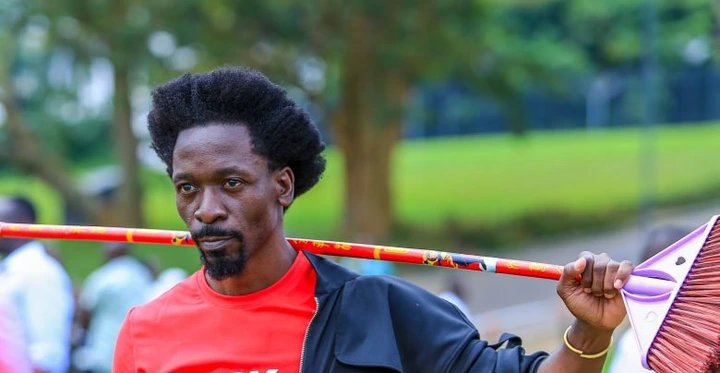

The Uganda Law Society (ULS) has issued a sharply worded statement rejecting what it described as an attempt by incoming Chief Justice Flavian Zeija to silence critics on social media, escalating tensions between the bar and the judiciary at the start of the new legal year.
In a public release dated February 6, the lawyers’ body said judges, like all public officials in a democratic society, “do not enjoy any special immunity from criticism, caustic commentary, or even outright insult on social media or elsewhere.â€
The statement was issued in response to remarks attributed to Justice Zeija during the ceremonial opening of the New Law Year 2026, where he reportedly signaled intolerance toward online commentary perceived as insulting or traumatic to judicial officers.
The ULS anchored its position on Article 29 of the 1995 Constitution, which guarantees freedom of expression, arguing that the protection extends even to offensive or harsh public discourse about state institutions.
“Public officers, especially those exercising immense authority over citizens’ liberties, lives, and property, must tolerate a higher threshold of scrutiny and unflattering commentary than private individuals,†the statement read.
The society warned that threats of legal action against online critics risk chilling legitimate debate and eroding public trust in the judiciary.
The lawyers’ body also criticized what it described as the judiciary’s reliance on “political weaponry drawn from colonial-era laws,†including offences such as scandalizing the court and criminal libel.
It added that newer statutes, including the Computer Misuse Act and the Data Protection and Privacy Act, were increasingly being associated with attempts to control dissent.
Header advertisement
“These tools, often wielded to silence dissent, are incompatible with a modern, independent judiciary in a constitutional democracy,†the statement said.
The ULS warned that excessive focus on policing online narratives could undermine the judiciary’s legitimacy during what it described as a “perilous political transition†marked by contested public trust in state institutions.
Call for reforms
The lawyers’ body urged the Chief Justice and his colleagues to focus instead on substantive reforms, including clearing case backlogs, ensuring merit-based appointments, strengthening accountability, and demonstrating independence in politically sensitive matters.
“Praise and respect will follow demonstrable improvement—not demands for it,†the statement noted.
Citing the Inspectorate of Government’s 2021 Cost of Corruption report and other sources, the ULS said the reputation of Uganda’s justice system remains burdened by perceptions of corruption, delays, favoritism, and barriers to access for ordinary citizens.
The society cautioned that if the judiciary treated critics as enemies rather than stakeholders, the public could begin to view judges as political actors, further eroding institutional authority.
“The Judiciary exists to serve the people, not to be shielded from them,†the statement concluded, adding that the ULS was ready to engage constructively with the courts on reforms to strengthen justice delivery.
The statement was signed by ULS President Isaac K. Ssemakadde and members of the governing council under the Radical New Bar faction.


 Government will not gazette Kijanangoma as King of Tooro for now - Attorney General insists
Ultimate Uganda
Government will not gazette Kijanangoma as King of Tooro for now - Attorney General insists
Ultimate Uganda
 King Oyo’s Body to Arrive Thursday
Ultimate Uganda
King Oyo’s Body to Arrive Thursday
Ultimate Uganda
 Besigye, Lukwago expected to meet Gen. Salim Saleh today at Kapeeke
Ultimate Uganda
Besigye, Lukwago expected to meet Gen. Salim Saleh today at Kapeeke
Ultimate Uganda
 Rwabwogo Advised to ‘Eat His Bishop’ As MK Prepares to Enter State H’se: PREZ MUSEVENI ON HIS WAY OUT
Ultimate Uganda
Rwabwogo Advised to ‘Eat His Bishop’ As MK Prepares to Enter State H’se: PREZ MUSEVENI ON HIS WAY OUT
Ultimate Uganda
0 Comments