
UHRC Boss Wangadya under fire over explosive corruption, abuse of office
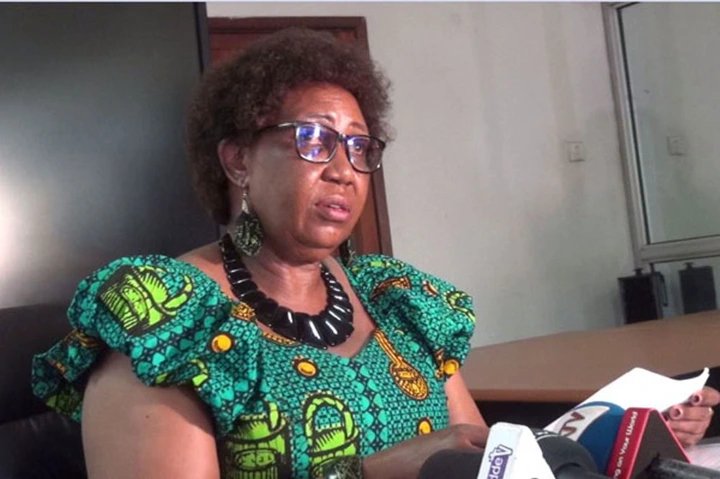

Whistleblower allegations raise serious questions about misuse of funds, power, and governance — but the Commission insists there is “no crisis.â€
Kampala, Uganda: The leadership of the Uganda Human Rights Commission is under intense scrutiny following a wave of whistleblower allegations accusing its Chairperson, Ms Mariam Wangadya, of maladministration, financial impropriety, and abuse of office, claims the Commission has attempted to push back as baseless.
The unfolding controversy has raised fresh questions about governance, accountability, and staff welfare at one of Uganda’s most critical constitutional institutions.
Whistleblower accounts circulating in government and media circles allege that the UHRC is increasingly centralized under the Chairperson, sidelining other commissioners and key governance structures.
According to the whistleblowers, she allegedly directed the Human Resource Manager and Secretary to continue making a 10 percent government NSSF contribution on her behalf until March 2025, reportedly earning the funds unlawfully for over three years.
The Chairperson is also said to have taken control of the Commission’s budgeting process for the financial years 2024/2025, 2025/2026, and the ongoing 2026/2027 cycle, allegedly sidelining the Management Committee, Finance Committee, and other Commissioners.
Whistleblowers further state that a supplementary allocation of UGX 10.4 billion, secured through lobbying of the Attorney General and Ministry of Finance, was treated by Ms Wangadya as her personal entitlement. Of this, UGX 2 billion was earmarked for salary enhancements for the Chairperson, Commissioners, and staff, with the Chairperson determining her own remuneration unilaterally, reportedly UGX 20 million higher than that of other Commissioners.
Additionally, a new budget line for the Office of the Chairperson has been introduced in the Commission’s history, allegedly giving Ms Wangadya access to funds that have reportedly been channelled through personal assistants’ accounts, first through Ms Pauline Nansamba and later through Ms Doreen Mukunyu Nabatte. The funds were allegedly used for personal enrichment, including foreign trips, vehicle purchases, and generators for private residences.
The allegations further suggest that some funds may have been routed through aides and used for expenses such as travel, vehicles, and equipment—claims that remain unverified at the time of writing this story.
Human Resource Crisis
Further insider leaks obtained by this website indicate that staff at the Uganda Human Rights Commission are reportedly living in fear of intimidation and bullying, with sources indicating that at least five employees have resigned due to what they describe as inhumane treatment.
The aggrieved staff question the irregular promotion of Wangadya’s personal assistants and relatives (some names withheld) to senior positions without following proper protocols, effectively sidelining more experienced and long-serving staff.
There are also claims that staff approaching retirement have been denied exit in contravention of public service policy. Certain junior officers have reportedly been elevated to positions of influence to facilitate alleged irregularities in recruitment, transfers, and dismissals.
Sources further allege that funds intended for civic education, monitoring, and inspections have been diverted for personal gain. For instance, recent budgets included allocations for new vehicles and generators for the Chairperson and Commissioner Kaheru, despite the availability of existing functional assets.
Further information verified by this publication points to a whopping UGX 77 million from the Chinese Embassy, meant to purchase ICT equipment, that was allegedly deposited into the Chairperson’s personal account, with no procurement records available.
There are also claims that the Chairperson has demanded kickbacks from staff under the guise of facilitating supplementary funding, and that overseas travel purportedly for stakeholder engagement may have served private interests.
Governance and Policy Concerns
Sources further state that Ms Wangadya has resisted engagement with Parliament and the Ministry of Justice and Constitutional Affairs, and that critical documents, including budgets, annual reports, and policy papers, are treated as personal rather than institutional property.
Staff who do not align with Wangadya’s ‘modus operandi‘ describe the Commission as effectively run by a small inner circle, reportedly comprising the Chairperson, some unnamed commissioners, directors and technical directors relegated to the periphery.
Allegations also extend to policy violations, favoritism, and the promotion of activities that may conflict with government policy, particularly in the area of LGBTIQ rights, reportedly funded by NGOs.
The whistleblower further states that the Uganda Human Rights Commission is currently characterized by a toxic work environment, centralization of power, and alleged misuse of public funds. Staff morale is reportedly low, and service delivery has been compromised.
All these claims, if substantiated by investigating authorities, would point to deeper institutional challenges affecting morale and service delivery.
UHRC breaks silence, dismisses claims
In a March 16 press statement, the Commission rejected the allegations and instead accused sections of the media, particularly The Investigator, of engaging in “character assassination, cyber harassment and bullying†targeting the Chairperson and staff.
“The said publications have assumed the role of an investigator and a judge contrary to known journalism principles of fairness and balance,†the statement reads.
The Commission emphasized that whistleblower processes must remain confidential under the law, the right to a fair hearing must be respected under Article 28 of the Constitution and that investigations, if any, should be allowed to proceed without interference.
“We wish to clarify that whistle-blowing is protected under the law, but it does not in any way impair every person’s presumption of innocence. The said whistle-blowers’ report raises issues concerning administrative decisions, which the Commission is ready to offer appropriate clarification at an opportune time. Therefore, there is no crisis and cause for alarm whatsoever,†the statement read.
Despite the denial, the situation has drawn attention to broader governance concerns within the UHRC, an institution established under Article 51 of the Constitution to uphold human rights and accountability.
Analysts note that the gravity of the allegations, particularly those touching on public funds management, institutional independence and internal governance structures, may warrant formal scrutiny by oversight bodies if substantiated.
The clash between whistleblower claims and the Commission’s firm denial now places the UHRC at the centre of a high-stakes credibility test. At issue is not only the reputation of its leadership, but also public confidence in the institution tasked with defending citizens’ rights.


 Government will not gazette Kijanangoma as King of Tooro for now - Attorney General insists
Ultimate Uganda
Government will not gazette Kijanangoma as King of Tooro for now - Attorney General insists
Ultimate Uganda
 King Oyo’s Body to Arrive Thursday
Ultimate Uganda
King Oyo’s Body to Arrive Thursday
Ultimate Uganda
 Besigye, Lukwago expected to meet Gen. Salim Saleh today at Kapeeke
Ultimate Uganda
Besigye, Lukwago expected to meet Gen. Salim Saleh today at Kapeeke
Ultimate Uganda
 Rwabwogo Advised to ‘Eat His Bishop’ As MK Prepares to Enter State H’se: PREZ MUSEVENI ON HIS WAY OUT
Ultimate Uganda
Rwabwogo Advised to ‘Eat His Bishop’ As MK Prepares to Enter State H’se: PREZ MUSEVENI ON HIS WAY OUT
Ultimate Uganda
0 Comments