
You Passed UACE 2025 — But That Might Not Be Enough: How Better Results Are About To Make University Admission Harder Than Ever
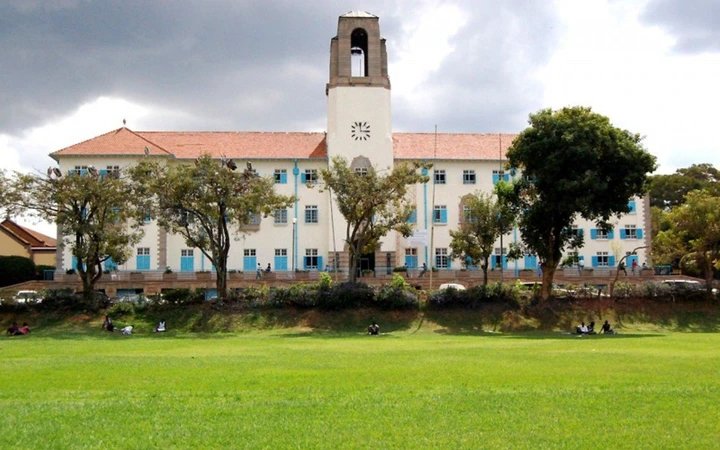

Here is the uncomfortable truth about Uganda’s best-ever UACE results: the better everyone performed, the harder it is going to be for you to get into the university course you want.
That is the quiet warning university officials are sending to the 133,291 candidates who scored the minimum two principal passes required for undergraduate admission in the 2025 Uganda Advanced Certificate of Education exams — results released by the Uganda National Examinations Board (UNEB) last Friday.
Yes, you qualified. But so did tens of thousands more people than last year. And the number of university slots has not grown at the same pace.
The Numbers Tell The Story
Of the 165,172 candidates who sat the 2025 UACE exams, a striking 133,291 — that is 68.6 percent — met the minimum entry requirement of two principal passes for university. That figure represents a 3.1 percent jump from the 92,273 who qualified the previous year.
Breaking it down further, UNEB data shows that 68,906 candidates (41.7 percent) secured three principal passes, up from 54,334 (38.6 percent) in 2024. Another 44,385 candidates (26.9 percent) got two principal passes, compared to 37,935 in 2024. An impressive 98.9 percent of all candidates qualified for the UACE certificate.
UNEB Executive Secretary Daniel Odongo described the performance as consistent with a broader trend of improvement and a significant increase in the number of students who sat the examination this year. He noted that an extra 21,018 university places would need to be made available to absorb the additional qualifying candidates.
For diploma-level programmes at tertiary institutions — where one principal pass and two subsidiaries are considered — the qualifying pool widens even further, with 145,129 candidates (87.9 percent) eligible.
Better Results, Tighter Cut-Off Points
For students eyeing competitive programmes like Law, Medicine, and Engineering, the improved national performance comes with a catch.
Makerere University Academic Registrar Prof Mukadasi Buyinza did not mince words. Cut-off points, he explained, will inevitably rise because more qualified students are competing for the same limited number of slots.
“We look at how many have applied, and we usually have a limit per programme. If the thread cuts you out, you are not admitted,†he said.
He also moved to clear up a concern that had been circulating in the media, clarifying that Makerere is not reducing its admissions intake as had been reported. “We are maintaining the usual figure,†he said — which stands at approximately 14,000 students admitted annually.
What is changing, however, is the postgraduate landscape. Makerere’s current total student population sits at around 35,000, including roughly 5,000 postgraduate students. The university’s strategic plan targets doubling Masters and PhD students to about 10,000 by 2030, with postgraduate enrolment expected to hit at least 30 percent of the total student population.
“Our target is to strengthen research output and churn out more specialists who can drive Uganda’s development,†Prof Buyinza added.
Miss Makerere? There Are Other Options
For the many candidates who will not make Makerere’s cut-off points despite qualifying, officials are pointing to Uganda’s growing network of public universities as a safety net.
With 12 public universities now operating across the country — including Gulu, Mbarara, Busitema, Muni, and Kyambogo — there are more options than ever before for students who miss out on their first-choice institution.
Busitema University’s Public Relations Officer, Ms Peace Karungi, explained the dynamic clearly. “Usually, the cut-off points are determined solely by two factors: the students’ performance that year and the capacity of an institution. If the performance was better, it automatically means the cut-off points will be tight,†she said.
In short — a good year for students nationally is a competitive year for every individual student.
If you are among the 133,291 who qualified for university this year, congratulations — your result is genuinely worth celebrating. But as you prepare to apply, here is what you need to keep in mind:
The cut-off points for competitive programmes at top public universities will almost certainly be higher than last year. Apply strategically. Consider your programme choices carefully. And do not rule out other public universities — they are growing, they are accredited, and they may well offer the same degree that Makerere does.
The results were better. The competition just got stiffer. Plan accordingly.


 The women who have been in King Oyo’s life
Ultimate Uganda
The women who have been in King Oyo’s life
Ultimate Uganda
 Ex Kagame Guard Commander Tom Byabagamba Dies in Rwandan Prison After 12 Years
Ultimate Uganda
Ex Kagame Guard Commander Tom Byabagamba Dies in Rwandan Prison After 12 Years
Ultimate Uganda
 Government begins salary payments for public sector workers – Reform Committee
Ultimate Uganda
Government begins salary payments for public sector workers – Reform Committee
Ultimate Uganda
 Temangalo land: NSSF, Nzenyi reach agreement
Ultimate Uganda
Temangalo land: NSSF, Nzenyi reach agreement
Ultimate Uganda
0 Comments