
President Museveni’s victory and the gradual fragmentation of Uganda’s multiparty system
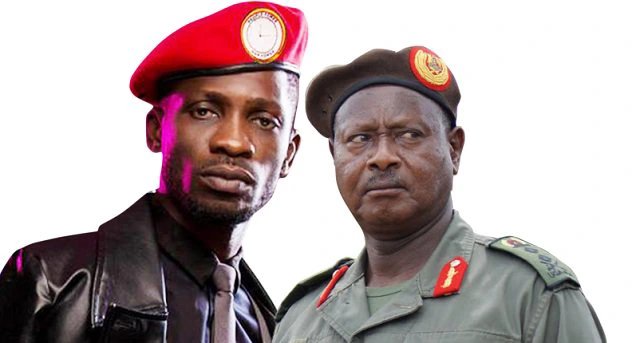

The presidential race was widely viewed as a two-horse contest between Museveni and Robert Kyagulanyi (Bobi Wine), but the semblance of openness was tempered by the heavy policing of the political field.
COMMENT | DR JUDE KAGORO | The 2026 general election in Uganda followed a familiar pattern. As in the previous six elections under President Yoweri Museveni, the incumbent again emerged victorious. Yet interpreting the result simply as another reaffirmation of the ruling National Resistance Movement (NRM) misses a deeper political dynamic. The election exposed not only Museveni’s enduring dominance but also a widening gap between his personal political capital and the institutional strength of his party, unfolding alongside a steadily narrowing space for political pluralism and opposition contestation.
Across Uganda, despite opposition parties and many observers rejecting the election results as rigged, the official outcome gave Museveni 71.5 percent of the presidential vote—up sharply from 59 percent in 2021—while voters simultaneously elected opposition and independent candidates to Parliament, reducing the NRM’s representation from 336 of 529 seats (63.5 percent) to roughly 300 (about 56 percent). This split-ticket outcome highlights a widening gap between presidential dominance and party strength.
President Museveni’s long grip on power reflects a political system that has become increasingly centered on the presidency. After forty years in office, Museveni has consolidated several forms of political influence—historical legitimacy from the bush war that brought him to power in 1986, the symbolic authority of the warrior within a militarized political habitus, and a far-reaching network of patronage. These sources of power have reinforced a presidential style of governance in which military and political loyalty converge around the person of the president rather than the ruling NRM party itself.
This concentration of authority has turned Uganda’s political landscape into one defined by entrenched presidentialism. Politicians across the political divide now work within this reality, choosing to cooperate with the presidency at the national level while focusing on their own electoral strategies in parliamentary and local contests. The result is a political field where survival often depends less on party structures and more on personal alignment with the president’s power.
Money played a critical role in the elections. Voters anticipated cash handouts, while candidates prepared substantial financial resources for what has effectively become a money-giving battle—a contest not over ideas or policies but over who can spend more. Political capital has increasingly taken on a monetary form. Alongside the alignment with the presidency, success depends on the conversion of economic resources into symbolic legitimacy through material display.
A few days before the January elections, I travelled across Uganda to observe campaign dynamics and public sentiment. Conversations with parliamentary candidates, security officials, local leaders, and ordinary voters revealed a political order less governed by ideology than by webs of interdependence and long-habituated power relations.
One striking observation was the widespread perception that the presidential contest had already been decided. Across much of the country, Museveni’s victory was considered inevitable, shifting competition toward parliamentary races and local contests. Buganda stood out as a tense exception. Here, the political field was charged with intense rivalry, a continuation of the stiff competition that had cost the NRM heavily in 2021.
That prior defeat appeared to have attracted much tighter control and, in turn, more violence. The competition itself was reflected through sporadic clashes, voter intimidation, and several confusing incidents surrounding vote declarations. In some districts, delays in Electoral Commission announcements created anxiety; in a few, results were issued and later overturned, leaving candidates and voters confused. These chaotic episodes underscored how increased competitiveness in Buganda amplified coercion and procedural manipulation. The presidential race was widely viewed as a two-horse contest between Museveni and Robert Kyagulanyi (Bobi Wine), but the semblance of openness was tempered by the heavy policing of the political field.
Uganda’s politics has become increasingly presidentialized. The gap is sharply visible in northern Uganda. In Acholi, Museveni secured roughly 82 percent of the presidential vote across nine districts—one of his strongest national showings—yet the NRM won only 60 percent of parliamentary seats, with the remainder going to opposition parties and independents. A similar pattern appeared in neighboring Lango, where Museveni obtained 81.4 percent of the presidential vote while the NRM won just 18 of the sub-region’s 31 parliamentary seats (60 percent), and the Uganda People’s Congress (UPC) mobilised support to secure eleven constituencies.
These results expose a growing disjunction between presidential appeal and party structure. Even where Museveni dominates the ballot, his support does not automatically flow down to NRM candidates. In essence, some opposition politicians have learned to “play in the political fieldâ€â€”strategically supporting the president to retain access to resources and protection, while organizing independently for parliamentary and local contests. In Uganda’s current configuration of power, it is often safer to back the president and mobilize separately than to confront him directly—since challenging his authority can result in the loss of political space, state favour, or even personal security. This reflects a prototype neopatrimonial logic—align upward for safety, diversify downward for survival.
Even regions that have benefited heavily from state investment do not fully translate development into political consolidation. Bunyoro illustrates this paradox. Large-scale projects—including oil sector development, new road networks, Hoima International Airport, expanding industrial infrastructure, an international football stadium, and preparations for the 2027 Africa Cup of Nations—have turned the region into one of Uganda’s most strategic economic corridors. Yet this transformation has not produced uniform political loyalty. While Museveni still secured around 80 percent of the presidential vote across Bunyoro, opposition visibility is growing in urban centres. In Hoima City, Bobi Wine scored 31 percent of the vote—an unexpectedly strong performance in what had long been considered a secure NRM stronghold.
Although multiparty competition re-emerged in 2005, parliamentary races remain far more about access, visibility, money, and local brokerage than ideology. Candidates operate in a political field where symbolic and social capitals—trust, reputation, and redistributive capacity—overpower programmatic platforms.
This pattern was particularly evident in Acholi and Lango. The Democratic Party’s organization under Norbert Mao remained active in Acholi, though his position blurred boundaries: serving as a cabinet minister under Museveni yet running on a DP ticket to defeat the NRM candidate. His victory created confusion over the meaning of party identity, but also revealed the flexibility of political actors within this field of overlapping allegiances.
In Tooro, which in all previous elections had delivered 100 percent NRM parliamentary representation, the 2026 elections produced three independent MPs. This marked a historic erosion of one-party dominance and signaled the spread of personality-based legitimacy even in the NRM’s core areas.
These trends create what might be described as dual-track politics: national loyalty to the presidency paired with localized, transactional rivalry. The blurred boundaries of competition were vividly demonstrated in Busoga when senior NRM figure and former Speaker of Parliament Rebecca Kadaga publicly met and congratulated the NUP candidates who won. That such a gesture could occur openly from a leading figure of the ruling party underscores how personal and regional figurations now override rigid partisan identities.
Internal rivalries within the ruling establishment underscore the growing personalization of political competition. In Lira City (Lango), serving cabinet ministers Jane Ruth Aceng and Betty Amongi contested the same parliamentary seat while each mobilized support for Museveni’s presidential campaign, with their respective camps striving to outdo one another in demonstrating stronger loyalty and mobilization capacity for the president.
At the same time, new political networks have emerged within the ruling NRM itself. The Patriotic League of Uganda (PLU), led by Gen. Muhoozi Kainerugaba, President Museveni’s son and Chief of Defence Forces, has become an increasingly influential mobilizing platform, particularly among younger voters. Candidates associated with the PLU succeeded in dislodging entrenched NRM figures such as Theodore Ssekikubo in Rwemiyaga County in Buganda and Barnabas Tinkasimire in Buyaga West County in Bunyoro, in some cases triggering violent intra-NRM clashes that exposed deepening tensions within the ruling camp. While the PLU reinforces the broader pro-government coalition and renews elite legitimacy around the Museveni family, it simultaneously bypasses and weakens the NRM’s institutional structures. Loyalty to the presidency is increasingly expressed through parallel networks rather than through the party itself.
Perhaps the most troubling development from the election was the sharp decline in voter participation. National turnout fell to 52.5 percent—the lowest since Museveni came to power—leaving more than ten million registered voters absent from the polls. This represents a significant blow to Uganda’s democratic project. With over 10 million registered voters effectively disengaged, it is impossible to know how the outcome might have differed had these citizens participated. Such withdrawal might be reflecting fatigue within an entrenched political configuration—citizens adapting to a system where outcomes appear predictable and electoral participation increasingly feels hollow or transactional rather than meaningful political expression.
This sense of democratic contraction is reinforced by developments surrounding the leading opposition party, NUP. The party leader’s flight into exile and the continued occupation of his home by security forces signal troubling limits to political tolerance. Such actions project a clear message to both supporters and rivals that serious challenges to the ruling order carry significant personal risks, reinforcing a climate of caution and fear rather than open political competition.
Museveni’s re-election underscores a broader trend—the consolidation of presidential authority alongside the gradual erosion of the ruling party cohesion and multiparty politics in general. At the same time, the political field has narrowed through the curtailment of opposition actors and the expanding use of security forces to manage dissent, reinforcing a climate in which political competition is tightly controlled. Uganda’s democratic future will depend less on electoral outcomes than on whether its political system can evolve from personalized rule and coercive oversight toward institutionalized competition.


 Museveni steps into Mulago land dispute
Ultimate Uganda
Museveni steps into Mulago land dispute
Ultimate Uganda
 HIV Alarm in Kampala: 211 New Infections Weekly Linked to Massage Parlours, Spas & Lodges
Ultimate Uganda
HIV Alarm in Kampala: 211 New Infections Weekly Linked to Massage Parlours, Spas & Lodges
Ultimate Uganda
 Uganda: ‘Delayed land acquisition stalling road works’
Ultimate Uganda
Uganda: ‘Delayed land acquisition stalling road works’
Ultimate Uganda
 Fearless Former Minister Criticizes M7 For Always Betraying Sr Colleagues While Claiming to Be Fighting Corruption, Urges Barugahara & Nameere to Watch their Back
Ultimate Uganda
Fearless Former Minister Criticizes M7 For Always Betraying Sr Colleagues While Claiming to Be Fighting Corruption, Urges Barugahara & Nameere to Watch their Back
Ultimate Uganda
0 Comments