
US Navy giant 'Tripoli' set to enter warzone, may break Strait of Hormuz chokehold
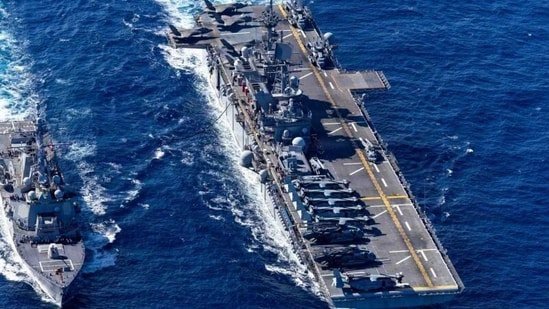

USS Tripoli provides US an opportunity to put troops on ground to secure the Strait of Hormuz, key waterway choked since the conflict began on Feb 28.
The direction that on-going US-Israel-Iran war will take will be decided next week when 50,000 ton USS Tripoli, amphibious assault ship, carrying over 2000 marines of the 31st Marine Expeditionary Unit (MEU) enters the war theatre in north Arabian sea.
The huge ship with top of the line fighters on board is currently south of Sri Lanka in south Indian Ocean and is on way to force multiply the USS Abraham Lincoln carrier strike group in Gulf of Oman.
The huge ship with top of the line fighters on board is currently south of Sri Lanka in south Indian Ocean and is on way to force multiply the USS Abraham Lincoln carrier strike group in Gulf of Oman.
The huge ship with top of the line fighters on board is currently south of Sri Lanka in south Indian Ocean and is on way to force multiply the USS Abraham Lincoln carrier strike group in Gulf of Oman. USS Tripoli is 844 feet long (USS Ford, the largest war ship in the world is 1106 feet long) with F-35, MV-22 Osprey and MH60S Seahawk Helicopters on board. It is accompanied with landing ship decks (LSDs) for deploying Marines on enemy land. The battleship is expected to enter the war theatre around March 22-23.
US President Trump has left the window open on whether he will send troops to Iran. “ No, I’m not putting troops anywhere …If I were, I certainly would not tell you, but I am not putting troops,†President Trump told reporters last night. Given the state of war and fluid situation, the US will not announce before putting troops on ground as it all depends on the evolving war and the escalation coming from Iran towards Gulf nations. Track latest in US-Iran war here
USS Tripoli to be used for opening Hormuz?
However, there is a strong possibility that USS Tripoli may be used to open up the Strait of Hormuz to international oil shipping and ensure freedom of navigation in the restricted channel of water. The Strait of Hormuz is mere 33 kilometers wide at its narrowest point and the geography of the area suits Iran in its effort to target shipping and engineer oil crisis.
While it is very difficult to predict what US war planners will do next under mercurial US President, it is definitely in interest of global community that freedom of navigation is allowed in Persian Gulf or else the oil prices and petroleum product prices will go into stratosphere. Even though it may seem implausible that the US warships enter Persian Gulf at a time when Iran is still firing ballistic missiles, drones and using attack craft to target shipping, the only way oil traffic can be restored is perhaps having an international coalition under UN flag for free navigation in the Strait of Hormuz.
The other option could be that US lands its marine expeditionary units on Kharg Island of Iran and ensure free navigation. This maybe one of the plans as US has targeted Iranian navy and missile/drone/ artillery batteries on the coast of Persian Gulf. The US has already decimated Iranian military positions on Kharg islands and may use the stored crude on the island to alleviate global energy crisis.
While India is talking to all the players in the Gulf Region and Europe to find an early solution to end the war, it has already ramped up its indigenous LPG production to nearly 38 per cent to ensure that the domestic and industrial consumers are not hit and the gap is bridged to a large extent.
With Iranian regime still showing no signs of capitulating to the US offensive, the only best bet is to push Tehran’s domination of the Straits of Hormuz and Persian Gulf through force. A fully blown economic crisis triggered off by the closure of Straits of Hormuz is not in anyone’s interest except Iran.


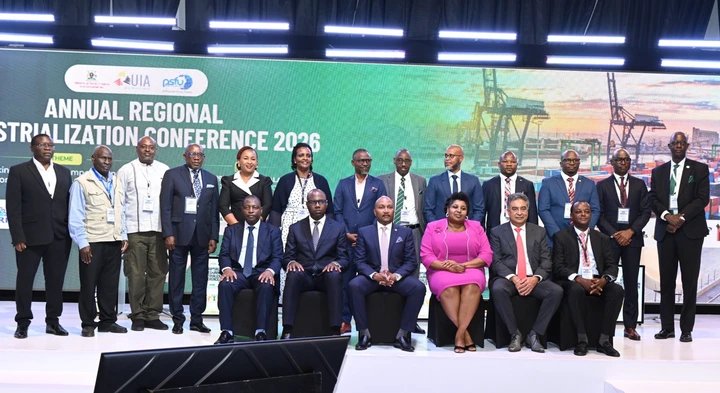 DRC opposition urges Tshisekedi to abandon constitutional changes
Ultimate Uganda
DRC opposition urges Tshisekedi to abandon constitutional changes
Ultimate Uganda
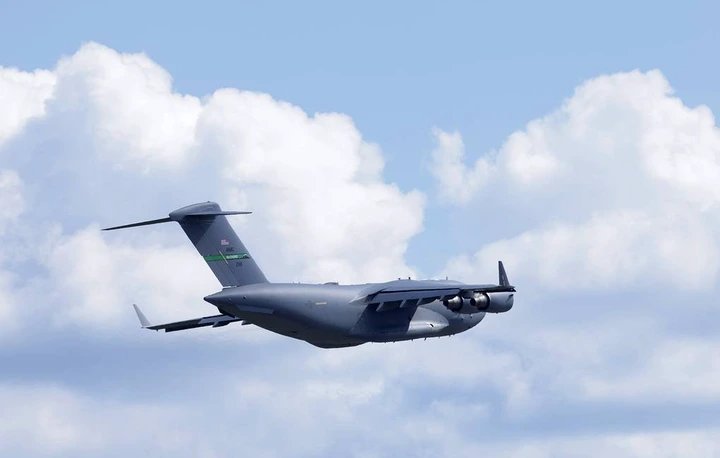 US military transport plane lands in Moscow
Ultimate Uganda
US military transport plane lands in Moscow
Ultimate Uganda
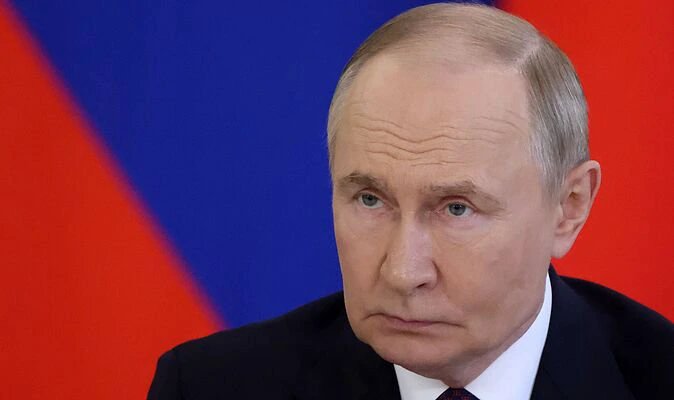 Putin puppet slaps UK with terrifying 2-word warning over drone factories
Ultimate Uganda
Putin puppet slaps UK with terrifying 2-word warning over drone factories
Ultimate Uganda
 China develops hypersonic weapon to hunt US command aircraft thousands of miles away
Ultimate Uganda
China develops hypersonic weapon to hunt US command aircraft thousands of miles away
Ultimate Uganda
0 Comments