
Uganda’s First Oil: A Defining Countdown to Economic Transformation and Energy Sovereignty

KAMPALA – As every second, minute, hour, day, and month winds down, Uganda edges closer to its promise—the dawn of oil production.
From drilling and completing wells to laying thousands of kilometres of pipeline, Uganda’s progress is unmistakable. Supporting infrastructure, central processing facilities, reservoir modelling, land acquisition, socio?economic empowerment of Project?Affected Persons, biodiversity and sustainability plans across the Albertine all reflect more than regulatory compliance—they are the building blocks of a generational shift.
Uganda is on track to achieve First Oil this year. The developments undertaken over the past two decades are premised on strong fundamentals that ensure project viability for the next 30 to 50 years. Uganda’s dual strategy of developing both a crude export pipeline and a refinery will not only maximise the value of the crude but also set in motion a transformative agenda that will drive the country’s long?term economic growth and development.
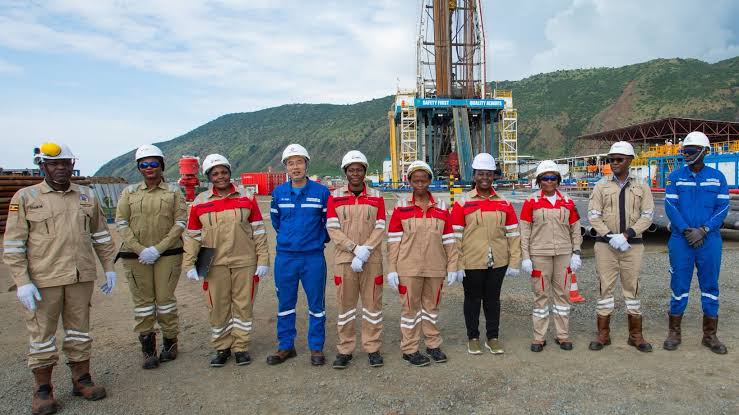
To date, each of the three major flagship projects—Tilenga, Kingfisher, and the East African Crude Oil Pipeline (EACOP), is achieving critical milestones that bring Uganda closer to First Oil. The Tilenga Project, spanning the northern and southern banks of the Nile in Nwoya and Buliisa districts and expected to produce 190,000 barrels of crude per day at peak, has progressed to 67% completion. More than 190 wells have been drilled, surpassing the 170 wells required for First Oil. The project also includes 170 km of buried flowlines, and a 96 km feeder pipeline that will deliver crude from the Central Processing Facility (CPF) in Buliisa to Hoima, a Lake Water Abstraction System, and other infrastructure such as the Victoria Nile Crossing, Bugungu Airstrip, Support bases, camps, and access roads.
The Kingfisher Project, expected to produce 40,000 barrels of crude per day, has reached 76.5% completion. A total of 19 wells have been drilled, exceeding the 15 wells required for First Oil. The Central Processing Facility and associated infrastructure, including the 48 km feeder line to the Hoima Export Hub, are nearing completion and remain on schedule for the First Oil milestone.
The EACOP Project—Uganda’s 1,443 km export conduit transporting crude from Hoima to the Tanga Port in Tanzania—continues to register strong progress and now stands at an 82% completion rate. China Petroleum Pipeline Engineering Company (CPP) and its subcontractors are advancing work on above?ground installations (AGIs), the marine terminal and jetty, pipeline construction, thermal insulation, and camp development. More than 1,350 km of pipe has been welded, strung, and is currently being laid.
Pre?commissioning tests at the pump stations have commenced. Hydrostatic testing of the tanks at the Marine Storage Terminal in Tanzania has been completed, and hydro tests on multiple pipeline sections in both Tanzania and Uganda are now underway.
One would suspect that the current conflict involving Iran in the Middle East would negatively impact Uganda’s projects. However, despite global shipping disruptions, the bulk of the materials required for First Oil are already in the country, with only a limited amount still in transit—mainly from Asia. As such, the conflict is expected to have minimal impact on deliveries and First Oil timelines. With EACOP financing secured, potential funding gaps are no longer a concern.
Uganda’s projects are low?cost, low?emission, and high?value—both internationally and locally. The country’s dual development strategy ensures maximum value from our resources. Uganda’s fiscal regime is also flexible enough to capture potential upsides in international oil prices, exemplified by the windfall tax linked to price increases.
This is more than a countdown to production; it is a countdown to transformation. First Oil represents new revenue streams, new industries, expanded infrastructure, and opportunities for millions of Ugandans—spanning energy, logistics, manufacturing, services, and technology. It signals Uganda’s entry into the global energy arena, and is exhibit ‘A’ that the tenfold growth is possible.


 Starlink goes live in Uganda; price comparisons against MTN, Airtel
Ultimate Uganda
Starlink goes live in Uganda; price comparisons against MTN, Airtel
Ultimate Uganda
 NSSF sets September 24 for Annual Members Meeting as savers await interest rate declaration
Ultimate Uganda
NSSF sets September 24 for Annual Members Meeting as savers await interest rate declaration
Ultimate Uganda
 Boda boda riders launch e-commerce, digital loans platform
Ultimate Uganda
Boda boda riders launch e-commerce, digital loans platform
Ultimate Uganda
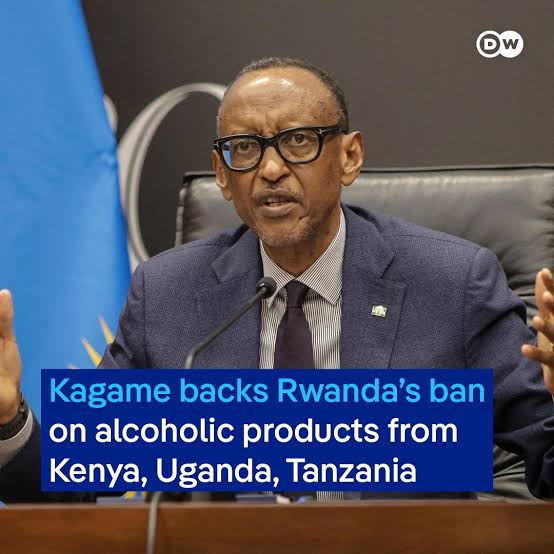 Rwanda: We Cannot Sit and Watch As Illicit Alcohol Kills People - Kagame
Ultimate Uganda
Rwanda: We Cannot Sit and Watch As Illicit Alcohol Kills People - Kagame
Ultimate Uganda
0 Comments