
Uganda’s impeding debt crisis
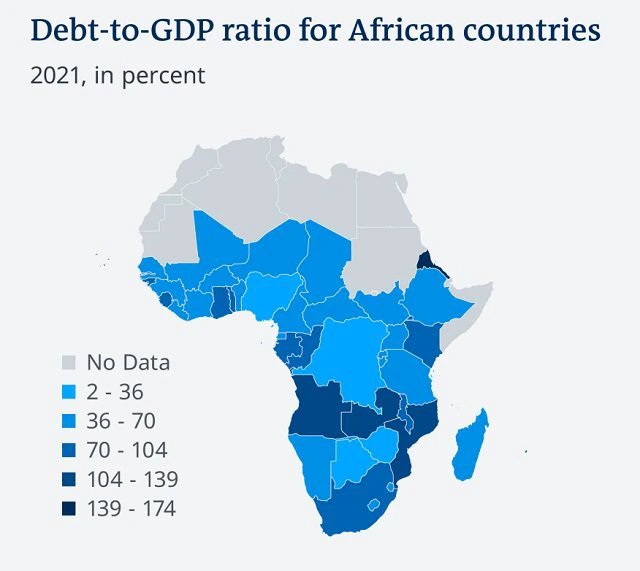

In a recent podcast of Bad Natives, I argued that there is a real risk of Uganda defaulting on her domestic bonds in two to three years. It makes little sense to judge a country’s debt sustainability using the debt-to-GDP ratio. GDP is not a resource of government which it can use to pay creditors. The resource government uses to pay creditors is largely tax revenues. Therefore, the most appropriate measure of the ability of a government to service its debt is the ratio of debt service to tax revenues. I said that in Uganda, 46% of government revenues go to service debt.
The podcast is hosted by the legendary Charles Onyango-Obbo and Robert Kabushenga. It is positioned to court an international audience. So, many offshore investors in Uganda’s bonds got jittery and began making calls. Their brokers then contacted me, saying I am scaring the market. The ratio of Uganda’s debt service to tax revenues, they argued, is 30%, not 46%, which is technically correct. Besides, they said, a country cannot default on bonds issued in its own currency since it can always print money and pay. Again, this is technically correct, but that comes with inflation.
Although only 30% of Uganda government revenues go to service its debts, this figure is misleading. Our country has a debt it rolls over every year worth Shs 11 trillion. Basically, this means that every year, the government borrows from Mukasa to pay Okello. This works only because people have confidence in the government’s ability to pay – so they are willing to keep buying its bonds. If one studies debt defaults by governments across time and space, rarely do countries wake up and declare a moratorium.
The first step to default is fiscal irresponsibility, i.e., the government spends much more than it earns from tax revenues. Therefore, it keeps borrowing to sustain high fiscal deficits. As the debt soars, the government doesn’t adjust its spending habits to reflect its fiscal position. The party can keep going until there is an endogenous or exogenous shock to the economy. This is called the “black swan†– the impact of a big and unexpected event.
Think of COVID, the Russia-Ukraine war or the current war between Israel and America against Iran. When such events cause increases in costs such as fuel or a sharp decline in government revenues, it undermines public confidence in the government’s ability to service its debt. When investors cannot buy its bonds, government cannot roll over its debt. Default has arrived. In saying debt service consumes 46% of our revenues, I meant that in the event government cannot roll over that Shs 11 trillion debt, the cost of debt service would soar to 46% of revenues.
By 2019, Uganda’s debt position was good. The country’s total public debt was $10 billions of which $7.2 billions (68%) was foreign debt borrowed at highly concessionary terms. Meanwhile, domestic debt was $3.3 billions (32%). Our country was spending Shs 800 billion to service this foreign debt and Shs 2.1 trillion to service domestic debt. Why? Because domestic debt carries high interest costs. Therefore, even though it was only 32% of total debt, its service consumed 60 of total debt payments. I was vocal in defending the government’s position in this column.
In 2020, Uganda suffered the Covid shock, leading to slowed economic growth and even lower tax revenues. Instead of adjusting its spending, the first signs of fiscal irresponsibility set in. Government increased spending, borrowing expensive short-term money from abroad and even more expensive money domestically. But the real change was in domestic borrowing, which started growing like flowers in June. By December 2022, I was getting alarmed and advised government to control her appetite for spending. I warned that our country was on the highway to Ghana, which had declared a moratorium that year and went into default even on domestic bonds.
What happened? The government invested $600m in Uganda Airlines and was spending Shs 120 billion a year to subsidize it. It poured Shs 1.4 trillion into Lubowa Hospital, Shs 735 billion into a pharmaceutical plant, Shs 560 billion into Atiak Sugar factory, Shs 200 billion into Roko, another Shs 320 billion into a coffee factory in Ntungamo. It increased salaries for science teachers by 400% and those of nurses, generals in the military, judges etc by 300 to 500% and began spending Shs 1.2 trillion annually on the Parish Development Model (PDM). All this was done not because tax revenues increased but because government was borrowing.
Consequently, in the six years between 2019 and 2025, total debt tripled from $10 billion to $31.5 billion. Despite this bad position, the government is not putting the brakes on borrowing and spending but accelerating. Three weeks ago, the cabinet passed a resolution giving the aforementioned pharmaceutical plant another $430 million and another $79 to the coffee factory in Ntungamo, and last year it bought shares in Fine Spinners at Shs 69 billion. Then it borrowed $280m to take back Umeme to government. This financial year alone, government read a budget of Shs 72 trillion and then went back and got a supplementary of Shs 8 trillion. The supplementary will be financed 100% by new borrowing from abroad and in the country.
Now the govenment needs $600m as operating expenses to correct the problems of Uganda Airlines and another $400m to buy ten new aircraft. These new aircraft need 120 new pilots and many more crew. For that, Uganda Airlines will have high operating costs in the absence of a large customer base. Meanwhile, the Americans and Europeans have stopped funding our mission in Somalia. Although the army high command recently passed a resolution to withdraw from that troubled country, we are still stuck there. Why? Because the day we exit, Al Shabab will take over Mogadishu, just like the Taliban against the USA in Afghanistan in 2021.
International lenders with concessionary loans have been reducing because Western governments that used to give us cheap money are cutting spending. This has led our government to borrow more and expensively from both the external and domestic markets. As a result, our domestic debt has grown from 32% of total debt in 2020 to 52%, making debt service very expensive. Remember that in 2019, while domestic debt was 32% of total debt, it consumed 60% of total debt service. If we add domestic arrears of Shs 8.4 trillion and contingent liabilities of about Shs 300 billion, Uganda’s fiscal position is perilous, to say the least.


 Starlink goes live in Uganda; price comparisons against MTN, Airtel
Ultimate Uganda
Starlink goes live in Uganda; price comparisons against MTN, Airtel
Ultimate Uganda
 NSSF sets September 24 for Annual Members Meeting as savers await interest rate declaration
Ultimate Uganda
NSSF sets September 24 for Annual Members Meeting as savers await interest rate declaration
Ultimate Uganda
 Boda boda riders launch e-commerce, digital loans platform
Ultimate Uganda
Boda boda riders launch e-commerce, digital loans platform
Ultimate Uganda
 Rwanda: We Cannot Sit and Watch As Illicit Alcohol Kills People - Kagame
Ultimate Uganda
Rwanda: We Cannot Sit and Watch As Illicit Alcohol Kills People - Kagame
Ultimate Uganda
0 Comments