
Uganda tightens building controls as new law takes effect
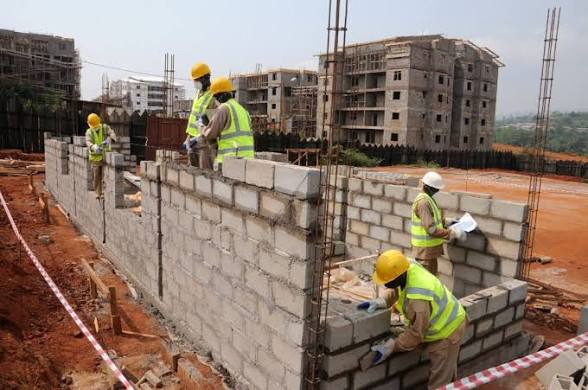

KAMPALA – Uganda has ushered in sweeping reforms in its construction sector following the enactment of the Building Control (Amendment) Act, 2026, a move aimed at strengthening oversight, improving safety standards, and curbing illegal building practices.
In a public notice, Eng. Flavia G. Bwire, Executive Secretary of the National Building Review Board (NBRB), confirmed that the amendments officially came into force on March 19, 2026, marking a significant shift in how building operations are regulated across the country.
Uganda’s construction industry has expanded rapidly in recent years, driven by urbanization, population growth, and infrastructure development. While this growth has supported economic progress, it has also exposed systemic weaknesses, including widespread non-compliance with building standards, use of unapproved construction methods, and inadequate supervision.
These gaps have, in some cases, led to building collapses, resulting in loss of life and property—prompting the government to tighten regulations.
The amendments reinforce the role of the National Building Review Board, the central regulatory body under the Ministry of Works and Transport. Among the major changes is a restructuring of the Board’s composition, reducing its membership from 16 to 9 to enhance efficiency and corporate governance.
The Board’s mandate has also been expanded. It can now hear and determine all building-related complaints—not just those linked to permit approvals—and develop capacity-building programs for stakeholders in the construction sector.
Additionally, the NBRB has been granted stronger enforcement powers, including the authority to issue stop or evacuation orders on unsafe structures, impose penalties, access construction sites, and refer cases to the police or professional bodies where necessary.
At the local level, Building Committees have also undergone major restructuring. Their membership has been reduced from 11 to 5, with a stronger focus on technical expertise. New roles, including Chairperson and Secretary, have been formally introduced, and members will now be appointed by Chief Administrative Officers or Town Clerks.
To improve accountability, Building Committees are now required to submit quarterly reports to the NBRB.
Their enforcement powers have also been strengthened, allowing them not only to order demolition of illegal structures but also to execute such actions where developers fail to comply.
The law introduces clearer procedures for building permit applications. Developers whose applications are deferred now have up to 12 months to submit the required documentation without incurring additional fees.
It also clarifies timelines for construction: projects must commence within 12 months of permit issuance and be completed within 60 months, unless an extension is formally granted.
A key highlight of the amendments is the compulsory application of the National Building Code in all construction activities. Building Committees will rely on these standards when reviewing plans to ensure safety and sustainability.
At the same time, the law encourages innovation by allowing approval of unconventional building technologies and materials, provided they undergo a formal evaluation and gazetting process.
Tougher Penalties Introduced
To deter violations, the law significantly increases penalties for various offences. Building without a permit, using prohibited construction methods, or continuing works after permit expiry now attracts heavier fines calculated per square metre of the structure, alongside possible imprisonment.
Liability provisions have also been expanded to cover accidents occurring not only on construction sites but also within completed buildings. Penalties for negligence have been raised to a maximum fine of UGX 10 million, up from UGX 5.6 million, or imprisonment of up to 12 years.
The amendments introduce a structured complaints resolution system. Complaints must first be filed with local authorities—specifically the Chief Administrative Officer or Town Clerk—before escalation to the NBRB if unresolved.
Similarly, appeals related to building permits must follow this hierarchy, eliminating direct appeals to the Board without prior local intervention.
The government is now set to develop detailed regulations to operationalize the amendments. These will cover procedures for demolition, approval of new technologies, enforcement of penalties, and complaint resolution mechanisms.
The National Building Code will also be revised to align with the updated law.
Eng. Bwire emphasized that the reforms are designed to promote safety, order, and accountability in Uganda’s construction sector. She urged developers, contractors, professionals, and the general public to comply fully with the law and adhere to approved building standards.


 Government will not gazette Kijanangoma as King of Tooro for now - Attorney General insists
Ultimate Uganda
Government will not gazette Kijanangoma as King of Tooro for now - Attorney General insists
Ultimate Uganda
 King Oyo’s Body to Arrive Thursday
Ultimate Uganda
King Oyo’s Body to Arrive Thursday
Ultimate Uganda
 Besigye, Lukwago expected to meet Gen. Salim Saleh today at Kapeeke
Ultimate Uganda
Besigye, Lukwago expected to meet Gen. Salim Saleh today at Kapeeke
Ultimate Uganda
 Rwabwogo Advised to ‘Eat His Bishop’ As MK Prepares to Enter State H’se: PREZ MUSEVENI ON HIS WAY OUT
Ultimate Uganda
Rwabwogo Advised to ‘Eat His Bishop’ As MK Prepares to Enter State H’se: PREZ MUSEVENI ON HIS WAY OUT
Ultimate Uganda
0 Comments