
Zzimwe’s son, daughter face arrest over Shs 612m loan

In December 2012, businessman Arvind Patel sued Zzimwe Enterprises and its directors, Paul Kasagga and Josephine Kasagga, demanding Shs 612 million.
Paul and Josephine are the children of prominent businessman Andrew Kasagga, the founder of Zzimwe Enterprises, who died in 2010.
Patel told the court the money was a friendly loan that had not been paid back.
Court records show that Zzimwe Enterprises and the Kasaggas were served with the lawsuit but did not respond or defend themselves.
Because of this, the court ruled in Patel’s favour in January 2013.
In April 2013, the court formally confirmed that Zzimwe Enterprises, Paul Kasagga, and Josephine Kasaga owed the money.
Patel also asked for legal costs, which were later fixed at Shs 51 million, bringing the total debt to Shs 663 million.
But the money was never paid.
Instead, the case dragged on for years as the Kasaggas kept returning to court, trying to block the payment or cancel the judgment. The judge noted that they filed several applications but did not follow through with them.
At one point, one of their cases was even closed because they did not take action.
Meanwhile, Patel kept trying to recover his money. As far back as 2014, he had already asked the court to issue a warrant of arrest against the Kasaggas to force payment.
The back-and-forth continued until 2023, when Patel made another attempt to enforce the judgment. This led to a fresh warrant of arrest being issued on September 29, 2025.
That warrant meant Paul Kasagga and Josephine Kasagga were at risk of being arrested and possibly detained for failing to pay the debt.
This is what pushed them back to court again.
They argued that the arrest order was unfair and illegal. Their lawyers from Kavuma Kabenge & Co Advocates told the court that Patel had skipped an important step.
Before someone can be arrested over a debt, the law requires that they be first given a formal notice asking them to explain why they have not paid. This is called a Notice to Show Cause.
The Kasaggas said they were never given this notice.
They also argued that too much time had passed since the 2013 judgment, saying the law only allows such enforcement within 12 years.
On the other side, Patel, through his lawyers from Lipton Advocates, insisted that everything had been done properly. He said the Kasaggas were aware of the case from the start but chose to ignore it.
He also told the court that they had spent years filing applications that delayed the process.
Justice Patience Rubagumya agreed with Patel on the issue of time.
The delays, she said, were largely caused by the Kasaggas themselves.
“It is evident that [Patel] did not sleep on his right to execute his decree but was prevented… by multiple applications,†she said.
This meant the case was still valid, even after more than 12 years.
However, Justice Rubagumya also found that Patel made a key mistake: He did not give Paul and Josephine Kasagga the required notice before asking for their arrest.
She stressed that this step is very important because it gives a person a chance to defend themselves before harsh action is taken.
“A warrant of arrest should always be preceded by a notice. This ensures no one is condemned unheard,†she said, quoting earlier decisions.
Because of this, she cancelled the arrest warrant issued against Paul and Josephine in September 2025.
This means Paul Kasagga and Josephine Kasagga will not be arrested for now.
However, she made it clear that the debt still stands and that Zzimwe Enterprises and the Kasaggas still owe Patel Shs 663 million.
Justice Rubagumya told Patel to restart the process the right way by first giving the Kasaggas the required notice.


 Government will not gazette Kijanangoma as King of Tooro for now - Attorney General insists
Ultimate Uganda
Government will not gazette Kijanangoma as King of Tooro for now - Attorney General insists
Ultimate Uganda
 King Oyo’s Body to Arrive Thursday
Ultimate Uganda
King Oyo’s Body to Arrive Thursday
Ultimate Uganda
 Besigye, Lukwago expected to meet Gen. Salim Saleh today at Kapeeke
Ultimate Uganda
Besigye, Lukwago expected to meet Gen. Salim Saleh today at Kapeeke
Ultimate Uganda
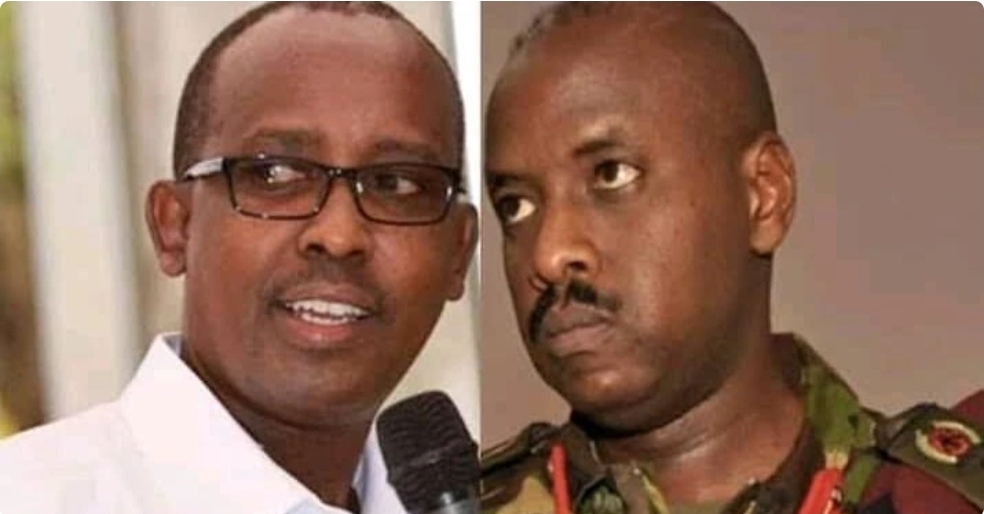 Rwabwogo Advised to ‘Eat His Bishop’ As MK Prepares to Enter State H’se: PREZ MUSEVENI ON HIS WAY OUT
Ultimate Uganda
Rwabwogo Advised to ‘Eat His Bishop’ As MK Prepares to Enter State H’se: PREZ MUSEVENI ON HIS WAY OUT
Ultimate Uganda
0 Comments