
As Museveni Takes Oath for Seventh Term, Let us Reflect on his Achievements Over the Past Six Terms

On May 12, 2026, President Museveni will take the oath of office for the seventh time as President of Uganda. He is the only president I have known since I began to understand the world.
I have grown, studied, graduated, and given birth to my child under his leadership. I cannot describe what life was like under previous regimes, even though I was born then; I only know it through stories and online sources, as told by those who experienced it.
Over the years of his rule, Museveni has contributed positively to the country, despite a few challenges that still need to be addressed—most notably corruption, which continues to hinder development.
Museveni has particularly emphasized peace and security. Today, Uganda enjoys relative stability, supported by a strong and professional army and a police force that maintains order. Before he took power, the country experienced several civil wars. During his tenure, he managed to suppress conflicts such as the Northern Uganda conflict (1986–2006), waged by the Lord’s Resistance Army (LRA) led by Joseph Kony, as well as Alice Auma’s Holy Spirit Movement.
According to those who lived through earlier regimes, security was poor. Roadblocks were common, often manned by soldiers who would stop vehicles and take whatever they wanted, sometimes robbing people in broad daylight.
At night, the situation was even worse. Soldiers reportedly knocked on people’s doors demanding money in Swahili. It is said that this contributed to some older people associating the language with insecurity.
Today, the situation is markedly different. There are no such roadblocks, and people move freely at all hours, with confidence in the protection provided by security forces.
Infrastructure development, particularly roads, is another area where Museveni’s government has made significant progress. Uganda now has over 6,000 kilometres of paved roads, connecting districts and facilitating trade and movement.
Major projects include the Kampala–Entebbe Expressway and the Kampala Northern Bypass. In contrast, past regimes had only about 1,175 to 1,500 kilometres of paved roads, with most roads being murram.
I recall my first journey to my village in Muwanga, Kiboga District, around 1997. It was a difficult experience due to dusty murram roads. Today, we enjoy tarmac roads up to Katera, where we branch off to our village.
There are also stories that travel to and from Kampala once took a week or more due to poor road conditions.
Government investment in road infrastructure has improved connectivity, eased movement, and boosted trade. It has also enhanced access to essential services such as education and healthcare.
Parents can now choose schools from across the country due to improved transport networks. I attended secondary school in Mukono District at St. Joseph’s SSS Naggalama, commuting from Entebbe thanks to better roads.
In education, the introduction of Universal Primary Education (UPE) significantly increased school enrollment, making education more accessible. Pupils are now able to express themselves in basic English.
Building on UPE, Universal Secondary Education (USE) was introduced, providing free secondary education to many students. One of my colleagues is a strong advocate of this initiative.
Primary schools have been established in every parish, and secondary schools in most sub-counties, with about 90 percent of sub-counties now having a secondary school.
The gender gap in education has also narrowed, from 70 percent boys and 30 percent girls to 55 percent boys and 45 percent girls. Additionally, girls without formal education have benefited from skilling initiatives under the President’s programmes.
More than 117 seed secondary schools have been constructed under the Uganda Intergovernmental Fiscal Transfers (UgIFT) programme.
Despite ongoing challenges, the education sector has made notable progress, contributing to a more educated population.
In the health sector, achievements are visible, although challenges remain, including concerns about shortages of medicines in public facilities.
Health Centre III facilities have been established in every sub-county, and Health Centre IV facilities in each county, improving access to healthcare services. Many HCIIIs are being upgraded to HCIVs, with the addition of surgical theatres and ambulance services.
Regional hospitals, such as Moroto Hospital, have also been upgraded to reduce congestion at Mulago National Referral Hospital.
During the COVID-19 pandemic, Uganda implemented strict measures including border closures, travel restrictions, and curfews. These efforts were credited with helping to control the spread of the virus.
Museveni was recognized internationally at the First International Post-COVID Conference for his management of the pandemic.
Efforts to combat HIV/AIDS have also recorded progress. Initiatives such as the Presidential Fast-Track Initiative, the ABC strategy (Abstinence, Be Faithful, Condom use), and the work of the Uganda AIDS Commission have contributed to improved outcomes.
Currently, 97 percent of people living with HIV are virally suppressed. National HIV prevalence among adults has declined to 4.9 percent, while new infections have reduced from 96,000 in 2010 to 37,000 in 2024.
While challenges remain to be addressed in his seventh term, these do not diminish the progress made over the years.


 Government will not gazette Kijanangoma as King of Tooro for now - Attorney General insists
Ultimate Uganda
Government will not gazette Kijanangoma as King of Tooro for now - Attorney General insists
Ultimate Uganda
 King Oyo’s Body to Arrive Thursday
Ultimate Uganda
King Oyo’s Body to Arrive Thursday
Ultimate Uganda
 Besigye, Lukwago expected to meet Gen. Salim Saleh today at Kapeeke
Ultimate Uganda
Besigye, Lukwago expected to meet Gen. Salim Saleh today at Kapeeke
Ultimate Uganda
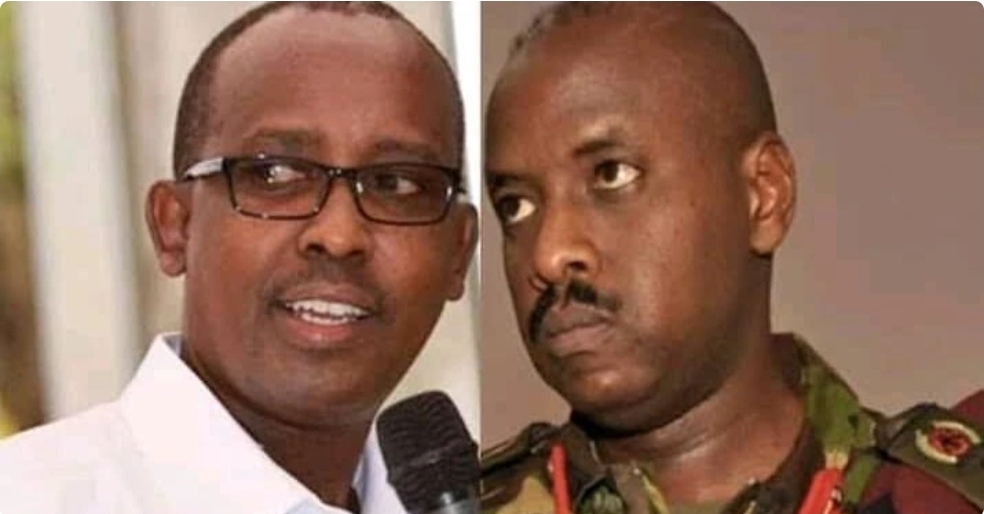 Rwabwogo Advised to ‘Eat His Bishop’ As MK Prepares to Enter State H’se: PREZ MUSEVENI ON HIS WAY OUT
Ultimate Uganda
Rwabwogo Advised to ‘Eat His Bishop’ As MK Prepares to Enter State H’se: PREZ MUSEVENI ON HIS WAY OUT
Ultimate Uganda
0 Comments