
Deferred Strength: Uganda Clays’ Fragile Recovery and the UGX 23.6b NSSF Exposure:
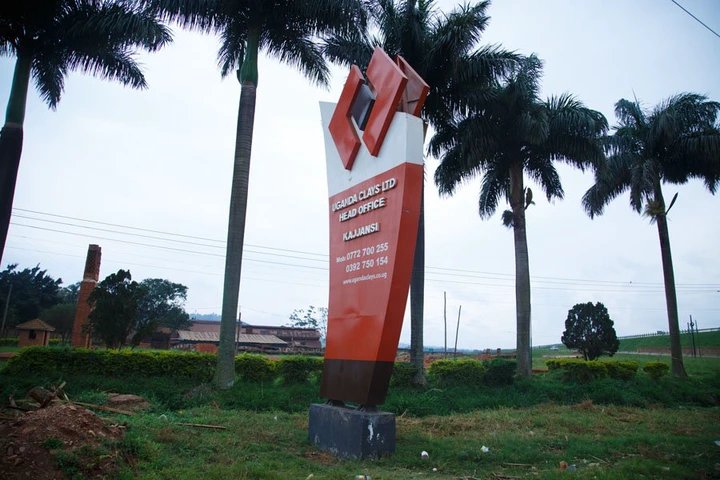

Uganda Clays may have bought time, but not certainty. Beneath the return to profit lies a balance sheet still under strain, propped up by deferred obligations and a partially unsecured NSSF loan. Its recovery, while visible, remains fragile. The real test will come when repayments begin, when improved performance must translate into real cash strength, and optimism is replaced by hard financial accountability.
Uganda Clays has returned to profit, but its recovery remains fragile. Thin margins, weak cash flows, and a UGX 23.6 billion NSSF loan, partly unsecured, highlight underlying risks. As repayments loom in 2028, the company’s ability to sustain growth and meet its obligations will be the true measure of its turnaround.
Uganda Clays has returned to profit, but its recovery remains fragile. Thin margins, weak cash flows, and a UGX 23.6 billion NSSF loan, partly unsecured, highlight underlying risks. As repayments loom in 2028, the company’s ability to sustain growth and meet its obligations will be the true measure of its turnaround.
Uganda Clays Limited has returned to profitability. On paper, that statement marks a turning point for one of Uganda’s oldest industrial manufacturers, a company that has struggled in recent years under the weight of losses, operational inefficiencies, and mounting debt.
But beneath the headline numbers lies a far more complex and concerning reality.
The company’s 2025 financial statements show a modest rebound, with revenue rising to UGX 34.8 billion, up from UGX 31.6 billion the previous year, and a net profit of UGX 140 million, reversing a loss of nearly UGX 5 billion in 2024.
The turnaround is significant in directional terms, representing a swing of over UGX 5 billion in profitability. Yet, when examined more closely, the recovery appears fragile.
At a net margin of just 0.4%, Uganda Clays is operating on extremely thin ground, where even minor cost pressures or revenue disruptions could quickly erase gains.
More critically, the company’s financial position remains heavily anchored to a large and increasingly complex obligation: a UGX 23.6 billion loan from the National Social Security Fund (NSSF).
And it is this loan, its structure, its security, and its implications, that now sits at the center of a broader question:
Is Uganda Clays truly recovering, or is it being sustained by time, patience, and deferred pressure from its largest creditor?
A recovery built on narrow margins
Uganda Clays’ return to profitability is driven by a combination of improved production efficiency and modest revenue growth.
Gross margins improved significantly, rising to 43% from 26% the previous year, reflecting better operational performance and more efficient utilization of machinery.
This suggests that internal restructuring efforts are beginning to yield results. However, below the gross margin line, structural challenges persist.
Administrative expenses remained elevated at approximately UGX 10 billion, while employee costs stood at UGX 9.7 billion, underscoring a cost base that is still heavy relative to revenue.
Finance costs added further pressure, totaling UGX 3.9 billion, largely driven by interest on existing debt obligations.
The result is a business that is profitable, but only just. This thin profitability is further reflected in cash flow performance.
Net cash generated from operating activities declined sharply to UGX 1.5 billion, down from UGX 8.1 billion in 2024, signaling weakening liquidity generation at a time when financial flexibility is critical.
Meanwhile, the company continues to invest heavily in expansion, with capital expenditure of approximately UGX 5 billion during the year and UGX 22.4 billion tied up in work-in-progress related to a new plant.
While this investment may strengthen future capacity, it also adds near-term financial strain.
Taken together, these indicators suggest that Uganda Clays’ recovery is not yet underpinned by strong, sustainable fundamentals.
The NSSF loan: A deferred obligation
At the core of Uganda Clays’ financial structure is its largest liability, the NSSF loan, which now stands at UGX 23.6 billion.
During the year, the loan was restructured to ease immediate pressure on the company. Interest is charged at 14% per annum, and a three-year moratorium on principal repayment runs from 2025 to 2028.
Principal repayment will begin in 2028 and extend over a seven-year period. In effect, Uganda Clays is not required to repay any principal in the near term.
This restructuring has provided critical breathing space, allowing the company to stabilize operations and return to profitability.
But it also introduces a fundamental dynamic: the company’s current financial performance is being assessed in the absence of full debt-servicing pressure.
Interest continues to accrue during the moratorium period, meaning the total obligation is not shrinking, it is growing.
This raises an important question about the nature of the recovery. If profitability depends on deferred repayment obligations, then the recovery may be more a function of financial engineering than operational strength.
An exposure with weak cover
The structure of the NSSF loan becomes even more significant when viewed against findings from the Office of the Auditor General.
According to the Auditor General’s report on NSSF, the loan to Uganda Clays is not adequately secured.
At the time of review, the outstanding loan exposure was UGX 20.6 billion, while the underlying collateral was valued at only UGX 15.4 billion.
More critically, the legally registered mortgage covered just UGX 11 billion, leaving a substantial portion of the loan unsecured.
This creates a clear gap. Approximately UGX 9.6 billion of the loan is effectively unsecured, meaning that in the event of default, the available collateral would be insufficient to fully recover the outstanding amount.
The situation is further complicated by the fact that the collateral valuation was last conducted in 2022, raising questions about its current market relevance in a changing economic environment.
In practical terms, this means that a significant portion of the loan is backed not by hard security, but by expectations about Uganda Clays’ future performance.
Profitability vs repayment reality
Uganda Clays’ financial position highlights a growing tension between reported profitability and underlying repayment capacity.
While the company posted a profit in 2025, its ability to generate cash remains constrained. Operating cash flows have weakened, and a significant portion of working capital is tied up in receivables.
Indeed, the company’s receivables position presents its own risk. Gross trade receivables stand at UGX 3.7 billion, but expected credit losses amount to UGX 2.6 billion, implying that over 70% of receivables are impaired.
This suggests that a large share of revenue is not being converted into cash, a critical issue for a company carrying significant debt.
At the same time, leverage is increasing. Total liabilities rose to UGX 42.6 billion, while equity declined slightly to UGX 38 billion, pushing the debt-to-equity ratio to 0.73, up from 0.52 the previous year.
These trends point to a business that remains financially stretched, even as it returns to profit.
NSSF’s triple exposure
The risk surrounding Uganda Clays is amplified by the nature of NSSF’s involvement.
NSSF is not just a lender; it is also a major shareholder, holding approximately 32% of the company’s equity, and participates in its governance through board representation.
This creates a triple exposure in which NSSF is simultaneously exposed to equity risk as a shareholder, credit risk as a lender, and governance risk as a participant in oversight.
This convergence of roles is not unusual in institutional investing, but it requires strong governance frameworks to manage potential conflicts and ensure disciplined decision-making.
Yet, as the Auditor General separately noted, NSSF does not have formal Terms of Reference guiding its representatives in associate companies, including Uganda Clays.
This means that while NSSF has influence, the structure through which that influence is exercised is not fully defined.
In a situation where a large, partially unsecured loan is at stake, such governance gaps become more consequential.
A business still under construction
Uganda Clays’ ongoing investment in expansion adds another layer to the story.
The company is in the midst of a significant capital expenditure program, with UGX 22.4 billion invested in work-in-progress related to a new plant.
The project, involving imported machinery, is expected to enhance production efficiency and support future growth.
But until that investment begins to generate returns, it represents additional financial pressure.
The company is effectively betting on future scale to offset current weaknesses, a strategy that can succeed, but one that also carries execution risk.
A recovery that raises questions
Uganda Clays’ 2025 results mark an important step forward. The return to profitability, improved gross margins, and continued investment in capacity all point to a company that is attempting to reposition itself for long-term sustainability.
But the numbers also tell a more cautious story. Profitability remains extremely thin. Cash flows are weakening. Debt levels are rising.
A significant loan obligation is deferred rather than resolved. And a portion of that loan is not fully secured.
Taken together, these factors suggest that the company’s recovery is still in its early stages and heavily dependent on future improvements that have yet to materialize.
The broader implication
For NSSF, the Uganda Clays exposure is more than just an individual investment.
It is a case study in how credit decisions, governance structures, and investment strategy intersect.
The Auditor General’s findings highlight a key vulnerability: a situation where a large loan is extended without sufficient collateral coverage to a company whose financial strength is still evolving.
At the same time, governance frameworks intended to oversee such investments remain underdeveloped.
This does not imply failure, but it does point to the need for stronger alignment between risk management practices and the scale of funds involved.
Time as a substitute for strength
Uganda Clays’ recovery is real, but it is also conditional. It is supported by improved operations, but also by deferred obligations. It reflects progress, but not yet resilience.
And at the center of it all is a loan that continues to grow, partially unsecured, and dependent on future performance for its ultimate resolution. For now, time is doing much of the work.
The question is whether, by the time repayment begins in 2028, Uganda Clays will have built enough strength to carry the weight on its own, or whether the burden will once again shift back to its largest creditor.
Because in the end, the story is not just about Uganda Clays. It is about how institutions like NSSF manage risk, protect value, and ensure that patience does not become exposure.


 Starlink goes live in Uganda; price comparisons against MTN, Airtel
Ultimate Uganda
Starlink goes live in Uganda; price comparisons against MTN, Airtel
Ultimate Uganda
 NSSF sets September 24 for Annual Members Meeting as savers await interest rate declaration
Ultimate Uganda
NSSF sets September 24 for Annual Members Meeting as savers await interest rate declaration
Ultimate Uganda
 Boda boda riders launch e-commerce, digital loans platform
Ultimate Uganda
Boda boda riders launch e-commerce, digital loans platform
Ultimate Uganda
 Rwanda: We Cannot Sit and Watch As Illicit Alcohol Kills People - Kagame
Ultimate Uganda
Rwanda: We Cannot Sit and Watch As Illicit Alcohol Kills People - Kagame
Ultimate Uganda
0 Comments