
Kapelebyong District Receives 350 Bags of Improved Cassava Cuttings to Boost Farming and Livelihoods
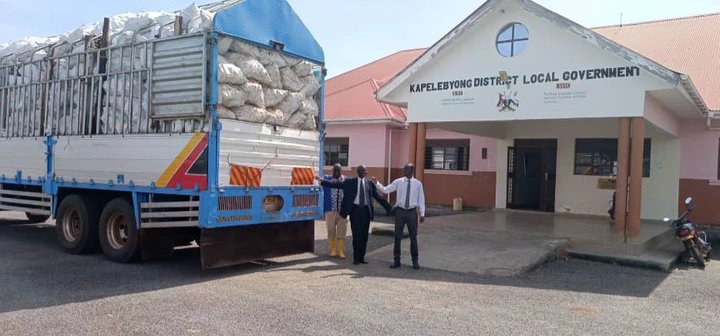

Kapelebyong District has received a consignment of 350 bags of improved cassava cuttings from the National Agricultural Research Organization (NARO), in a significant move aimed at enhancing agricultural productivity, strengthening food security, and improving household incomes among farming communities.
The planting materials will be used to establish a total of an 80-acre demonstration garden in Okungur sub county which garden is expected to act as practical training centers where farmers can learn and adopt modern, climate-smart cassava farming techniques.
Speaking on the development, the District Communication Officer, Emmanuel Opio, said the initiative is part of ongoing government efforts to transform subsistence farming into more productive and sustainable agriculture. He noted that many farmers in Kapelebyong still depend on traditional farming practices, which have limited yields and exposed crops to pests, diseases, and the effects of unpredictable weather patterns.
Opio explained that through the demonstration garden, farmers will receive hands-on training in key agronomic practices such as proper land preparation, correct spacing, timely planting, weed control, pest and disease management, as well as post-harvest handling. He added that agricultural extension workers will be actively involved in guiding farmers at every stage to ensure the success of the gardens and effective transfer of knowledge.
“The demonstration garden is not just a garden, but a learning platform where farmers will be equipped with practical skills that they can replicate in their own fields to increase production,†Opio said.
He further revealed that the cassava varieties supplied under the program include NASSE NARO CASS 1, NASSE 14, and NASSE 19. These improved varieties are known for their high yields, early maturity, and resistance to common cassava diseases such as cassava mosaic and brown streak, which have previously affected production in many parts of the region.
According to district official, the introduction of these varieties is expected to significantly boost cassava output, ensuring that households have enough food for consumption while also generating surplus for sale. This, they say, will go a long way in improving household incomes and reducing poverty levels in the district.
Opio emphasized that cassava remains one of the most reliable food and cash crops in Kapelebyong due to its ability to withstand harsh weather conditions compared to other crops. He noted that investing in its production is a strategic step towards building resilience among farmers, especially in the face of climate change.


 The women who have been in King Oyo’s life
Ultimate Uganda
The women who have been in King Oyo’s life
Ultimate Uganda
 Ex Kagame Guard Commander Tom Byabagamba Dies in Rwandan Prison After 12 Years
Ultimate Uganda
Ex Kagame Guard Commander Tom Byabagamba Dies in Rwandan Prison After 12 Years
Ultimate Uganda
 Government begins salary payments for public sector workers – Reform Committee
Ultimate Uganda
Government begins salary payments for public sector workers – Reform Committee
Ultimate Uganda
 Temangalo land: NSSF, Nzenyi reach agreement
Ultimate Uganda
Temangalo land: NSSF, Nzenyi reach agreement
Ultimate Uganda
0 Comments