
URA’s 10 million dollar recovery raises many questions
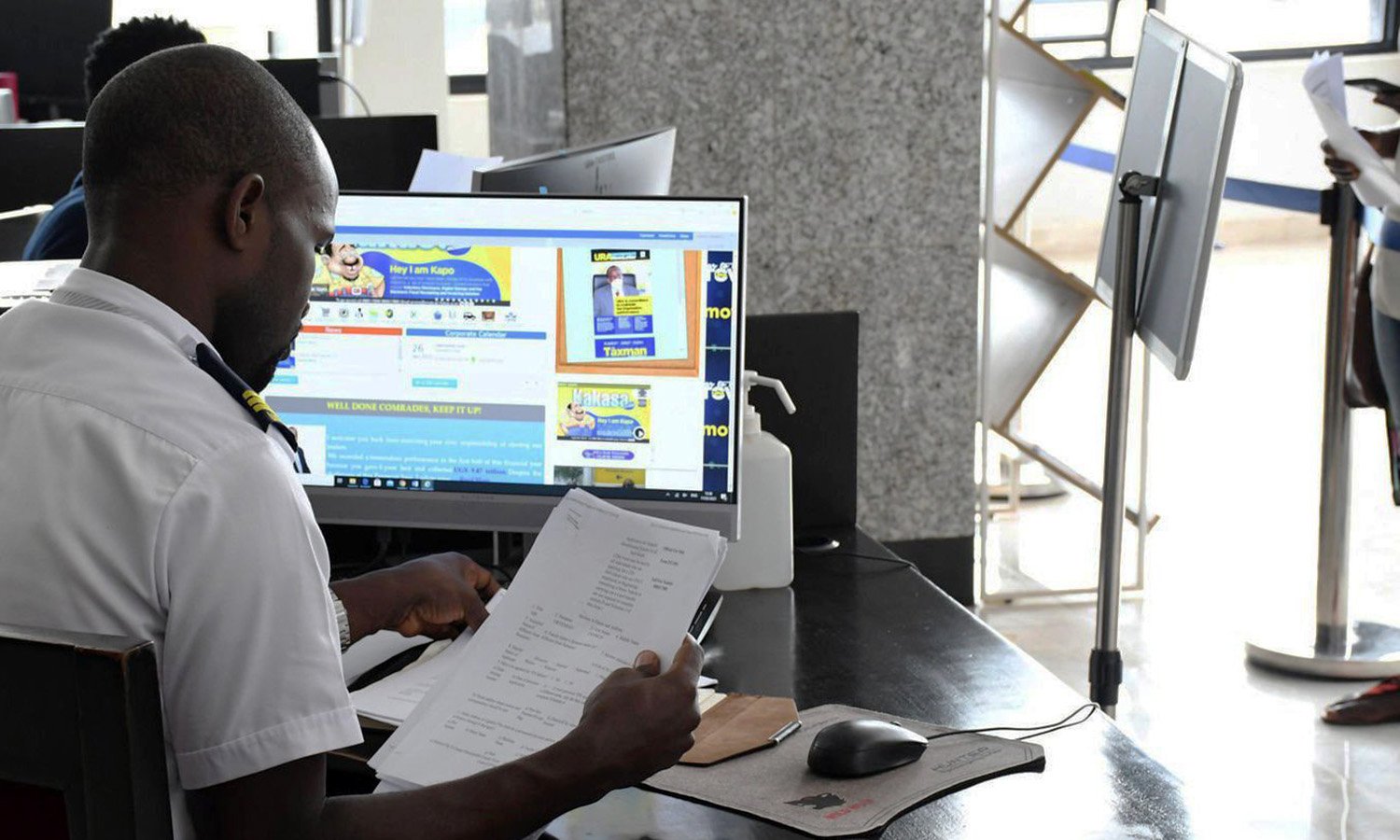

A public disclosure by Uganda’s tax authority that it recovered in excess of $10m (Shs37b) smuggled through Entebbe International Airport has raised more questions than answers. The revelation has come under scrutiny after sources at the aviation security, which combines civilian and military intelligence, as well as Special Forces Command, told this publication they were unaware of the discovery. On one hand, if the discovery holds water, then hats off to the taxman for instilling integrity in its ranks. On the other hand, cracks have begun to show in the narrative, and therein lies the rub.
Highly-placed security sources said the disclosed amount is substantial and would immediately trigger national security inquiries as to the source and purpose of shipping the money. According to an official familiar with the process, Uganda Revenue Authority (URA) customs officers at the airport would notify the commander of Aviation Security, who would convene an inter-agency meeting to discuss the cash find. No such notification or meeting happened, and key stakeholders at the country’s only international airport learnt of the discovery in the media. URA said the money was shipped in as cargo, among kitchenware, and its officer declined a bribe offer by the clearing agent and escalated the matter to superiors.
She’s since been rewarded with Shs50m and a promotion, according to the taxman, drawing interest of Ugandan diplomats after claims the money originated from Turkey. Ms Enid Priscilla Katusiime, the recipient and alleged whistle-blower, was turned into a national topic after she allegedly rejected a Shs300 million bribe to induce her to look away and not disclose the questionable cache of dollars. “The incident happened about two to three weeks ago,†The URA Commissioner General, Mr John Musinguzi Rujoki, told this publication in a brief interview last Sunday.
On Thursday, Mr Musinguzi rewarded Ms Katusiime with a promotion and a bounty of Shs50 million in appreciation for what he called an act of valour. “Your firm’s resolve to uphold integrity despite pressure not to declare the money reflects a high standard of accountability that the institution embodies,†he said, noting that the customs officer demonstrated the highest level of integrity and commitment to duty. “This is the kind of conduct we expect from all our officers.†It was not clear if the other tax officials in the line of reporting such cases were also rewarded. But to URA, this action was a feather in their cap in its efforts to curb smuggling and rampant trade mis-invoicing, which robs the government of taxes.
On the flip side, however, the discovery of a whopping Shs37.9 billion being smuggled into the country on a cargo plane raises a red flag that demands urgent attention and could even trigger a diplomatic row between Uganda and the country of origin. By last evening, the matter had not been escalated beyond an internal probe, as the government had yet to contact Turkey, the origin of the nearly Shs38 billion. The Minister of State for Foreign Affairs, Mr Okello Oryem, said: “We also learnt about that incident where a Uganda returnee from Turkey tried to smuggle money into Uganda through Entebbe International Airport and was arrested, and the cash was taken to the Bank of Uganda for safe custody.â€
He added: “We further understand that investigating agencies in collaboration with FIA [Financial Intelligence Authority] have launched an investigation into the matter, but to the best of my knowledge, none of the investigating bodies has contacted us for us to help them escalate the matter with the government of Turkey. But we are committed as the Ministry of Foreign Affairs to offer that assistance once they approach us.†Police, which would ordinarily take the lead in such investigations, said it had left the matter to URA, which has powers to handle cases from arrest to prosecution. “URA has powers to arrest and prosecute cases. I had a conversation with them, and we agreed that they handle their matter, so everything from arrest to prosecution is being done by them, and thus they can authoritatively comment about it,†Police spokesperson Kituuma Rusoke said on Sunday.
But this means they are not reading from the same page with URA, which said police were instead handling the matter. Mr Musinguzi said police, in collaboration with FIA, had commenced the probe. “...We handed the money to Bank of Uganda for safe custody, the culprit was arrested, and the police and FIA have commenced the investigation,†he said. If the police account on the matter is accurate, then it would be interesting to understand why the police entrusted URA with this multi-billion-dollar case, given its Financial Crimes Investigation Division at CID is specifically tasked with probing such economic crimes. Sources at Entebbe International Airport told this newspaper that they neither saw nor heard of the incident in the past two to three weeks. Many said they only heard about it in the media.
When contacted, the Uganda Civil Aviation Authority (UCAA) spokesperson, Mr Vianney Luggya, said: “For customs, the airport is manned by staff of the URA. Our role as UCAA is to provide them with infrastructure, and that is the only relationship we have, and if they have told you something, especially from top officials, [then] that is the truth...â€
The FIA said it has now launched a probe into the circumstances under which the Ugandan returnee from Turkey allegedly tried to smuggle the money into the country. The FIA Executive Director, Mr Sam Wandera, told the Daily Monitor that the authority is examining the possibility of money laundering. “We have picked interest in the case, and as part of our mandate, we are providing intelligence to the investigating agencies. For now, that is all I can say,†Mr Wandera said. The whereabouts of the Ugandan returnee from Turkey remain shrouded in mystery, as do the dates when he or she will be arraigned in court.
Mr Musinguzi also declined to reveal details of the clearing firm and shipping company involved, noting that the confiscated container also carried kitchenware and personal items. Officials from the Bank of Uganda (BoU) had not responded to our inquiries by press time. Mr Carols Lwanyaga, the head of BoU’s mainstream media communications, said: “I forwarded it (email) to my bosses and they have not responded yet...Once they respond, I will revert to you. We shall probably respond tomorrow (today).†Traditionally, URA has unmasked culprits before spotlighting whistle-blowers.
A similar scenario unfolded on January 26, 2024, when URA enforcement arrested suspected smugglers of Oris cigarettes worth Shs140 million in Ssenge Village, Wakiso District. Like in the current Katusiime’s case, the suspect tried to bribe officers but was instead arrested. Likewise, on July 28, 2021, URA arrested a smuggler disguised in military uniform to evade scrutiny. He was found with a truckload of goods, including pens, worth Shs300 million in taxes. It is unclear why URA chose to expose its employee this time, given the astronomical sum involved and the unknown motives of the likely owner.
In past cases, URA officials showcased exhibits, products, containers, or vehicles, but this time, photos circulating online show stacks of $100 bills in a briefcase-like structure and the source of the images has not been credited. Under URA’s 2023 clearance rule, anyone entering the country through the airport must declare amounts exceeding Shs37 million ($10,000). Any sum above $10,000 requires clearance from FIA.
FIA, established by an Act of Parliament, monitors, investigates, and prevents money laundering. It enforces Uganda’s anti-money laundering laws and oversees financial transactions within the country. In 2020, Uganda was placed on the Financial Action Task Force (FATF) grey list for deficiencies in Anti-Money Laundering (AML) and Combating the Financing of Terrorism (CFT). Parliament responded by passing amendments to the Companies Act, Partnership Act, and Trustees Incorporation Act, alongside the Companies (Beneficial Owners) Regulations, 2023.
By February 2024, Uganda was removed from the grey list, and by June 2025, the European Union also struck Uganda off its list of high-risk third countries.
FIA has since been at the forefront of freezing accounts of individuals and organisations whenever the source or motive of funds is questionable.


 Government will not gazette Kijanangoma as King of Tooro for now - Attorney General insists
Ultimate Uganda
Government will not gazette Kijanangoma as King of Tooro for now - Attorney General insists
Ultimate Uganda
 King Oyo’s Body to Arrive Thursday
Ultimate Uganda
King Oyo’s Body to Arrive Thursday
Ultimate Uganda
 Besigye, Lukwago expected to meet Gen. Salim Saleh today at Kapeeke
Ultimate Uganda
Besigye, Lukwago expected to meet Gen. Salim Saleh today at Kapeeke
Ultimate Uganda
 Rwabwogo Advised to ‘Eat His Bishop’ As MK Prepares to Enter State H’se: PREZ MUSEVENI ON HIS WAY OUT
Ultimate Uganda
Rwabwogo Advised to ‘Eat His Bishop’ As MK Prepares to Enter State H’se: PREZ MUSEVENI ON HIS WAY OUT
Ultimate Uganda
0 Comments