
Fuel Levy Approved: MPs Clear UGX200 Tax Despite Public Outcry, Opposition Warns Of Economic Pain
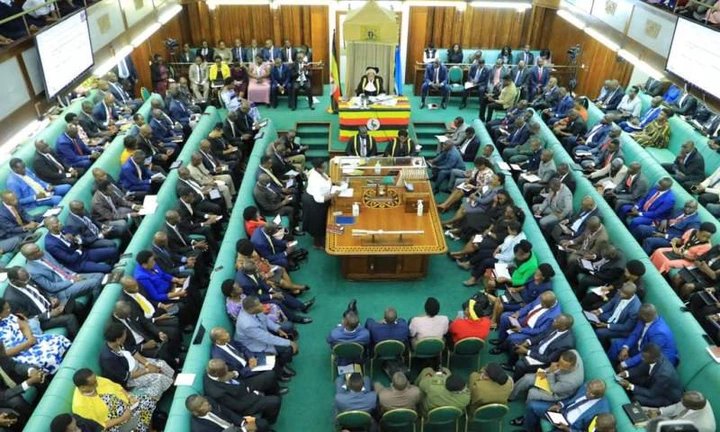

Parliament has approved Government’s proposal to impose a UGX200 excise levy on every litre of fuel, a move expected to generate about UGX450 billion in additional revenue as the State intensifies efforts to finance the national budget.
Lawmakers backed the measure during consideration of the Excise Duty (Amendment) Bill, 2026, following recommendations by the Finance Committee at the April 21, 2026 plenary sitting. The approval came despite sustained objections from sections of stakeholders and opposition MPs, who warned of rising living and production costs.
Minister of State for Finance (General Duties), Henry Musasizi, defended the tax hike, dismissing concerns that global geopolitical tensions, particularly the war in Iran and broader Middle East instability, should influence Uganda’s fiscal decisions.
“If we pass this proposal, we generate UGX450 billion to finance the budget. We cannot forfeit this revenue because of a war we do not control or know when it will end,†Musasizi told Parliament. “What if the conflict spreads elsewhere?â€
Under Clause 2(c), the Bill amends Schedule 2 of the Excise Duty Act to increase tax on petrol and diesel by UGX200 per litre.
The Ministry of Finance said the adjustment is modest, given that average fuel pump prices stand at about UGX5,400 per litre, and is not expected to significantly alter retail prices beyond the tax component. It further argued that the revision is aimed at preserving the real value of excise duty amid inflationary pressures.
The Finance Committee informed Parliament that interventions by the Uganda National Oil Company (UNOC), including direct procurement of fuel through Vitol Bahrain E.C, are expected to soften potential price shocks and stabilize supply.
The Committee consequently recommended approval of the levy, which Parliament adopted.
However, a minority report led by Ibrahim Ssemujju and co-signed by Karim Masaba, Hanifah Nabukeera, Brenda Nabukenya, Anna Adeke, and Geofrey Ekanya rejected the proposal, calling instead for a reduced levy of UGX50 per litre to reflect inflationary adjustments.
The MPs argued that fuel demand is highly inelastic, meaning any tax increase would be fully passed on to consumers, worsening the cost of living and production.
“Fuel prices are already high and likely to rise further due to geopolitical tensions in the Middle East,†Ssemujju said. “Energy drives all sectors, so the cost of doing business will inevitably increase.â€
He noted that pump prices had already reached UGX5,500 per litre, adding that international forecasts, including from the IMF and World Bank, suggest that oil markets could take up to a year to stabilize even if conflict subsides.
The minority report also cited guidance from the Institute of Certified Public Accountants of Uganda, which advised that any tax adjustment should primarily correct for inflation erosion rather than introduce significant new burdens.
Beyond fuel, Parliament also approved a series of excise duty adjustments across key commodities.
For sugar, Government increased excise duty on cane or beet sugar and chemically pure sucrose from UGX100 to UGX300 per kilogram. Officials argued the rate had remained unchanged since 2015, and that inflation had eroded its fiscal value.
According to Parliament’s Finance Committee Chair, Amos Kankunda, the adjustment also aligns with public health objectives by discouraging excessive sugar consumption linked to non-communicable diseases such as diabetes and obesity.
On cement, adhesives, grout, white cement and lime, Parliament adopted a moderated increase from UGX500 to UGX750 per 50kg bag, lower than Government’s initial UGX1,000 proposal, after concerns were raised over construction costs.
Government had defended the increase on grounds that the tax had also remained unchanged since 2015 and needed adjustment to reflect inflation and maintain revenue efficiency.
Parliament further approved an increase in excise duty on imported undenatured spirits with alcohol content below 80%, raising the rate to 80% or UGX3,500 per litre, whichever is higher. Government said the move is aimed at protecting local producers and discouraging cheap imports while broadening the tax base.
Lawmakers also endorsed an increase in excise duty on motorcycles at first registration from UGX200,000 to UGX500,000.
Kankunda said motorcycle use has expanded rapidly, particularly in urban centres such as Kampala, making it a reliable tax base.
“This is a practical way of taxing a growing informal sector, especially boda boda operators who are difficult to reach through income tax,†he said.
The Committee argued that taxing motorcycles at first registration ensures more effective revenue collection from the sector.
The proposal, however, drew strong resistance from the minority, who warned that the increase could hurt youth employment and small-scale transport operators.
Ssemujju argued that the government should retain the UGX200,000 rate, warning that higher entry costs could suppress business expansion and deepen economic inequality.
“We must protect youth livelihoods in the informal sector,†he said, cautioning that debt-driven taxation models require careful calibration to avoid public resistance and economic strain.


 Government will not gazette Kijanangoma as King of Tooro for now - Attorney General insists
Ultimate Uganda
Government will not gazette Kijanangoma as King of Tooro for now - Attorney General insists
Ultimate Uganda
 King Oyo’s Body to Arrive Thursday
Ultimate Uganda
King Oyo’s Body to Arrive Thursday
Ultimate Uganda
 Besigye, Lukwago expected to meet Gen. Salim Saleh today at Kapeeke
Ultimate Uganda
Besigye, Lukwago expected to meet Gen. Salim Saleh today at Kapeeke
Ultimate Uganda
 Rwabwogo Advised to ‘Eat His Bishop’ As MK Prepares to Enter State H’se: PREZ MUSEVENI ON HIS WAY OUT
Ultimate Uganda
Rwabwogo Advised to ‘Eat His Bishop’ As MK Prepares to Enter State H’se: PREZ MUSEVENI ON HIS WAY OUT
Ultimate Uganda
0 Comments