
Christopher Okello Onyum Fate: When Museveni Threatened to Hang Death Row Inmates and Asked for Their List
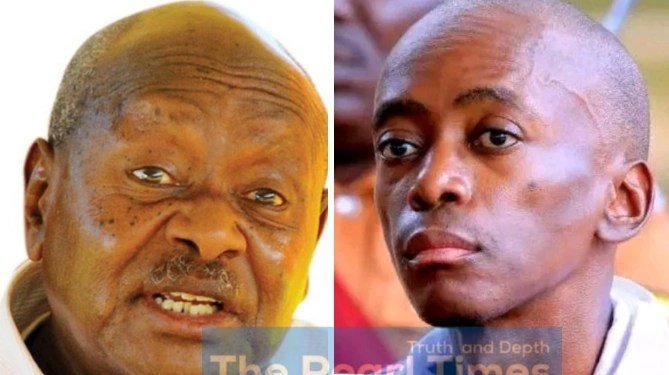

Christopher Okello Onyum’s fate has remained a matter of national interest since the brutal murder of toddlers at a Ggaba daycare centre in the capital Kampala. Convicted and sentenced to death, Christopher Okello could end up on the list of those whose appeals have failed, meaning that they are condemned for execution by the state. While Uganda has not executed civilians since 1999, Museveni’s views on the death penalty point to the direction of resuming executions to, as the president has previously put it, send “a message†to criminals. In this report, The Pearl Times looks at when Museveni threatened to hang death row inmates and asked for their list.
First, let us look at key facts about the death penalty in Uganda. The death penalty in Uganda remains one of the most contested aspects of the country’s justice system, shaped by law, landmark court rulings, and strong political views—particularly from President Yoweri Museveni.
Uganda retains the death penalty for capital offences such as murder, aggravated robbery,treason, and terrorism. While courts continue to issue death sentences, executions have not been carried out in recent years, effectively placing the country under a de facto moratorium.
A major shift came with the 2009 ruling by the Supreme Court of Uganda in Attorney General v. Susan Kigula and 417 Others. The court upheld the legality of the death penalty but abolished mandatory death sentences and ruled that inmates should not remain on death row indefinitely.
Despite the absence of executions, courts continue to impose death sentences in high-profile cases. In recent years, courts have handled serious war crimes cases such as that of former LRA commander Thomas Kwoyelo. While he was ultimately sentenced to 40 years in prison instead of death, the case demonstrated that capital punishment remains an available option for the gravest crimes.
These cases underscore a key reality: Uganda continues to sentence offenders to death even as executions remain rare.
Last Civilian and Military Executions in Uganda
The last confirmed civilian executions in Uganda took place in April 1999 at Luzira Maximum Security Prison in Kampala. A total of 28 death row inmates were executed by hanging, most of them convicted of murder, in what remains the largest single execution event in the country’s recent history.
Among them was Musa Sebirumbi, a high-profile former political figure convicted of multiple murders. The executions were carried out despite international appeals and drew widespread condemnation from human rights groups. Since then, no civilian executions have been carried out in Uganda.
Unlike civilian executions, military executions continued for a few more years. In March 2002, two UPDF soldiers were executed by firing squad after being convicted of murder.
In March 2003, at least three more soldiers were executed shortly after court martial proceedings, raising concerns about due process and fair trial rights.
Some reports also indicate that the last known executions—believed to involve soldiers—occurred around 2005, marking the end of active enforcement of capital punishment in Uganda.
Since then, Uganda has not carried out executions, despite continuing to sentence individuals to death.
Today, Uganda operates in a paradox: courts still impose the death penalty, but executions are not carried out. Many death row inmates eventually have their sentences commuted to life imprisonment. Organizations such as Amnesty International argue that the death penalty violates the right to life and does not deter crime.
They have repeatedly criticized calls to resume executions, especially following Museveni’s 2018 remarks.
Uganda remains at a crossroads. The judiciary has moved toward limiting the application of the death penalty, while political leadership continues to defend it as a necessary deterrent.
For now, the country maintains a legal death penalty system that is rarely enforced—caught between tradition, reform, and ongoing debate.
Museveni Views on Death Penalty
In 2018, Museveni broached the matter of the death penalty while speaking at the annual judges’ conference in Kampala. Museveni argued that removing the death penalty would open the floodgates of chaos.
Making a case of the Mosaic law of revenge, Museveni blamed himself for not executing death row convicts.
“I saw some NGOs opposing the death sentence. In a pre-industrial society like ours, removing death sentence is a recipe for chaos. We believe in the law of Moses; eye for an eye,†Museveni told the judges in Kampala.
“I have been making the mistake of not sanctioning these death sentences, I am repenting. As you are aspire for best international practices, you must be aware that societies like the UK went through the industrial revolution 200 years ago. Here in Uganda and Africa, we are dealing with pre-industrial societies.â€
In January 2018, during the pass-out ceremony of 706 prison warders and wardresses and 213 non-commissioned officers at Luzira Prisons Grounds in Kampala, Museveni vowed to hang some death row inmates, insisting they deserved to die for their crimes, and that this would deter other intending criminals.
“Criminals think they have a right to kill people and keep their heads … I am going to revise a bit and hang a few. I believe that this lenience is becoming a problem. I am going to revise this and hang a few,†said Museveni who attributed his lenience to his Christian values.
“We must hang some of these people because if you see how they kill people, they deserve to be killed.â€
In the same year, 2018, reports emerged that Museveni had requested names of five death row inmates eligible for execution but was reportedly told by then attorney general William Byaruhanga that there were none since some had had their death sentences commuted and others were yet to fully exhaust the appeal process.
Death row convicts can appeal their sentences up to the Supreme Court, the highest in the land.
As we have reported, not ready to die, Christopher Okello Onyum has appealed his death sentence, as reported Here.
Meanwhile, Uganda Prisons Commissioner General Byabashaija has made it clear that Christopher Okello Onyum will be hanged within 72 hours if President Museveni signs his death warrant. (See Details Here).
According to the law, if Christopher Okello Onyum’s appeal fails even in the Supreme Court, his fate will be in the president’s hands as Museveni can do three things to him, as detailed HERE.


 Government will not gazette Kijanangoma as King of Tooro for now - Attorney General insists
Ultimate Uganda
Government will not gazette Kijanangoma as King of Tooro for now - Attorney General insists
Ultimate Uganda
 King Oyo’s Body to Arrive Thursday
Ultimate Uganda
King Oyo’s Body to Arrive Thursday
Ultimate Uganda
 Besigye, Lukwago expected to meet Gen. Salim Saleh today at Kapeeke
Ultimate Uganda
Besigye, Lukwago expected to meet Gen. Salim Saleh today at Kapeeke
Ultimate Uganda
 Rwabwogo Advised to ‘Eat His Bishop’ As MK Prepares to Enter State H’se: PREZ MUSEVENI ON HIS WAY OUT
Ultimate Uganda
Rwabwogo Advised to ‘Eat His Bishop’ As MK Prepares to Enter State H’se: PREZ MUSEVENI ON HIS WAY OUT
Ultimate Uganda
0 Comments