
Kamwokya Ghetto Youth Turn Waste into Opportunity Through GAYO Initiative
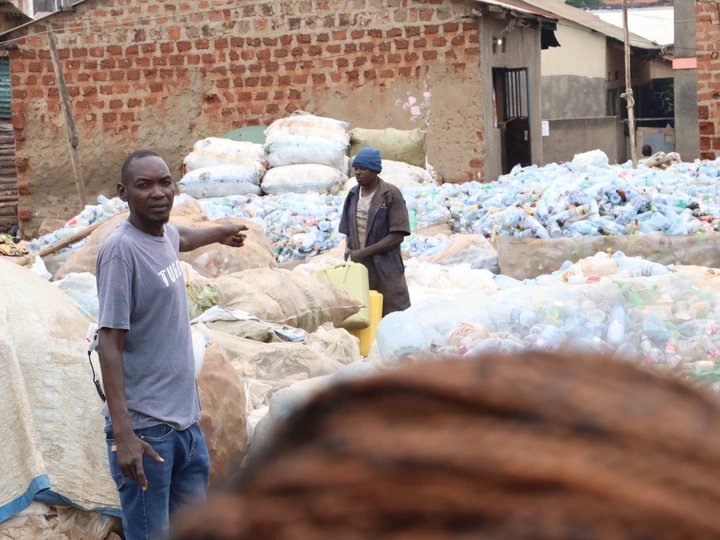

The Green Africa Youth Organisation (GAYO) has intensified efforts to support youth-led waste management innovations in Kampala’s informal settlements as part of broader efforts to advance circular economy solutions and sustainable urban living.
Through partnerships with initiatives such as Ghetto Research Lab and Nkumbi Terimba Initiative in Kamwokya, Kampala, GAYO is supporting young people to transform waste into valuable products, create jobs, improve sanitation, and address environmental challenges in densely populated communities.
Speaking during a community engagement on zero waste management in Kampala, Jemimah Babirye Kasibbo, Lead Programs Officer at GAYO, said the organisation is focused on supporting youth-led innovations in both plastic and organic waste management.
She explained that GAYO is already supporting similar initiatives in Mukono and Mbarara, focusing on organic waste recovery and plastic recycling through projects such as ecobricks.
Raymond James Ntabazi, Project Coordinator for the Zero Waste Cities Programme at GAYO, said studies conducted in Kamwokya indicate that black soldier fly farming could become a key solution in addressing organic waste challenges in urban communities.
He noted that the black soldier fly facility offers a sustainable solution for organic waste management by converting food waste into valuable products such as animal feed and organic manure.
Ntabazi said that many residents currently dispose of waste in drainage channels and open spaces, contributing to flooding and poor sanitation.
“Partners such as Nkumbi Terimba are already piloting black soldier fly farming, and there is hope that this model can be expanded to other communities,†he added.
According to Ntabazi, most urban waste generated in Kampala is organic and can be transformed into valuable products when properly managed.
The black soldier fly system works by feeding larvae on food leftovers and fruit waste. The larvae consume the waste, reducing its volume while producing protein-rich feed for poultry, pigs, and fish. The remaining residue is processed into organic manure for agriculture.
“This process helps reduce waste in the community while creating economic value from materials that would otherwise be discarded,†he explained.
Patrick Mujuzi, Founder and Team Lead at Ghetto Research Lab, said the organisation was established to create innovative solutions to environmental challenges facing slum communities.
“At Ghetto Research Lab, we see waste as something profitable and transformative, not only for people but also for other living organisms,†he said.
The organisation operates multiple environmental projects including compost management, aquaponics, seed ball tree planting, black soldier fly farming, and plastic recycling.
He explained that biodegradable waste collected from the community is processed into nutrient-rich fertilizer through composting systems that use locally made compost toilets.
The organisation also trains women and youth to recycle plastic waste into construction materials such as ecobricks used in building public toilets within informal settlements.
“So far, the initiative has supported the construction of about five to six toilets in different slums of Kampala,†he revealed.
He added that the projects have significantly improved livelihoods, particularly among single mothers who now earn income through waste collection and recycling activities.
“Many of them have been able to earn income, pay school fees for their children, pay rent, afford medical care, and meet basic household needs,†he said.
However, he noted that challenges such as limited working space, lack of machinery for value addition, and inadequate sensitization continue to affect operations.
“With better equipment, such as machines for producing pavers or processed plastic products, the value of waste could be significantly increased,†he explained.
Residents hail initiative
Residents and local leaders say the initiatives are already transforming communities previously overwhelmed by poor waste management.
Ronald Lubega, a resident involved in the project, said many community members are now earning a living through waste collection and recycling.
“The community is generally happy that we now have a centre where we can sell and buy recyclable materials,†he said.
Although challenges such as unstable prices for recyclables remain, Lubega noted that the work has helped many people pay rent, educate their children, and improve their livelihoods.
“This is not a bad job because it helps people earn a living,†he said.
Kisenyi II LC1 Chairman Jimmy Mbabaali Kamya said the initiatives have helped reduce flooding, improve sanitation, and restore dignity in the area.
“These ghetto youths have tried to help waste become precious by collecting, sorting it, and making useful items out of it,†he said.
Kamya recalled that before the interventions, garbage frequently blocked drainage channels, causing floods and disease outbreaks.
“We used to suffer from diseases like cholera, diarrhoea, and dysentery due to flies and poor sanitation, but the situation is improving,†he added.
Jemimah Babirye Kasibbo, Lead Programs Officer at GAYO noted that through such engagements, they seek to how youth in informal settlements are responding to waste challenges despite limited resources.
“It is clear that young people here are already innovating and creating solutions despite limited resources. However, there is still a significant knowledge gap in waste segregation, management, and reuse. Waste is a resource, but many communities still lack awareness on how to utilize it effectively,†she said.
She also cited limited funding as one of the biggest barriers affecting the expansion of youth-led waste innovations.
“There is also a major challenge of limited funding and resources, which has restricted the scaling of these innovations. Many initiatives remain small despite their potential impact,†she said.
Kasibbo called on government institutions and development partners to invest in youth-driven environmental initiatives.
“The young people are already working, but they need support to scale,†she emphasized.


 The women who have been in King Oyo’s life
Ultimate Uganda
The women who have been in King Oyo’s life
Ultimate Uganda
 Ex Kagame Guard Commander Tom Byabagamba Dies in Rwandan Prison After 12 Years
Ultimate Uganda
Ex Kagame Guard Commander Tom Byabagamba Dies in Rwandan Prison After 12 Years
Ultimate Uganda
 Government begins salary payments for public sector workers – Reform Committee
Ultimate Uganda
Government begins salary payments for public sector workers – Reform Committee
Ultimate Uganda
 Temangalo land: NSSF, Nzenyi reach agreement
Ultimate Uganda
Temangalo land: NSSF, Nzenyi reach agreement
Ultimate Uganda
0 Comments