
Free Compulsory Education to Return Before Cabinet Over Funding Unresolved Issues

The government’s plan to fully implement free and compulsory basic education is expected to return to the Cabinet for fresh guidance, as significant funding gaps and other critical challenges continue to hinder its rollout.
The policy, which seeks to strengthen Universal Primary Education (UPE) and Universal Secondary Education (USE) by removing all hidden costs and making education truly free and compulsory for every Ugandan child, has struggled to take off due to insufficient resources.
According to report of the sectoral committee on education and sports on the ministerial policy statement and budget estimates, the programme requires over 1.48 trillion shillings over four financial years.
However, a huge shortfall persists. For the upcoming financial year, the Ministry had projected 518 billion shillings for effective implementation, but only 209 billion shillings is currently available, leaving a deficit of approximately 324.11 billion shillings.
The government had initially promised to roll out the free compulsory education programme starting in 2024. However, available information indicates that funding is not the only challenge facing the initiative.
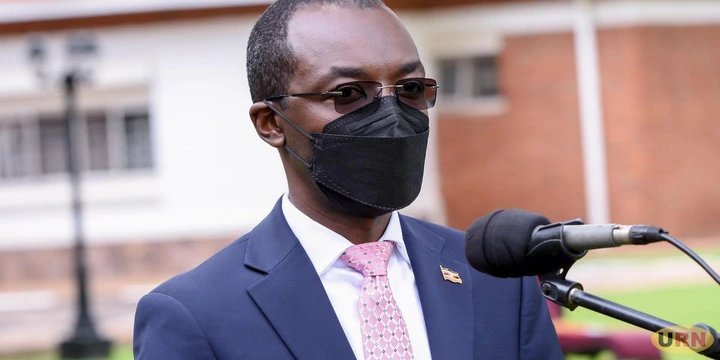
Education Spokesperson Dr Denis Mugimba, confirmed that the Ministry is still working to resolve several other critical issues. He added that in the coming financial year, the Ministry will return to Cabinet seeking further guidance on these matters.
One of the central issues under review is a comprehensive revision of the unit cost of education. This will determine the new capitation grants to be paid to schools.
Foundation bodies and head teachers have long cited inadequate capitation grants as the primary reason schools continue to impose various charges on parents. They argue that current funding levels are far too low to cover essential costs such as teaching materials, utilities, maintenance, laboratory equipment, and co-curricular activities.
Currently, the government disburses 18,000 shillings to 20,000 shillings per learner per year in primary schools (UPE), 175,000 shillings per learner in secondary O-Level (USE), and 270,000 shillings per learner at A-Level (UPOLET).
The National Planning Authority (NPA) has repeatedly stated that both the current figures and the methodology used to calculate them are outdated and insufficient. The NPA has recommended substantial increases. For example, raising primary capitation to between 59,000 shillings and 63,500 shillings per pupil annually.
Much larger increases are needed at secondary and A-Level to match the higher demands of the curriculum, including science practicals, laboratory consumables, specialised teaching, and rising operational expenses. NPA proposals have suggested raising O-Level capitation to around 530,000 shillings and A-Level to approximately 885,000 shillings per learner per year.
Dr Mugimba added that Cabinet will also provide further guidance on the specific contributions expected from the government and what parents will still be required to provide, particularly on items such as uniforms, books, feeding (meals), and other essentials.
More information indicates that Cabinet will also discuss key policy enablers, including the necessary amendments to the Primary and Post-Primary Education Act, among other legal and regulatory adjustments.
Once clear policy direction is given by Cabinet, implementation of the free compulsory education programme will proceed in a phased manner, starting with UPE before rolling out to USE-URN.


 Government will not gazette Kijanangoma as King of Tooro for now - Attorney General insists
Ultimate Uganda
Government will not gazette Kijanangoma as King of Tooro for now - Attorney General insists
Ultimate Uganda
 King Oyo’s Body to Arrive Thursday
Ultimate Uganda
King Oyo’s Body to Arrive Thursday
Ultimate Uganda
 Besigye, Lukwago expected to meet Gen. Salim Saleh today at Kapeeke
Ultimate Uganda
Besigye, Lukwago expected to meet Gen. Salim Saleh today at Kapeeke
Ultimate Uganda
 Rwabwogo Advised to ‘Eat His Bishop’ As MK Prepares to Enter State H’se: PREZ MUSEVENI ON HIS WAY OUT
Ultimate Uganda
Rwabwogo Advised to ‘Eat His Bishop’ As MK Prepares to Enter State H’se: PREZ MUSEVENI ON HIS WAY OUT
Ultimate Uganda
0 Comments