
Uganda should count itself lucky to have Museveni - Nsibambi
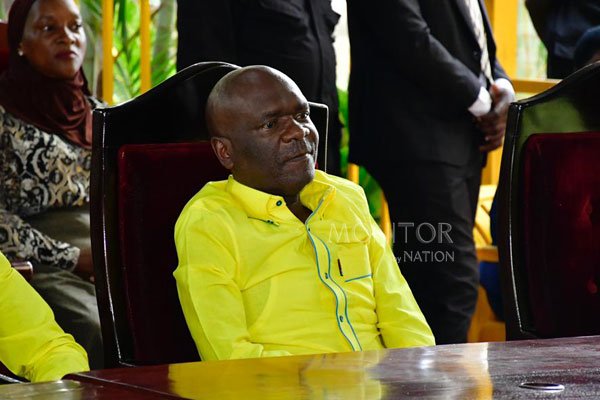

Yusuf Nsibambi, the outgoing Mawokota South lawmaker, spoke to Patrick Kamara in a wide-ranging interview on The Grind Podcast. The veteran politician painted a bleak picture of Opposition politics in Uganda while purring over Yoweri Museveni, Uganda’s president since 1986. Excerpts:-
_________________
Who is Yusuf Nsibambi?
Incidentally, I'm not the usual ordinary politician. I'm an activist I could say. I've been involved in activism for the last 20 or so years, and I'm just a professional lawyer and a humble teacher at the law school. So kind of, please, just look at me from that perspective. I joined politics because I thought activism per se, though political, may not really lead to change and transformation but for all the years I’ve been in [the] Opposition I guess actually it is more confrontational politics and creating hatred so that's why I had to get this big shift from activism and defiance to cooperation and dialogue.
Take us back to when you decided to have your own Damascus road turn around to a party that you always criticised.
Yes, actually, right off from school in my first year we have really had a lot of issues raised condemning this government and the regime in control and the management of the governance of this country. [At] school, [we were] involved in DP [Democratic Party) activism campaigns. We actually led to the creation of Uganda Young Democrats […]. So all along we have been involved in activism, and all along we thought we can actually come up with change. We go to [the] Reform Agenda, then FDC [Forum for Democratic Change] as a party, and the different cooperation with the different political formations. So you are right, I've been really on that road to Damascus, but I realised that the road is going nowhere because we employed wrong strategies. So I think my appearance at State House, as you remarked in your introduction, is really after a lot of efforts which involved religious bodies and other activists who actually realised that you really have to talk to the government in control and see how you can develop this country without confrontation and unnecessary defiance. The NRA and the FDC stand on a different political dichotomy.
But you are grounded differently in FDC ideology and NRM is different. You actually convinced many people to join FDC because of its values and what it stands for. For you to be able to cross the aisle, a lawyer who teaches law at the university, we were wondering that if there's anybody who could be left still standing in FDC it would be Yusuf Nsibambi.
I talked to Dr Kizza Besigye on two occasions, and then on the third occasion I went with a delegation of honorary members of parliament, about six. I will not mention their names. [Dr Besigye] does not believe in elective politics, and the constitution and our laws talk about change through elective politics. I suggested that we can take on to other methods. Beyond elective politics, can we persuade and lobby this government to ensure that at least we embark on government programmes as joint partners, not as adversaries? And Dr [Besigye] said: “No. For me, I left elective politics. We are mobilising the critical mass to ensure that this regime goes.†[…] So we thought as a group that I think this is a wrong strategy. Dr Besigye and company abandoned Najjanankumbi, which is the registered platform legally to conduct political affairs.
Now you have the people's government in Katonga or at Katonga. Dr Besigye is sworn in as a president. I don't want to say de facto because we have no such powers. We don't have structures for the government. So that kind of confusion left FDC virtually as just a paper tiger. It does not exist. We had a delegates conference. Ever since that delegates conference, the Secretary-General Hon Nandala Mafabi has only appeared at Najjanankumbi just three times. There are no regular meetings. The committees established are not functional. The delegates conference, the NEC representatives of the country cannot be maintained. It's not sustainable. They have no transport refund, you cannot even buy a bottle of water so everything is at a standstill. […] If you are operating under circumstances, which are unclear, against a power or a party with national resources, against a party with military force, what do you have to do? You have to accept as a political reality that for us to forge forward, let's work in partnership with this party, condemn what is not right, appreciate what is okay, and work for your people. This is pure surrender. […] I surrendered to Opposition politics because it was just daydreaming. […] I've interacted with the President [Museveni] since November about eight times. I realised that he's not a bad man. He listens. He has a strong and vibrant think tank. We have interacted with a few members of the think tank. So some of these ideas, which appear to be Opposition, have been accepted. But when you present them in a confrontational manner, in a manner which is defiant, and the President has been given a mandate by the people you are purporting to work for, for example, in the last eight elections, he got 71 percent. So if 71 percent believe in him, then he's the society. You cannot now apply like a 0.3 percent that we got as FDC to influence policy and development. It's just now accepting that the strategy, all strategies we have been employing were actually wrong and misplaced.
You convinced many young people to join the Opposition, including the elite. They looked at you as a straight businessman, a lawyer who teaches law at the Law School at Makerere University. Every time you spoke, people were inclined to listen to you more. There must be, you know, a huge disappointment in the Forum for Democratic Change where you are vice president.
Yeah, in the interim, I think they're a little bit disappointed, and it will take time to get that confidence back. I've talked to the Archbishop Kazimba Mugulu and the Inter-religious Council and they have done a very good job. It's tremendous. Most people cannot believe we would have gotten chaos here during [the 20226] elections. They prevailed over that. They prevailed over the defiance of the Gen Z, which had been imported from Gabon and Kenya. […] I’ve started engaging some members, not just FDC, but the youth. And it's also a problem of unemployment. I've talked to the president to really ensure that they inject more money in the youth skilling programmes; not as established, because there are also weaknesses. You have to close the gaps of corruption and misuse of resources. So you're right, they must be disappointed because all along for the last 20 years we've been telling a different story. But you also have to go out and tell them that, “okay, look here, can we change strategy? Whatever we tell you, you should not abandon it because they are seeking freedom in terms of free speech.†Their human rights as enshrined in the Constitution. But beyond that, you have to put food on the table. So I think that is our cardinal role we really have to ensure and we have also a duty to ensure that these people understand our new approach to issues and the perspective as highlighted let me you know when you talk about putting food on the table allow me to say this with a lot of respect is this about political ideology or grocery ideology? It can be taken to be grocery ideology, but that's also an issue of political reality. You must put food on the table, you have to pay school fees and tuition, you have to look at your healthcare first before you talk about these other general theoretical human rights issues.
For a man of your calibre we thought you'd be able to defend against state power, but it was all in vain. What went wrong?
I don't know how I failed to make it in Mawakota [South]. I thought we had injected a lot of funds and time into their constituency, but the voters said otherwise, and I don't blame them. I have a big problem with the institutions. Some of these institutions, which I don’t want to mention, are still looking at politics differently. They don't look at it logically. Then the issue of commercialisation of politics. I've been doing development programmes, electricity, water, road, garbage collection, fumigation, but this is broad and global. The ordinary voter wants something to eat. So last minute money was injected and it's a very big problem. I think this government or parliament should really ensure that politics is not commercialised. I think that is a big problem. Though now I feel a little bit relaxed. Maybe I joined politics and I went to Mawakota without knowing the true interests of the people, what the people want.
Did you need to pull the plug on the development programmes you started in Mawokota South?
[…] I have eight transformers in the constituency. Two are personal; not only personal, I use them on personal property and business. So the transformer in question is the transformer at Jalia City. The other transformer is supposed to be at Nkozi Clays. But the one in issue is that Jalia City is on my land. I bought a transformer. I was using it for my purposes. Then, without my authorisation, eight homes were tapped illegally. But since I was a politician, I could not stop them. Incidentally, that entire village, which I was serving when I was put on the stand by the General, did not vote for me. So it was passed on, and I have no regrets about it.
For five years, you had the mandate of the people of Mawokota South, including those villages that maybe later didn't give you a vote, which is just anything that can happen in a democratic process, but should actions out of what can be construed as anger have been your ideal choice?
[…] I had to reinstate them but I'm not happy with them so they are still enjoying my power. But really on a personal note I'm not happy with them because I've taken over most of their families. I paid bursaries [worth] Shs75 million per term for the constituency. At first I had cut them off, but when I talked to my mother, she said: “No, let them enjoy the bursaries.†But still, I think effective next year or not, apart from those doing universities and completing, [they will be cut off] because I have no job […] I've put solar in all townships in the constituency, I've not touched. For the eight transformers, it's only two. I really have no regrets.
When you crossed the aisle, when you came from the blue corner to this yellow corner, what was very strange was that you actually went right into the inner sanctum of the NRM, almost at the altar.
When you see Museveni from a distance, you believe this is an old man, but he's an old man with wisdom. He discusses political issues from antiquity. So I really want to see him, to raise a point and a programme. I really want to see him even tomorrow. So I think my joining NRM was really a blessing. It's a very big blessing. I've actually realised that the NRM as a party is founded on ideology. My political orientation is like now I'm a baby. I'm learning a lot […] I don't know what awaits in the transition, but at the moment we don't need any change until we have grasped the NRIM ideology, which is actually based on that think tank I've talked about.
I'm amazed about how you are not choking on the very words you kept talking against the NRM and President Museveni.
Yeah, I've actually had a long study of Yoweri Kaguta Museveni and the person from articles written by Dan Wadada Nabudere from Tanzania. So when I reflect on those articles by Dan Wadada Nabudere and what I've seen practically going on when the president is in charge as a president for 40 years, you realise you have a political genius. There's no way you can be a president for 40 years without an attempt for even a mutiny or a coup. So when you reflect on that you realise that you have a genius in the house. Maybe we have not seen that for the past years. So now this is the time for us to bless what is going on and forge a way forward towards transition. True democracy, in my view, must have some element of opposition because they more or less become your strategic ally. They point out to you your problems, your challenges, your weaknesses. And because they are there, they can make the party in power better because they are able to criticise. But what we have seen now, this kind of political knockout that has happened, many people criticise, say maybe it was not even fair. Does it build a better democracy? Yes, it does. The checks and balances are there. We've just gone through elections. People have voted in their representatives. We are going to have Opposition governments swearing in. So I think it has to do with a lot of the voters themselves. So if you fail to vote in people who can create the checks and balances, what do you expect of any government in power? So I think that's what has to be done. I believe in a coalition government. I also believe in a succession plan. I also believe in discussing the national question as stakeholders, not just politicians, but the general stakeholders in the country, religious leaders, the media fraternity, activists, the professionals and the elites. So I think we really have to push that. That should be the agenda. It has nothing to do with just change of guards [sic] because you can have another government; not NRM, but still towing the same kind of line the NRM has been towing. So I think we have a very big duty and responsibility of ensuring that you don't just bring this government to its knees, but ensure a system where you have checks and balances, and also accountability.
When I look at countries in Africa where they have had this strongman lead them for decades, every moment that strong man left power, there would be chaos, be it Libya with Gaddafi, be it Egypt with Hosni Mubarak, or Bashir with Sudan, or Mobutu with Zaire, be it Zimbabwe with Robert Mugabe, things have not panned out well. Are we going to be any different?
We're not going to be any different because of us. It's us. You see, we have to ensure that we create institutions which are democratic, even within our parties. Just look at any party, what you call Opposition, is there any democracy? The National Unity Platform is basically headed by [the] Firebase Crew. At the helm you have the head of the party as [Robert] Kyagulanyi then next you have Barbara Itungo. In that order, by the way, because I know. I was an insider almost in the party. Then you have Nubian Li, then you have [David Lewis] Rubongoya, [Benjamin] Katana, then now you come with [Fred] Nyanzi […] Basically, that is the party: It has no constitution, it has no organs to do with management and governance. Rubongoya has 50 percent as Secretary-General in terms of appointment and the president 50 percent. So the appointing authority is vested in two people. Then you come to FDC, the party which I dearly loved and was a leader. No meetings for the last six years, six months. The Secretary-General and the President do give decrees and then their decisions are taken. The Administrative Secretary, who is not anywhere in the structure, is the one calling the shots. You only go to DP [Democratic Party], virtually separate from Hon [Norbert] Mao, and maybe be there at the periphery. The Secretary-General is nowhere. They have never had any meetings since the delegates conference at Garuga. Then UPC [Uganda People’s Congress] is non-existent. There’s a court order saying the president is not [Jimmy] Akena, but Akena is transacting business as the president and the wife CP [Conservative Party]. It is a party of ceremonies and jokers, so I don't want to talk about this party.
The names you begin with, of the leaders of NUP, do you have a problem with these individuals?
No, I don't have any problem. Surprisingly, I've been close to them, and they are also aware that my role in ensuring that NUP existed was really big, very big indeed. But ultimately, they have no political orientation and direction. You cannot purport to come up and take over government when you are managing matters in that kind of manner. And whatever I'm stating here is actually the actual truth. For you to get [the flag] to stand on a NUP ticket, you had to get the blessing of those individuals, which is not bad as long as you have structures […] I'm giving them credit for taking advantage of the political gullibility of our people. Our people are gullible. I'm not saying they are naive, but they are actually gullible. A simple thing can turn their minds to believe that there's a future being conducted or led by this group. So they are really riding on the naivety and gullibility of our people and dancing on their graves. They are celebrating, they are enjoying the benefits of gullibility. So basically I think we have a duty to go out there and tell our people that whatever you are seeing that is shining is not gold. […].
Where are you headed next?
Personally, I think I'm headed to look after myself, my family, and my health. I think I've contributed something which one cannot just throw away to do with elective politics. Maybe I have to respect the decision of the people because maybe they voted for someone [Susan Nakawuki] who is better than me. Incidentally, she's NRM. I would call upon them to support her.


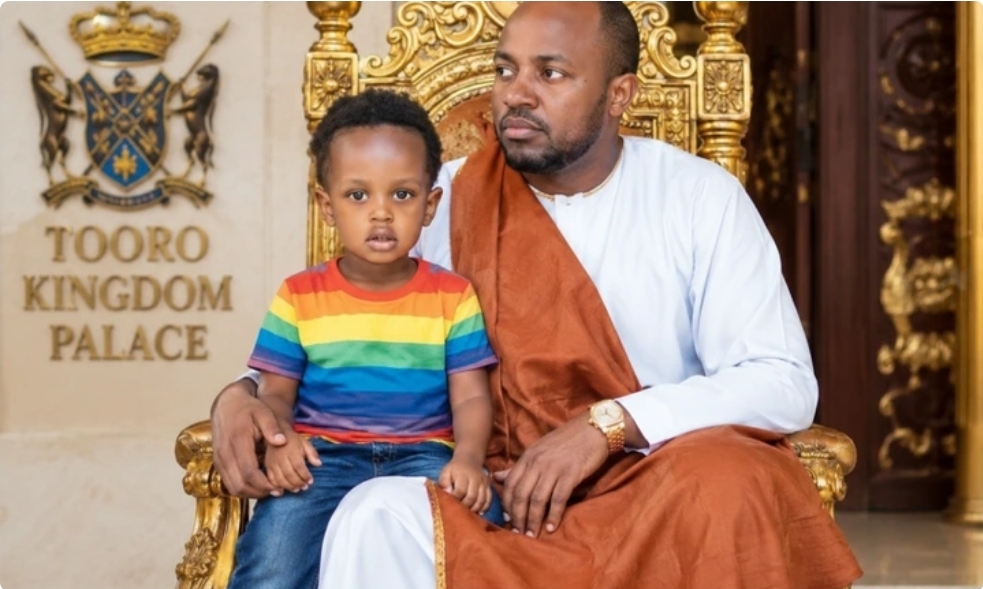 The women who have been in King Oyo’s life
Ultimate Uganda
The women who have been in King Oyo’s life
Ultimate Uganda
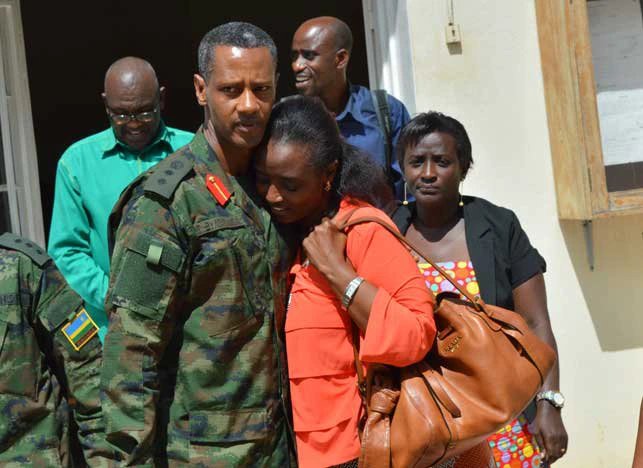 Ex Kagame Guard Commander Tom Byabagamba Dies in Rwandan Prison After 12 Years
Ultimate Uganda
Ex Kagame Guard Commander Tom Byabagamba Dies in Rwandan Prison After 12 Years
Ultimate Uganda
 Government begins salary payments for public sector workers – Reform Committee
Ultimate Uganda
Government begins salary payments for public sector workers – Reform Committee
Ultimate Uganda
 Temangalo land: NSSF, Nzenyi reach agreement
Ultimate Uganda
Temangalo land: NSSF, Nzenyi reach agreement
Ultimate Uganda
0 Comments