
Java House Loses Bid to Block Shs3.1 Bn Tax
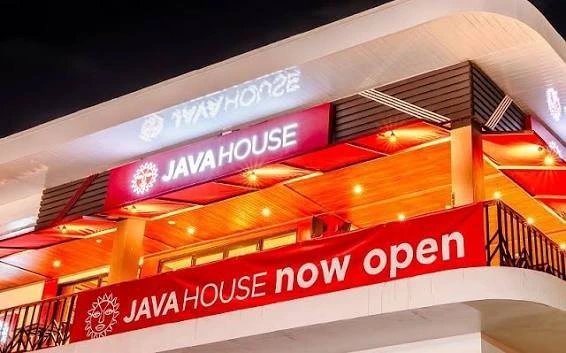

KAMPALA — The Tax Appeals Tribunal has upheld a Uganda Revenue Authority (URA) decision to treat Shs3.16 billion claimed by Java House Coffee Shop Uganda Limited as unsupported shareholder loans and reclassify the money as undeclared income, in a ruling that sharply criticised the company’s record keeping and handling of inter-company transactions.
In a detailed ruling delivered by Tribunal chairperson Hon. Crystal Kabajwara alongside members Christine Katwe and Willy Nangosyah, the tribunal said the restaurant chain failed to produce critical documentation proving that liabilities and loans from its predecessor company, Java Coffee and Tea Limited (JCTL), had legally passed to the current entity.
“The Applicant cared less and did not exercise the due diligence expected of a large corporate entity, moreover, with a multinational footprint,†the tribunal ruled.
“It beggars belief that an entity such as the Applicant engaged in a transaction involving the assumption of the entire business operations of its predecessor, JCTL, and not even a single document has been adduced before this Tribunal regarding the transfer of the business.â€
The case arose from a URA audit covering July 2014 to June 2020, during which the tax authority assessed Java House for VAT and income tax liabilities arising from disputed input VAT claims and what URA termed “unsupported loans†amounting to Shs3.16 billion.
Java House, which operates restaurants and coffee shops in Uganda as a subsidiary of Java House Mauritius, argued that the funds were genuine shareholder loans advanced through related companies including Nairobi Java House.
The company maintained that it inherited the liabilities of JCTL after taking over its Ugandan operations in 2015.
According to court records, the total shareholder loan stood at about Shs16.5 billion.
URA verified approximately Shs13.3 billion through stock transfers, management fees, capital expenditure, recapitalised interest and cash transfers, but rejected Shs3.16 billion for lack of supporting evidence.
The tribunal agreed with URA, saying the company failed to provide agreements, resolutions or transfer records linking JCTL’s liabilities to the applicant company.
“In the absence of any documentation supporting this, one cannot determine with certainty whether the Applicant assumed the liabilities,†the ruling stated.
“A bank statement issued to JCTL does not automatically become the Applicant’s statement in the absence of documentation linking it to the Applicant.â€
The tribunal further backed URA’s powers to recharacterise transactions for tax purposes, saying the authority had exercised those powers “judiciously and rationally.â€
“We therefore find that the powers to recharacterize the unsupported loans as undeclared income were exercised judiciously and rationally,†the panel ruled.
However, Java House secured a partial victory on a separate dispute involving input VAT claimed on refurbishment and construction works at several branches including Grand Imperial, Shell Lugogo, Acacia Kisementi, Shell Jinja, Imperial Mall Entebbe and Gapco Kamwokya.
URA had rejected the VAT claims, arguing that some invoices from contractor Sarova International Builders Uganda Limited could not be directly matched to payments and lacked clear narrations.
But the tribunal found sufficient evidence that the works were carried out and paid for.
“The Respondent does not dispute that the Applicant refurbished several of its branches. They also do not dispute that the contractor was SIBL and that they performed the services,†the tribunal noted.
It added that the only known relationship between Java House and the contractor was a commercial one for construction services.
“Therefore, in the absence of any other evidence to the contrary, it is highly unlikely that payments from the Applicant to SIBL could have been anything other than the services that SIBL was contracted to provide.â€
The tribunal consequently ordered URA to refund Shs237.3 million in input VAT to Java House, with interest computed under Section 34 of the VAT Act.
Still, the tribunal maintained the income tax and VAT assessments arising from the unsupported loans, dealing a major setback to the restaurant chain in one of the more closely watched corporate tax disputes involving multinational businesses operating in Uganda.
The ruling also sends a wider warning to multinational companies operating through related entities and intra-group financing arrangements that URA and the courts will demand detailed transactional records to support tax positions.
“Taxpayers must understand that they have a primary duty to maintain transactional documents to support their tax positions,†the tribunal said.


 Starlink goes live in Uganda; price comparisons against MTN, Airtel
Ultimate Uganda
Starlink goes live in Uganda; price comparisons against MTN, Airtel
Ultimate Uganda
 NSSF sets September 24 for Annual Members Meeting as savers await interest rate declaration
Ultimate Uganda
NSSF sets September 24 for Annual Members Meeting as savers await interest rate declaration
Ultimate Uganda
 Boda boda riders launch e-commerce, digital loans platform
Ultimate Uganda
Boda boda riders launch e-commerce, digital loans platform
Ultimate Uganda
 Rwanda: We Cannot Sit and Watch As Illicit Alcohol Kills People - Kagame
Ultimate Uganda
Rwanda: We Cannot Sit and Watch As Illicit Alcohol Kills People - Kagame
Ultimate Uganda
0 Comments