
Busitema University’s Second-Chance Programme Attracts Regional Attention
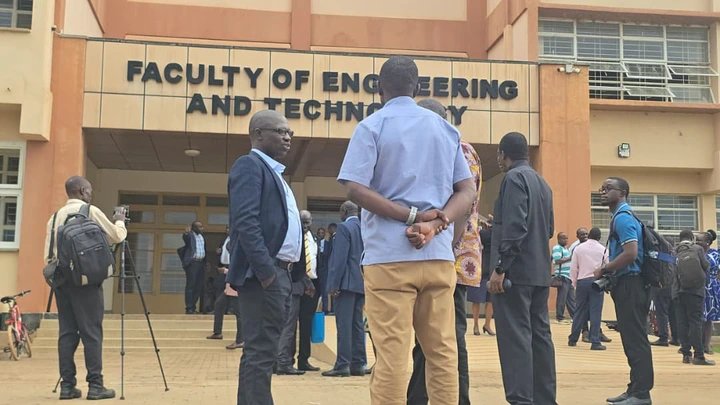

Busitema University’s Higher Education Certificate Programme is increasingly gaining regional recognition for giving students who missed direct university entry requirements a second chance to pursue higher education and rebuild their futures.
For many students at Busitema University, the Higher Education Certificate Programme is more than just an academic course — it is a second chance at rebuilding their dreams.
The programme targets students who did not meet direct entry requirements for university admission, giving them an opportunity to bridge academic gaps and qualify for degree programmes.
Faith Ongodia is among the beneficiaries whose life changed through the initiative.
“I was rotting at home after failing A-Level, but once I got here, I performed very well and I am now pursuing my degree course. To date, I still can’t believe it,†she said.
Introduced in 2019, the programme has since attracted thousands of learners from different parts of Uganda, many of whom say it has equipped them with both academic and practical skills needed to successfully transition into university degree programmes.
Maurice Owor, another beneficiary, said the programme restored his hope after scoring only one principal pass at A-Level.
“My A-Level journey was not good. I got one principal pass, but when Busitema University advertised the Higher Education Certificate Programme, I applied and was shortlisted. Later, I also benefited from support under FAWE Uganda for vulnerable students. After completing the programme, I obtained good grades and I am now pursuing a Bachelor’s degree in Electrical Engineering. I am grateful to the National Council for Higher Education for accepting this programme,†Owor said.
University administrators say the initiative is not only expanding access to higher education but also improving student preparedness and academic success.
According to Vice Chancellor Prof. Paul Waako, the programme has transformed the lives of many vulnerable students who previously had limited opportunities to access university education.
“This is a story of success and a story of enhancing opportunities for vulnerable children. A number of our students are already engineers, while others are nurses and doctors graduating this year. However, some still face challenges of dropping out due to tuition fees. We hope government can recognize this programme like others through sponsorship support to help vulnerable learners complete their studies,†Waako said.
The success of the programme is now attracting international attention.
A delegation from Zimbabwe led by the Forum for African Women Educationalists (FAWE) Africa is currently on a benchmarking visit at Busitema University to study how the model can be adapted and implemented in Zimbabwe.
The delegation met students, university administrators and programme coordinators before touring university facilities.
Prof. Fanuel Tagwira, Permanent Secretary in Zimbabwe’s Ministry of Higher and Tertiary Education, said the programme could help address challenges faced by many learners in Zimbabwe, especially girls who fail to attain the required principal passes for direct university admission.
“We received a team from Uganda in Zimbabwe that talked highly about this programme, and we realized it could provide a solution to challenges we face back home. Many students, especially female students, fail to proceed to university after missing the required two principal passes. We are here to study the programme so that we can possibly implement it in Zimbabwe,†Tagwira said.
The National Council for Higher Education says the programme continues to register remarkable success across Uganda.
Rev. Dr. Cyrus Ssebugenyi, Head of Audit Monitoring and Compliance at the council, said more than 50 institutions are currently implementing the programme, benefiting thousands of students nationwide.
“The programme is doing very well. So far, we have over 50 institutions implementing it, and more than 90,000 students have benefited,†he said.
As more countries seek practical ways of expanding access to higher education, Uganda’s second-chance model is increasingly emerging as a potential solution for thousands of learners across the region.


 The women who have been in King Oyo’s life
Ultimate Uganda
The women who have been in King Oyo’s life
Ultimate Uganda
 Ex Kagame Guard Commander Tom Byabagamba Dies in Rwandan Prison After 12 Years
Ultimate Uganda
Ex Kagame Guard Commander Tom Byabagamba Dies in Rwandan Prison After 12 Years
Ultimate Uganda
 Government begins salary payments for public sector workers – Reform Committee
Ultimate Uganda
Government begins salary payments for public sector workers – Reform Committee
Ultimate Uganda
 Temangalo land: NSSF, Nzenyi reach agreement
Ultimate Uganda
Temangalo land: NSSF, Nzenyi reach agreement
Ultimate Uganda
0 Comments