
Museveni’s challengers over the years
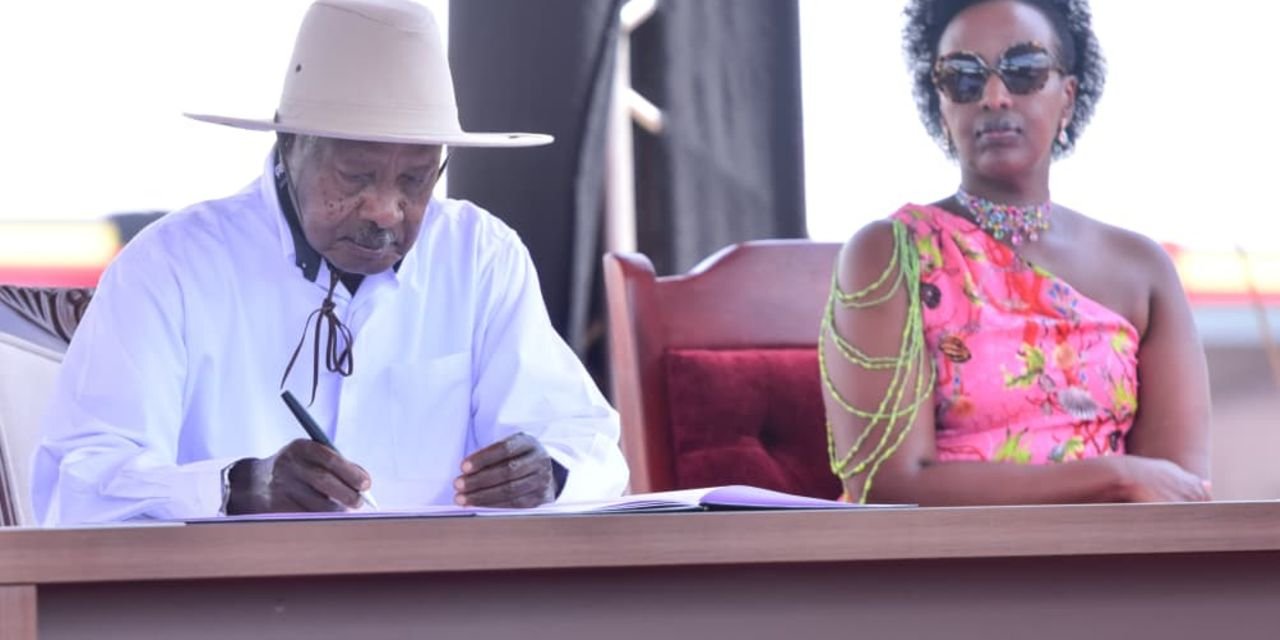

When President Museveni shot to power in 1986 by gun after a five-year guerrilla war, he famously declared that Africa’s biggest problem was leaders who overstayed in office.
Four decades later, the same man has just taken the presidential oath for the eighth time — and his seventh as an elected leader — cementing one of Africa’s longest-running presidencies and extending his grip on power beyond 40 years.
The irony is difficult to miss.
What began as a liberation project promising democratic renewal has evolved into a political machine whose resilience has repeatedly outlasted opponents, survived constitutional restraints, and reshaped Uganda’s electoral landscape through legal engineering, patronage politics, and the fragmentation of opposition forces.
Since Uganda’s first presidential election under the 1995 Constitution, Museveni has faced 33 challengers across seven electoral cycles. None has succeeded in unseating him.
His journey from revolutionary outsider to entrenched incumbent mirrors Uganda’s own democratic contradictions: regular elections held under constitutional order, but persistently shadowed by allegations of state intimidation, disputed outcomes, and accusations of institutional capture.
The first challenge: Ssemogerere’s test
Museveni’s first electoral test came in 1996, when his former ally in the broad-based transitional government, Paul Kawanga Ssemogerere, challenged him.
Museveni secured 74.3 percent of the vote against Ssemogerere’s 23.6 percent.
It was a commanding victory, but it also marked the beginning of Uganda’s modern opposition politics.
At the time, the country was still under the “Movement system,†which banned formal party competition and required candidates to run on individual merit.
The arrangement heavily favoured Museveni’s incumbency.
Mr Mayanja Muhammad Kibirige (Independent) was the other presidential candidate. He garnered 123291 of the total votes, representing 2.1 percent of the votes cast.
More than 6 million Ugandans voted in the elections out of over 8 million registered voters, representing 72.9% of Registered Voters.
Besigye: The rebellion within
The most formidable challenge to Museveni came not from traditional opposition ranks, but from within his own revolution.
In 2001, former bush war physician and ally Kizza Besigye broke ranks and mounted a serious challenge.
Museveni won with 69.4 percent, but Besigye’s 27.7 percent signalled deep cracks in the ruling establishment.
Besigye would contest four consecutive elections — 2001, 2006, 2011 and 2016 — becoming the face of Uganda’s resistance politics.
Twice he challenged Museveni’s victories in court.
In both cases, the Supreme Court acknowledged electoral irregularities but ruled they were insufficient to overturn results.
His campaigns exposed what critics described as structural advantages enjoyed by the incumbent: control of state machinery, security dominance, and vast financial reach.
Yet despite repeated defeats, Besigye transformed opposition politics from symbolic participation into sustained resistance.
The other candidates in the 2001 presidential race were; Aggrey Awori (RIP) came third with a total of 103,653 votes representing 1.4%, Mr Kibirige Mayanja got 73,045 votes representing 1.0 percent, Mr Bwengye Francis got 22,666 votes representing 0.3 percent, and Mr Chapaa Karuhanga, trailed by garnering 10,055 votes representing 0.1 percent.
Multiparty politics, same outcome
The 2005 referendum restored multiparty politics after nearly two decades of Movement rule.
Presented as democratic reform, the shift coincided with the controversial removal of presidential term limits, a constitutional amendment that cleared Museveni to contest indefinitely.
The first multiparty election in 2006 produced familiar results: Museveni won with 59.24 percent, his narrowest margin at the time, Dr Besigye followed closely with 37.39 percent.
For many analysts, the election proved that procedural liberalisation did not necessarily weaken incumbent dominance. Instead, Museveni adapted.
His political strategy evolved from liberation legitimacy to institutional consolidation.
The other presidential candidates in the 2006 polls were: Mr John Kizito Ssebaana of DP, who came in the third position with 109,583 votes, representing 1.58, Mr Abed Bwanika, who came fourth with 65,956 votes, representing 0.95 percent, and Ms Obote Kalule Miria, who ran on the Opposition UPC ticket, trailed with 57,071 votes, representing 0.82%.
In the 2011 presidential polls, the contest was between Mr Museveni and Dr Besigye.
Museveni, contesting on the NRM party ticket, brushed aside his opponents when he garnered 5,436,639 million votes representing 68.57%. In comparison, Besigye maintained his grip on the second spot for the third time in a row with 2,071,397 million votes representing 26.13%, Mr Norbert Mao a new face on the opposition DP ticket came third with 148,170 representing 1.87%. His UPC counterpart, Olara Otunnu closely followed him with 125,465 representing 1.58% and a former FDC stalwart, Betty Olive Kamia who found love in a new political party, the Uganda Federal Alliance scored a total of 52,935, representing 0.67% and Abed Bwanika, this time on People’s Development Party garnered 51,565 votes representing 0.65%.
Mr Samuel Lubega, an independent candidate got 32,811 votes, representing 0.41% and the former NRM bigwig who fell apart with Museveni over the removal of the term limit in 2005, Bidandi Ssali of Peoples’ Progressive Party, trailed it off with 9,294 votes, representing 0.12%
The 2016 presidential polls were slightly different, as another NRM big wig, Amama Mbabazi joined the campaigns.
Mr Mbabazi who was the super minister and the secretary general of the NRM, spiced up the polls this time. But at the end, the electoral commission announced Mr Museveni the winner with 60 percent, followed by Dr Besigye with 35.61 percent, with Mr Mbabazi coming in the distant third.
Other presidential candidates were Prof Venansius Baryamureeba, the former Vice Chancellor of Makerere University, Maureen Kyalya, Benon Biraaro, a former army general and Elton Jon Mabirizi.
The age-limit battle and succession questions
By 2017, another constitutional safeguard stood in Museveni’s way: the presidential age limit of 75 years.
Parliament removed it amid chaotic scenes and fierce public opposition.
The amendment allowed Museveni, then 73, to seek further terms.
The move reinforced growing concerns that Uganda’s constitutional order was increasingly being redesigned around one man’s political survival.
It also intensified speculation about succession — a question Museveni has consistently avoided answering directly.
Bobi Wine and generational rupture
The 2021 election introduced Museveni’s most culturally potent challenger yet: Robert Kyagulanyi Ssentamu aka Bobi Wine.
Unlike Besigye’s reformist legalism, Bobi Wine’s insurgency was generational and populist, rooted in urban frustration and youth discontent.
His rise transformed opposition mobilisation.
For the first time, Mr Museveni faced a rival who commanded emotional resonance beyond traditional party structures.
Though Museveni retained power with 58.38 percent — his lowest share since 1996 — the result exposed shifting demographics and shrinking enthusiasm for liberation-era politics.
Central Uganda, once an NRM stronghold, delivered devastating losses to ruling party candidates.
The emergence of the National Unity Platform signaled a historic political realignment.
The other candidates in the 2021 race included: Gen. Mugisha Muntu Greggory of Alliance for National Transformation with 0.65%, Mr Norbert Mao of DP who bounced back from the 2016 absence, garnering 0.56 percent of the votes cast, Gen Henry Tumukunde, who got 0.5 percent, Kabuleta Kiiza Joseph, also an independent candidate scored 0.44 percent, Ms Nancy Kalembe Linda (Independent), who got 0.37 percent, Mr John Katumba (Independent) who garnered 0.36 percent, Mr Fred Mwesigye Fred (Independent) with 0.25 percent, and Mr Mayambala Willy, (Independent), who trailed with 0.15 percent.
2026: Restoration of dominance
The 2026 election appeared to reverse that erosion.
Museveni returned with 71.65 percent against Bobi Wine’s 24.72 percent and six other challengers.
The victory restored numerical dominance but did little to settle questions about the political transition.
Opposition groups rejected the outcome, citing familiar complaints of repression and uneven competition.
Still, Museveni’s continued victories point to a larger reality: Uganda’s opposition has repeatedly struggled to convert public discontent into unified electoral force.
Other candidates were; Mr Robert Kasibante (National Peasants Party), Mr Joseph Mabirizi (Conservative Party), Mr Nandala Mafabi (Forum for Democratic Change), Gen. Mugisha Muntu – (Alliance for National Transformation), Mr Munyagwa Mubarak Sserunga, (Common Man’s Party), and Mr Frank Kabinga Bulira (Revolutionary Peoples Party).
Fragmentation remains Museveni’s greatest political ally.
The unfinished question
Forty years after taking power, Museveni remains Uganda’s central political figure.
He has outlasted rivals, rewritten constitutional limits, and adapted faster than every generation of challengers.
Yet beneath the victories lies an unresolved national question: whether Uganda’s political future can emerge beyond the shadow of one man.


 Government will not gazette Kijanangoma as King of Tooro for now - Attorney General insists
Ultimate Uganda
Government will not gazette Kijanangoma as King of Tooro for now - Attorney General insists
Ultimate Uganda
 King Oyo’s Body to Arrive Thursday
Ultimate Uganda
King Oyo’s Body to Arrive Thursday
Ultimate Uganda
 Besigye, Lukwago expected to meet Gen. Salim Saleh today at Kapeeke
Ultimate Uganda
Besigye, Lukwago expected to meet Gen. Salim Saleh today at Kapeeke
Ultimate Uganda
 Rwabwogo Advised to ‘Eat His Bishop’ As MK Prepares to Enter State H’se: PREZ MUSEVENI ON HIS WAY OUT
Ultimate Uganda
Rwabwogo Advised to ‘Eat His Bishop’ As MK Prepares to Enter State H’se: PREZ MUSEVENI ON HIS WAY OUT
Ultimate Uganda
0 Comments