
Founder of Biyinzika Poultry ordered to refund Shs 130m to foreign investors over botched land deal
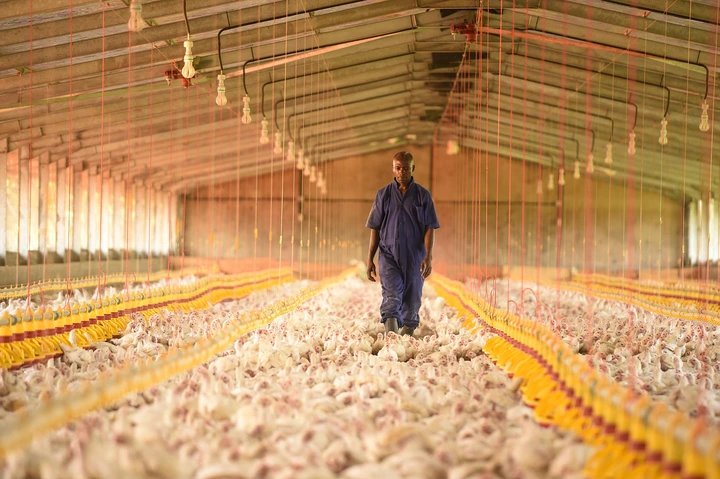

The Supreme Court has ordered Samuel Mukasa, the founder of Biyinzika Enterprises, to refund his foreign business partners more than Shs 130 million after a failed poultry farming land deal.
Mukasa and his wife Milly Mukasa established Biyinzika Enterprises Limited, now Biyinzika Poultry International Limited, as a poultry breeder farm in 1990.
In a landmark judgment, all five justices of the Supreme Court unanimously agreed that although Biyinzika Farmers Ltd, the special purpose vehicle formed between Agro Business Development and Biyinzika Enterprises, could not legally own mailo land because it qualified as a “non-citizen companyâ€, Mukasa and his wife, Milly, could not keep money paid to them after the land transaction collapsed.
The dispute began in 2004 when Agro Business Development, a foreign company, entered a joint venture with Biyinzika Enterprises Ltd to establish a poultry farming business in Uganda.
The two companies created Biyinzika Farmers Ltd as a special purpose vehicle for the project.
Under the arrangement, the foreign investors injected money into the project while Mukasa and his wife were expected to secure land for the poultry farm.
Court records showed that the investors paid Shs63 million to the Mukasas for the acquisition of mailo land at Buddo in Wakiso. They later spent another Shs70.895 million constructing the poultry farm on the land.
However, the relationship later broke down after the foreign investors discovered that the company they had created was legally barred from owning mailo land.
The central legal issue in the case became whether Biyinzika Farmers Ltd qualified as a Ugandan company or a non-citizen company under Uganda’s land laws.
In her ruling, Justice Catherine Bamugemereire explained that the company’s memorandum and articles of association did not contain restrictions stopping foreigners from owning shares in the company. Because of that omission, the law automatically treated it as a foreign/non-citizen company.
“The constitutional design reflects a deliberate policy to preserve Mailo tenure as a form of indigenous landholding, insulated from non-citizen acquisition,†she ruled.
The dispute then shifted to a second question. If the land deal was illegal from the beginning, could the foreign investors recover the money they had already paid?
The foreign investors, who were represented by Anthony Bazira of Byenkya, Kihika and Company Advocates, argued that Mukasa and his wife had received money for land they could not legally transfer and should therefore refund it.
Bazira also argued that denying the foreign investors compensation would unfairly enrich the Mukasas.
On the other side, Mukasa’s lawyers argued that the contracts were illegal and therefore unenforceable. They maintained that the investors could not seek compensation arising from an illegal transaction.
They also filed a cross appeal, claiming they had overpaid money connected to procurement contracts for poultry feed additives known as Unimix from the investors.
They alleged that the actual cost for 1,000 metric tonnes of Unimix should have been $300,000 dollars and not $386,000 as claimed by the investors.
But the justices of the Supreme Court rejected those arguments.
Justice Bamugemereire said the case was not about enforcing an illegal contract but about refunding money paid under a transaction that completely failed.
“The [foreign investors] are not attempting to enforce the contested transaction; instead, they seek to recover funds paid in relation to a transaction that did not materialise,†she ruled.
She found that the Mukasas had received the money but failed to provide the land interest promised.
“Allowing restitution does not contravene the policy against unlawful land ownership; rather, it prevents the [Mukasas] from unjust enrichment,†Justice Bamugemereire ruled.
The Supreme Court also criticised the earlier Court of Appeal ruling, which had only awarded Shs30 million to the investors.
Justice Bamugemereire said the lower court had taken an “overly technical approach.â€
The court eventually ordered Mukasa and his wife to refund the entire Shs 60 million paid for the land transaction.
The Mukasas were also ordered to pay Shs 70.895 million for losses incurred in constructing the poultry farm.
In total, the investors were awarded Shs 130.895 million, excluding interest and legal costs. The Supreme Court further ordered that the money would attract an annual interest of 12% until full payment is made.
Mukasa and his wife were also directed to pay 80% of the legal costs.
Justice Bamugemereire concluded that while the foreign investors could not legally own mailo land, fairness demanded that they recover their money.
Justice Christopher Izama Madrama agreed with the decision and warned that refusing compensation would reward fraud.
“I concur with my learned sister that denying a remedy to the 1st appellant would result in unjust enrichment,†he wrote.


 Starlink goes live in Uganda; price comparisons against MTN, Airtel
Ultimate Uganda
Starlink goes live in Uganda; price comparisons against MTN, Airtel
Ultimate Uganda
 NSSF sets September 24 for Annual Members Meeting as savers await interest rate declaration
Ultimate Uganda
NSSF sets September 24 for Annual Members Meeting as savers await interest rate declaration
Ultimate Uganda
 Boda boda riders launch e-commerce, digital loans platform
Ultimate Uganda
Boda boda riders launch e-commerce, digital loans platform
Ultimate Uganda
 Rwanda: We Cannot Sit and Watch As Illicit Alcohol Kills People - Kagame
Ultimate Uganda
Rwanda: We Cannot Sit and Watch As Illicit Alcohol Kills People - Kagame
Ultimate Uganda
0 Comments