
How the Removal of Term and Age Limits Led to Uganda’s Institutional Crisis

2005, Parliament removed presidential term limits, allowing the incumbent President to seek office indefinitely. Twelve years later, it removed the presidential age limit under Article 102(b) of the Constitution, prompting widespread fears that the prospects for a peaceful constitutional transition had been fundamentally undermined. Many warned that Uganda was drifting towards a life presidency and a return to the violent patterns of political succession that had characterised much of its post-independence history.
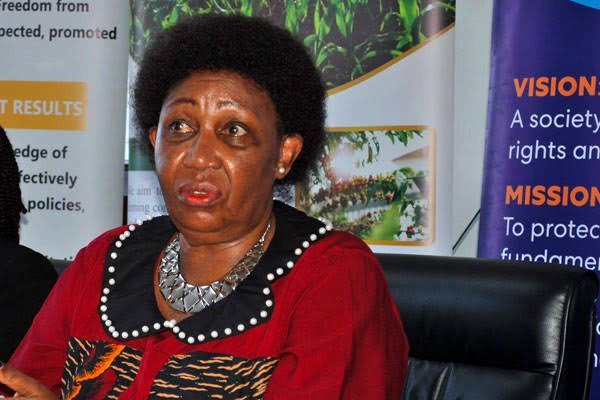
Among those who sounded the alarm was Morrison Rwakakamba. He argued that removing these constitutional safeguards amounted to a fundamental compromise of the spirit of the Constitution and created the conditions for a life presidency with potentially grave consequences for political stability.
Today, with the emergence of the Patriotic League of Uganda (PLU) under the Chief of Defence Forces (CDF), General Muhoozi Kainerugaba, and the apparent disregard for Article 208 of the Constitution, which requires the Uganda People’s Defence Forces to remain non-partisan, professional and subordinate to civilian authority, many of those warnings appear strikingly prescient.
Indeed, Morrison Rwakakamba deserves recognition for articulating, with remarkable clarity, the constitutional risks that lay ahead. To understand how Uganda’s current institutional crisis was engineered, it is worth revisiting his observations in an interview published by The Observer on 25 September 2017, at the height of the national debate over the proposed removal of Article 102(b).
On governance being subordinated to personal political survival, Rwakakamba observed:
“There is need for more imagination. I think the President is more concerned with maintaining a hold onto power. For example, you have a Parliament spending so many hours trying to diminish the Constitution by removing Article 102(b) instead of concentrating on those things in the 2016 manifesto… the entire Cabinet and Parliament are busy weakening the Constitution in order to perpetuate a life presidency.â€
On the illusion of economic transformation while constitutional politics consumed the State, he added:
“To say you want Uganda to move to a middle-income status yet you are presiding over an economy that is growing at 3.8 per cent per annum… you need an economy that is consistently growing at 10 per cent per annum for ten years. If your population is growing at three per cent and that population is jobless… Deploying money on buying a machine to detect pornography and not in the productive sectors of the economy shows that your agenda is not transformative.â€
His most powerful warning, however, concerned what he described as the dismantling of the Constitution’s final institutional safeguards.
On the constitutional “firewalls†against instability, he warned:
“We are concerned with the age limit removal. That is our last firewall… If you don’t have institutions that can deliver, then you have term limits. If the term limits were removed through political manoeuvring, then at least have other caps… If it passes, it portends trouble for the country and pushes Uganda’s risk profile through the roof.â€
He continued:
“You are faced with a life presidency and opening this window is allowing Museveni to be here not only beyond 2021, but 2026, or even 2031. In my view, President Museveni has done his part. He should be retiring. If he doesn’t, he is pushing us to the Zimbabwe corridor.â€
Perhaps his most profound constitutional insight came in challenging the long-standing official argument that Uganda’s problems lay with “the what†rather than “the who.â€
On the relationship between constitutional succession and political stability, he concluded:
“The President has been saying that the problems of Uganda are ‘the what’ not ‘the who.’ ‘The what’ has been here: it is the lack of jobs, health care and education. If ‘the what’ is not changing, then the problem is ‘the who.’ Year 2021 is the opportunity to re-imagine ‘the who’ to solve ‘the what.’… If the Constitution is removed, then people lose hope and you cannot comfortably say that people will not try to look for other means that are violent in nature.â€
Looking back today, these observations read less like political commentary than constitutional prophecy.
The removal of presidential term limits in 2005—procured through the transactional distribution of five million shillings to Members of Parliament—fundamentally commercialised the legislative arena, signalling that even the supreme law of the land could be bartered for regime survival.
By the time the age limit was targeted in 2017, the trajectory had evolved from mere financial inducement to naked coercion. Even though there were attempts to maintain a transactional veneer by paying 29 million shillings to each legislator – officially billed as facilitation to consult with their constituents – the institutional environment had fundamentally shifted. The majority of Opposition MPs recognized the disbursement as a political bribe and publicly returned the funds. Ultimately the amendment was not secured through constitutional consensus but under the shadow of force, punctuated by the unprecedented invasion of Parliament by the Special Forces Command (SFC), which violently assaulted and removed dissenting Members of Parliament from the Chamber.
Yet the most consequential institutional failure lay not in Parliament but in the courts.
When the amendment was challenged, the Constitutional Court acknowledged the military’s unlawful intrusion into Parliament but nevertheless upheld (4 -1) the constitutional amendment. On appeal the Supreme Court confirmed the decision (4-3). In doing so, the highest courts of the land effectively legitimised a constitutional change enacted under the shadow of military coercion. The final institutional firewall—the judiciary—thus yielded where it was expected to stand firm.
Once constitutional restraints are dismantled, or their violation judicially excused, in order to preserve an individual in power rather than the integrity of the constitutional order, the erosion of every subsequent institutional safeguard becomes progressively inevitable.
The increasing political role of the military, the rise of the PLU under a serving Chief of Defence Forces, and growing concerns over compliance with Article 208 should therefore not be viewed as isolated or contemporary aberrations. They are the logical culmination of a constitutional trajectory that began by commercialising constitutional amendment in 2005, escalated into military intimidation in 2017, and was ultimately normalised through judicial validation.
The question confronting Uganda today is therefore no longer whether the removal of presidential term and age limits mattered. The more profound question is whether those amendments became the constitutional gateway through which the Republic entered its present constitutional crisis.
Measured against the warnings issued by Mr. Morrison Rwakakamba in 2017 and the events that have since unfolded, the evidence points overwhelmingly in one direction: they did.
The writer is a senior advocate, former Member of Parliament and former Minister.


 Government will not gazette Kijanangoma as King of Tooro for now - Attorney General insists
Ultimate Uganda
Government will not gazette Kijanangoma as King of Tooro for now - Attorney General insists
Ultimate Uganda
 King Oyo’s Body to Arrive Thursday
Ultimate Uganda
King Oyo’s Body to Arrive Thursday
Ultimate Uganda
 Besigye, Lukwago expected to meet Gen. Salim Saleh today at Kapeeke
Ultimate Uganda
Besigye, Lukwago expected to meet Gen. Salim Saleh today at Kapeeke
Ultimate Uganda
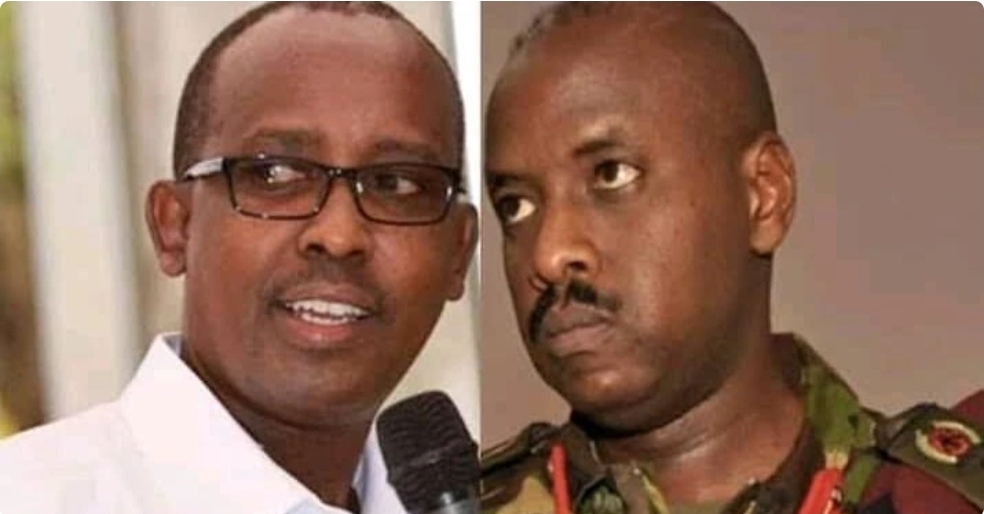 Rwabwogo Advised to ‘Eat His Bishop’ As MK Prepares to Enter State H’se: PREZ MUSEVENI ON HIS WAY OUT
Ultimate Uganda
Rwabwogo Advised to ‘Eat His Bishop’ As MK Prepares to Enter State H’se: PREZ MUSEVENI ON HIS WAY OUT
Ultimate Uganda
0 Comments