
Nabbanja Flags Off Emergency Food Relief for Karamoja
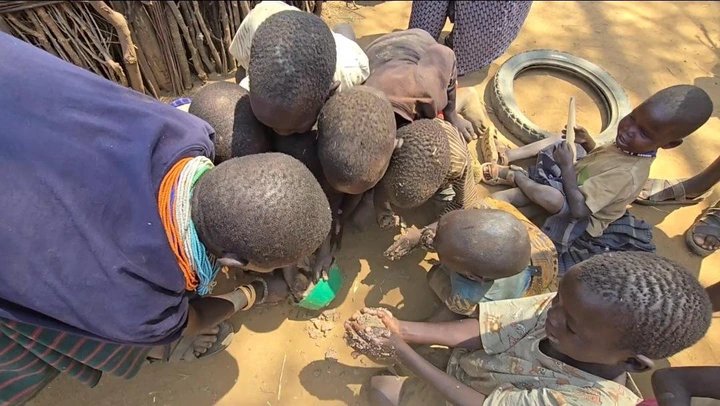

Prime Minister Robinah Nabbanja has flagged off the distribution of emergency food relief to vulnerable households in Karamoja, saying the intervention—ordered by President Museveni—will reach thousands of families over the next two months as government races to contain a hunger crisis that has claimed at least 19 lives.
Prime Minister Robinah Nabbanja has flagged off the distribution of emergency food relief to vulnerable households in the Karamoja sub-region, warning that any officials who divert the supplies will face tough punishment.
The relief operation comes days after reports indicated that at least 19 people had died from hunger across the sub-region, with local leaders warning that prolonged drought has pushed many families into severe food insecurity.
Speaking during the flag-off ceremony on Monday, Nabbanja said the emergency intervention was undertaken on the directive of President Yoweri Museveni following reports of worsening hunger in Karamoja.
"This relief response was a directive from the President," Nabbanja said.
She explained that the Office of the Prime Minister (OPM) turned to the National Enterprise Corporation (NEC), the commercial arm of the Uganda People's Defence Forces (UPDF), after private suppliers quoted what she described as exorbitant prices for the food.
"The private suppliers were charging us exorbitant prices. NEC is supplying the food at a relatively cheaper price," she said.
Under the programme, government will distribute 9 million kilogrammes of food over the next two months to vulnerable households across the nine districts of Karamoja.
Nabbanja said the food would be delivered directly to parishes rather than sub-counties to reduce transport challenges and ensure it reaches beneficiaries more quickly.
Each household will receive 20 kilogrammes of maize flour (posho) and 10 kilogrammes of beans, she said.
The Prime Minister directed district leaders to personally oversee the distribution exercise to ensure the food reaches the intended beneficiaries.
"All leaders in the districts of Karamoja must take up this responsibility and ensure the food reaches the very vulnerable," she said.
"There will be no tolerance for the diversion of relief items. Anyone found responsible will be dealt with."
The Minister of State for Relief, Disaster Preparedness and Refugees, Sam Engola, said the rapid response was made possible through close coordination among government agencies.
"The teamwork has enabled us to deliver this intervention within three days," Engola said.
He, however, called for long-term investments to address the recurring food crises in Karamoja.
"We should think about constructing large dams for irrigation and silos for food storage so that we can sustainably address food insecurity," he said.
State Minister for Karamoja Affairs Esther Anyakun welcomed the intervention, thanking the government and the Office of the Prime Minister for responding swiftly to the unfolding humanitarian emergency.
"I thank the government, through the Office of the Prime Minister, for reacting quickly to help the people of Karamoja," she said.
Maj Gen James Mugira, the executive director of the National Enterprise Corporation, said supporting the operation was consistent with the UPDF's mandate of contributing to national development.
"It is our mandate as the UPDF to support government in every way possible," Mugira said.
He added that all the food being supplied under the programme was produced on UPDF farms.
The intervention follows mounting concern over the humanitarian situation in Karamoja, where prolonged drought has devastated crop production and left thousands of households struggling to find food.
As of last weekend, local authorities had reported 19 hunger-related deaths, with children and older persons among the worst affected.
In Moroto District, Vice Chairperson Stephane Adupa Namer welcomed the government's intervention but warned that the planned food ration may only provide short-term relief because of the large family sizes common in Karamoja.
"The planned quantity cannot last a week because of the large size of households in Karamoja. Some men have four or more wives and many dependants. In such cases, the food may last only three days," she said.
Her concerns are echoed by many residents.
In Nawanatau Village, 75-year-old Lomongin Lomer, who cares for a household of 20 people, said the government's ration would be exhausted within days.
Similarly, Peter Lomongin, the Local Council I chairperson of Nachuka Village, said the food allocation would only sustain many families briefly.
"The food will only last us three days—just three days," he said.
Some leaders have urged government to complement food distribution with community feeding centres where vulnerable people can access regular meals.
Adupa said such centres would provide a more sustainable response for elderly people, children and other vulnerable groups.
For some families, however, the relief has come too late.
In Arechek Village, residents recently buried Veronica Nachuge, who they said died after spending several days without food.
Peter Lotukei, the Parish Chief of Nawanatau, said three hunger-related deaths had already been recorded in his parish alone.
Residents say many households have exhausted their food stocks, with some surviving on residue from locally brewed sorghum beer after crops failed due to the prolonged dry spell.
The latest government intervention is expected to provide immediate relief, but local leaders continue to call for longer-term investments in irrigation, water infrastructure and climate-resilient agriculture to prevent the region from repeatedly sliding into humanitarian crises.


 Government will not gazette Kijanangoma as King of Tooro for now - Attorney General insists
Ultimate Uganda
Government will not gazette Kijanangoma as King of Tooro for now - Attorney General insists
Ultimate Uganda
 King Oyo’s Body to Arrive Thursday
Ultimate Uganda
King Oyo’s Body to Arrive Thursday
Ultimate Uganda
 Besigye, Lukwago expected to meet Gen. Salim Saleh today at Kapeeke
Ultimate Uganda
Besigye, Lukwago expected to meet Gen. Salim Saleh today at Kapeeke
Ultimate Uganda
 Rwabwogo Advised to ‘Eat His Bishop’ As MK Prepares to Enter State H’se: PREZ MUSEVENI ON HIS WAY OUT
Ultimate Uganda
Rwabwogo Advised to ‘Eat His Bishop’ As MK Prepares to Enter State H’se: PREZ MUSEVENI ON HIS WAY OUT
Ultimate Uganda
0 Comments