
Understaffing, Not Negligence, is Crippling Mbarara Hospital, Radiographers Say
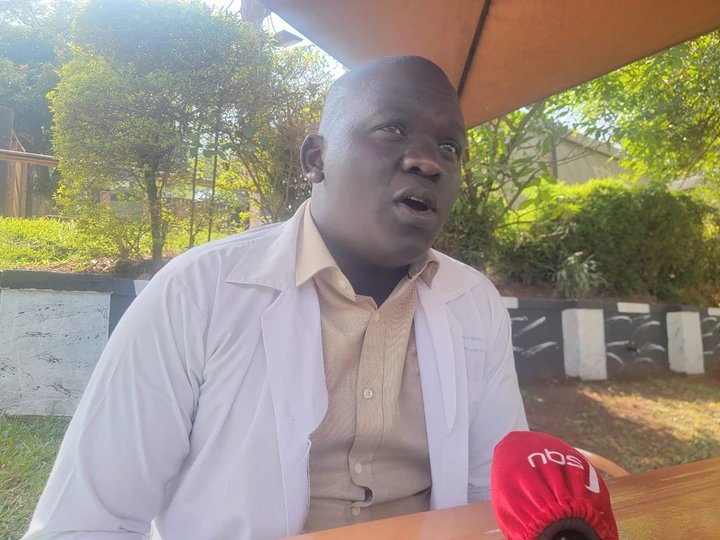

Micah Muhangi
The Society of Radiographers of Uganda has defended the cost-sharing model for advanced diagnostic imaging services in public hospitals, urging the Ministry of Health to address chronic staffing shortages and underfunding, which it says are the real causes of service delivery challenges at Mbarara Regional Referral Hospital.
"There are more machines than radiographers on the ground. One person cannot continuously move from operating an X-ray machine to CT scan, MRI and ultrasound throughout the day without compromising service quality," Micah Muhangi, President of the Society of Radiographers of Uganda, told journalists on Tuesday.
Muhangi was responding to last week's impromptu inspection of Mbarara Regional Referral Hospital by Health Minister Dr. Chris Baryomunsi.
The minister made an unannounced visit to the hospital between 11:00 p.m. and 2:30 a.m., during which he expressed shock at the state of service delivery. He subsequently ordered an immediate probe into the hospital's operations after receiving complaints from patients, including allegations that some had been asked to pay for imaging services.
According to Muhangi, the minister's surprise visit was a welcome move because it promotes accountability among health workers.
"We support the minister for going to the ground because it helps hold health workers accountable and ensures Ugandans receive the services they deserve," he said.
However, Muhangi clarified that while X-ray and ultrasound services at regional referral hospitals are provided free of charge, CT scans and MRI examinations operate under an approved cost-sharing arrangement.
He explained that CT and MRI services require costly consumables and routine maintenance, expenses that government funding alone does not adequately cover.
According to Muhangi, CT scans often require contrast media costing about Shs120,000 per patient, while MRI machines require helium gas, air conditioning, preventive maintenance and regular servicing to remain operational.
"The money collected through cost-sharing helps us buy consumables, maintain equipment and keep these machines running. Without it, the equipment would frequently break down, denying services to patients," he said.
The radiographers' society noted that imaging services remain considerably cheaper in public hospitals than in private health facilities.
For example, a CT scan costs between Shs100,000 and Shs150,000 at regional referral hospitals before contrast is administered, compared to approximately Shs300,000 at private facilities. MRI scans at Mbarara Regional Referral Hospital cost between Shs350,000 and Shs500,000, while similar services at private hospitals often exceed Shs700,000.
The society also cautioned political leaders against creating the impression that all imaging services in government hospitals should be entirely free.
"We urge leaders not to mislead the public into believing that patients should never pay anything. The cost-sharing arrangement is intended to sustain services and ensure equipment remains functional for everyone," Muhangi said.
Beyond financing, the radiographers identified severe understaffing as the biggest challenge affecting service delivery at Mbarara Regional Referral Hospital.
Muhangi said the hospital's radiology department is operating at only about 10 percent of its approved staffing structure, with only four radiographers currently serving instead of the recommended 34 positions approved by the Ministry of Public Service.
The staffing shortage, he said, forces the same personnel to operate X-ray, ultrasound, CT scan and MRI services, resulting in fatigue, burnout and delays in patient care.
He added that the shortage extends beyond radiographers to radiologists, the specialist doctors responsible for interpreting medical images and producing diagnostic reports.
According to Muhangi, the lack of radiologists explains why some patients are referred elsewhere to obtain radiology reports despite having undergone scans at government hospitals.
"If hospitals lack radiologists, patients receive the images but cannot obtain official reports. Government needs to recruit both radiographers and radiologists to provide complete diagnostic services," he said.
Muhangi also attributed the absence of night imaging services at many regional referral hospitals to inadequate staffing levels.
He explained that radiographers work with ionising radiation and cannot remain continuously exposed without adequate rest periods, in line with occupational safety standards.
"With only four radiographers operating an entire department, it is impossible to sustain 24-hour services safely," he said.
The society further criticised the growing practice of assigning health workers with only short-term training to operate specialised imaging equipment.
According to Muhangi, some health workers are receiving two-week ultrasound training to fill staffing gaps, despite radiographers and sonographers undergoing four to five years of specialised education.
He warned that replacing qualified imaging professionals with briefly trained personnel could compromise diagnostic accuracy, resulting in misdiagnosis, inappropriate treatment and poorer patient outcomes.
To address persistent financing and equipment challenges, the society renewed its call for Parliament to expedite the National Health Insurance Scheme.
Muhangi argued that the scheme would provide sustainable funding for specialised diagnostic equipment, recruitment of health professionals, maintenance of imaging machines and procurement of essential consumables needed to keep services running


 The women who have been in King Oyo’s life
Ultimate Uganda
The women who have been in King Oyo’s life
Ultimate Uganda
 Ex Kagame Guard Commander Tom Byabagamba Dies in Rwandan Prison After 12 Years
Ultimate Uganda
Ex Kagame Guard Commander Tom Byabagamba Dies in Rwandan Prison After 12 Years
Ultimate Uganda
 Government begins salary payments for public sector workers – Reform Committee
Ultimate Uganda
Government begins salary payments for public sector workers – Reform Committee
Ultimate Uganda
 Temangalo land: NSSF, Nzenyi reach agreement
Ultimate Uganda
Temangalo land: NSSF, Nzenyi reach agreement
Ultimate Uganda
0 Comments