
Non-Tariff Barriers Behind Uganda’s $376m Trade Deficit With Kenya, Tanzania – Report


KAMPALA: Uganda’s trade deficit with its East African Community (EAC) partners widened sharply in May, driven by rising imports and persistent non-tariff barriers that continue to limit the country’s exports to Kenya and Tanzania, the finance ministry said.
According to the Ministry of Finance’s latest Performance of the Economy Report, Uganda recorded a trade deficit of $376.87 million with EAC partner states in May 2026, more than three times the $112.75 million deficit recorded in the same month last year.
The ministry said the deterioration was caused by a 62.2% increase in imports from EAC countries and a 3.6% decline in export earnings within the regional bloc.
“The persistent trade deficits with Kenya and Tanzania are largely attributed to the continued existence of non-tariff barriers while the country continues to import substantial volumes of goods from both trading partners,†the report said.
The East African Community is a customs union and common market designed to allow the free movement of goods, services and people. While member states have largely eliminated import tariffs on goods originating within the bloc, businesses have long complained that non-tariff barriers continue to undermine regional trade.
These include repeated customs inspections, lengthy border clearance procedures, differing product certification requirements, roadblocks, licensing restrictions and other administrative measures that increase transport costs and delay deliveries.
Uganda’s largest bilateral trade deficit was with Kenya, at $358.96 million, followed by Tanzania, at $162.15 million, reflecting the country’s continued reliance on imports of manufactured goods, fuel, industrial raw materials and consumer products from the two neighbours.
Uganda, however, recorded trade surpluses with the Democratic Republic of Congo ($120.43 million), South Sudan ($53.90 million) and Rwanda ($28.95 million), where it exports food products, cement, steel, pharmaceuticals and other manufactured goods.
The report said EAC partner states have agreed to remove the remaining non-tariff barriers beginning in the 2026/27 financial year to improve market access and facilitate regional trade.
The commitment comes as the bloc seeks to deepen economic integration, although previous pledges to eliminate such barriers have often faced delays in implementation.
The EAC remains Uganda’s second-largest export market after the Middle East, making easier access to regional markets crucial for the country’s manufacturers and agricultural exporters.
Economists say reducing non-tariff barriers could help Uganda increase exports, narrow its trade deficit and strengthen industrial growth.


 Starlink goes live in Uganda; price comparisons against MTN, Airtel
Ultimate Uganda
Starlink goes live in Uganda; price comparisons against MTN, Airtel
Ultimate Uganda
 NSSF sets September 24 for Annual Members Meeting as savers await interest rate declaration
Ultimate Uganda
NSSF sets September 24 for Annual Members Meeting as savers await interest rate declaration
Ultimate Uganda
 Boda boda riders launch e-commerce, digital loans platform
Ultimate Uganda
Boda boda riders launch e-commerce, digital loans platform
Ultimate Uganda
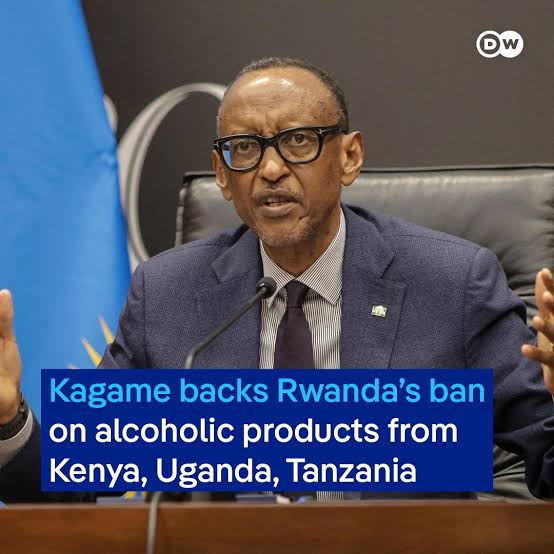 Rwanda: We Cannot Sit and Watch As Illicit Alcohol Kills People - Kagame
Ultimate Uganda
Rwanda: We Cannot Sit and Watch As Illicit Alcohol Kills People - Kagame
Ultimate Uganda
0 Comments