
Stanbic Bank loses bid to sell mortgaged property after dispute over spousal consent


Godfrey Adia, a prominent businessman in Arua, has secured a temporary legal victory over Stanbic Bank after the court ruled that the bank could not sell his property because it had failed to verify whether he had obtained his wife’s consent before taking out a mortgage.
That dramatic argument became one of the central issues in a bitter dispute between Stanbic Bank, Capital Commodities and Beverages Co. Ltd and Adia.
In the end, Justice Harriet Grace Magala failed to decide whether the mortgage was valid and instead ruled that the dispute was too complex to be decided through a quick court procedure.
One of the contested issues was the identity of Adia’s wife, whose consent the bank said it had secured.
Justice Magala dismissed the case and ordered the bank to pay Adia’s legal costs.
The dispute began in March 2020, when Capital Commodities and Beverages obtained a Shs90 million term loan from Stanbic Bank.
According to the bank, the loan was secured by a piece of land in Ayivu County which was registered in the name of Adia, a director of the company.
The bank said Adia also signed a personal guarantee promising to pay any money due if the company failed to do so.
Stanbic Bank told court that Capital Commodities later defaulted on the loan, so it issued notices of default on July 14, 2023 and October 31, 2023.
Finally, on December 1, 2024, through the postal service, it issued a notice of sale and also advertised the property for sale in the Daily Monitor.
It claimed that Adia remained on the property and refused to allow anyone access, making it impossible to sell the land. By September 4, 2025, Stanbic said the outstanding debt had risen to Shs 62 million.
The bank therefore asked the court to declare that it was entitled to foreclose on the mortgage, sell the land, evict Adia and award it the costs of the case.
The bank’s application was supported by an affidavit sworn by Norris Mutahunga, its legal officer for recoveries, who repeated that the loan remained unpaid and continued attracting interest.
But Adia said the case had been brought too early because the required statutory notices had never been properly served. He argued that he signed the loan documents only as a director of the company and not in his personal capacity.
Adia further maintained that his personal guarantee did not amount to mortgaging his own property and accused the bank of negligence for failing to obtain a power of attorney and for failing to obtain his wife’s consent before accepting the mortgage over what he described as matrimonial property.
One of the biggest disagreements concerned the identity of Adia’s wife.
Adia argued that the bank had failed to obtain the consent of Letasi Winnie, whom he identified as his wife, before mortgaging the property as required under Section 5(1)(a) of the Mortgage Act.
Stanbic rejected that claim, saying that spousal consent had in fact been obtained. It produced what it described as a signed spousal consent form and statutory declarations executed by Maturu Gloria, whom it identified as Adia’s wife.
Justice Magala said the conflicting evidence over the spouse showed why the case could not be decided summarily.
“Each party identified a different person as [Adia’s] spouse. The [bank] claimed that Gloria Maturu signed a spousal consent. [Adia], on the other hand, denied this assertion, stating that his wife is Winnie Letasi,†she said.
She said this contention over the identity of the spouse needs to be resolved by allowing each party to adduce evidence.
The Mortgage Act protects family homes by requiring a mortgagee to obtain the written consent of a spouse before mortgaging matrimonial property.
The purpose of the law is to prevent one spouse from secretly putting the family home at risk without the knowledge and agreement of the other spouse.
In this case, Justice Magala did not decide whether that legal requirement had been complied with because the facts remained disputed. Instead, she said evidence from witnesses would be necessary before any conclusion could be reached.
She also discovered another major dispute over whether Stanbic had properly served the statutory notices required before enforcing a mortgage.
Justice Magala noted that the bank claimed the notices were sent by post but said evidence would be needed to establish when such notices are deemed delivered and whether postal service had been agreed upon under the mortgage deed.
“The [bank] need not only to lead evidence to enlighten the court on when a document sent by post is deemed delivered but also whether sending notices to [Adia] was a mode agreed to in the Mortgage Deed,†she ruled.
She stressed that the procedure used by Stanbic, known as an originating summons, is intended only for simple and uncontested disputes. She found that this case involved contested facts requiring oral evidence from witnesses and cross-examination.
“It is undisputed that [Adia] is married and that the suit property is a matrimonial home. What is in dispute is the [identity of his] wife. This is a contentious matter that calls for each party to adduce evidence,†she said.
Having reached that conclusion, Justice Magala declined to determine whether Stanbic was entitled to sell the property.
She said the bank was at liberty to file a fresh suit if it still wishes to pursue the matter.


 Starlink goes live in Uganda; price comparisons against MTN, Airtel
Ultimate Uganda
Starlink goes live in Uganda; price comparisons against MTN, Airtel
Ultimate Uganda
 NSSF sets September 24 for Annual Members Meeting as savers await interest rate declaration
Ultimate Uganda
NSSF sets September 24 for Annual Members Meeting as savers await interest rate declaration
Ultimate Uganda
 Boda boda riders launch e-commerce, digital loans platform
Ultimate Uganda
Boda boda riders launch e-commerce, digital loans platform
Ultimate Uganda
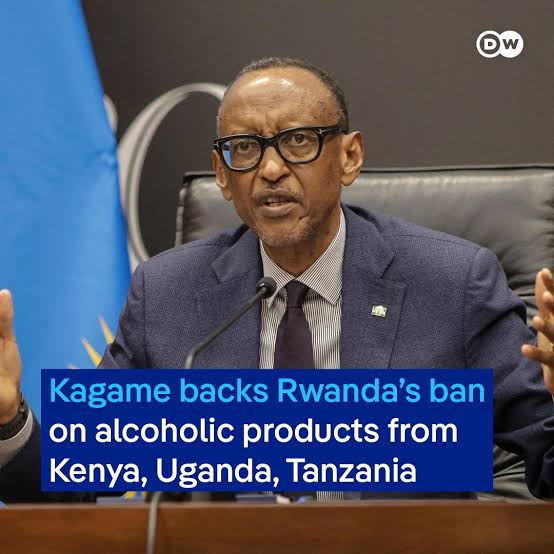 Rwanda: We Cannot Sit and Watch As Illicit Alcohol Kills People - Kagame
Ultimate Uganda
Rwanda: We Cannot Sit and Watch As Illicit Alcohol Kills People - Kagame
Ultimate Uganda
0 Comments