
Uganda Securities Exchange Earns AA Credit Rating in First Independent Assessment


The Uganda Securities Exchange (USE) has been assigned an AA issuer credit rating by ICRA Rating Agency, marking the exchange’s first independent credit assessment and a milestone that officials say strengthens investor confidence, reinforces the institution’s financial standing and signals the growing maturity of Uganda’s capital markets.
The rating, unveiled on Wednesday, reflects USE’s strong capacity to meet its financial obligations and indicates a low credit risk, placing it among highly creditworthy institutions. While an AA rating ranks just below the highest possible AAA grade, it demonstrates strong financial resilience, sound governance and stable operations.
USE Chief Executive Officer Paul Bwiso described the rating as an external validation of nearly three decades of building Uganda’s capital markets.
“This is more than a certificate on the wall. It’s an independent, external validation of everything we have built at the exchange over time, our institutional stability, our financial discipline, and our role as a capital markets intermediary,†Bwiso said.
The exchange has operated as Uganda’s principal stock exchange for 28 years, but Bwiso said reputation alone is no longer sufficient in modern financial markets.
“Issuers, investors, brokers, and regional partners increasingly demand independent, standardized evidence of institutional soundness. This rating gives them exactly that,†he said.
According to the rating rationale, ICRA recognised USE’s debt-free capital structure, supported by a steadily growing equity base built through reinvested profits. The agency noted that shareholders’ equity has grown at a compound annual rate of 13% during the review period.
The rating agency also cited the exchange’s strong liquidity position, with most of its assets invested in liquid short- and long-term investments, providing financial flexibility. It further highlighted USE’s diversified revenue streams from listing fees, trading commissions, depository services, market data and registry services, while affirming that the institution has no going-concern concerns.
For investors, the AA rating provides an independent assessment that the exchange is financially sound and well governed. For companies seeking capital, it demonstrates the value of obtaining independent credit ratings, which can improve investor confidence, widen access to institutional funding and potentially reduce borrowing costs.
Bwiso said independent ratings are becoming increasingly important as Uganda seeks to deepen its capital markets.
“For a market like ours that is still developing, still building depth, still working to attract new issuers and new pools of capital, this culture of independent assessment is not a luxury. It’s a necessity,†he said.
He noted that ratings help bridge the information gap between what an institution knows about itself and what investors can independently verify.
“The rating closes the gap. It translates complex financial statements, governance structures and risk exposures into a single credible signal that a pension fund manager in Kampala, a fund manager in Nairobi, or a diaspora investor in London can trust without having to audit our books themselves.â€
Bwiso said stronger credit ratings benefit both issuers and investors by lowering financing costs for well-rated institutions, attracting pension funds and insurance companies that often invest only in rated securities, and encouraging stronger corporate governance.
“By becoming a rated entity ourselves, USE is not simply asking others to embrace this discipline. We are leading by example.â€
He used the occasion to encourage Ugandan companies to consider raising capital through the country’s underdeveloped corporate bond market instead of relying solely on bank financing.
Although public attention often focuses on shares and initial public offerings, Bwiso said some of the greatest opportunities lie in fixed-income instruments, including corporate bonds, government securities, exchange-traded funds and Sukuk.
He noted that interest income from the exchange’s own investment portfolio now contributes about one-quarter of USE’s total income and has grown consistently despite fluctuations in trading revenues, demonstrating the resilience of fixed-income investments.
“To every finance director, every treasurer, every business owner in this room, if you have ever considered a corporate bond as a way to diversify your financing away from bank debt, to lock in longer tenors, to build a public credit profile of your own, now is the moment to have that conversation with us,†he said.
USE Board Director Dan Tumuramye said the inaugural rating represents years of work to strengthen the institution’s governance and financial management.
“The unveiling of our inaugural credit rating marks an important milestone in the evolution of the exchange. It demonstrates our commitment to transparency, sound governance, brilliant financial management, institutional resilience,†Tumuramye said.
He said the board views the rating as independent confirmation that the exchange is being managed with integrity and accountability while pursuing its vision of becoming Uganda’s preferred institution for investment and capital raising.
“This credit rating is a reflection of that commitment,†he said, adding that the board remains focused on expanding market participation, improving market infrastructure and introducing new investment products.
Capital Markets Authority Chief Executive Officer Josephine Okui Ossiya said the rating marks another step in the development of Uganda’s capital markets.
“This is more than the announcement of a rating. It is a statement that Uganda’s capital markets are continuing to mature and that transparency, accountability and good governance remain at the heart of sustainable market development,†she said.
Ossiya noted that ICRA is the first credit rating agency licensed in Uganda, describing independent ratings as an important tool for strengthening investor confidence.
“Capital markets run a lot on trust. Independent credit ratings contribute to building confidence by providing investors with objective information to support informed decision making,†she said.
She added that the exercise comes as USE prepares to establish a medium-term note programme, saying stronger capital markets are essential to mobilising long-term savings needed to finance Uganda’s development ambitions.
ICRA Uganda Director Jeremiah Karugaba said the agency’s assessment was based on three broad pillars baseline compliance, credit analysis and institutional assessment.
The evaluation examined USE’s business profile, capital structure, liquidity, earnings quality, governance, management and the broader macroeconomic environment before assigning the AA rating.
“What this report mainly brought out was about two or three things. Number one, the position of USE. Number two, its strong liquidity position and also the diversified revenue,†Karugaba said.
He said ICRA hopes the assessment will encourage more Ugandan companies to voluntarily seek credit ratings, helping improve corporate governance, financial reporting and access to capital.
“We are trying to grow the culture and everything that comes with it. That means corporate governance, financial bookkeeping and the like. We hope that with events such as this, we are able to have more companies align to credit ratings so that we can create an easier capital market space,†he said.
The USE’s inaugural AA rating comes as Uganda seeks to deepen its capital markets, broaden financing options beyond traditional bank lending and attract more domestic and international investors through stronger transparency and independent market assessments.


 Starlink goes live in Uganda; price comparisons against MTN, Airtel
Ultimate Uganda
Starlink goes live in Uganda; price comparisons against MTN, Airtel
Ultimate Uganda
 NSSF sets September 24 for Annual Members Meeting as savers await interest rate declaration
Ultimate Uganda
NSSF sets September 24 for Annual Members Meeting as savers await interest rate declaration
Ultimate Uganda
 Boda boda riders launch e-commerce, digital loans platform
Ultimate Uganda
Boda boda riders launch e-commerce, digital loans platform
Ultimate Uganda
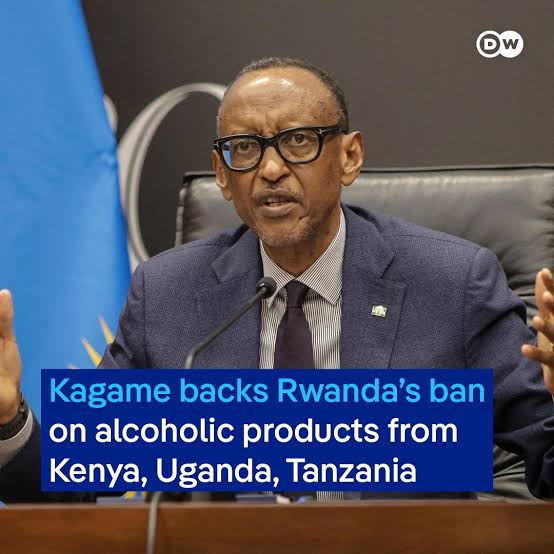 Rwanda: We Cannot Sit and Watch As Illicit Alcohol Kills People - Kagame
Ultimate Uganda
Rwanda: We Cannot Sit and Watch As Illicit Alcohol Kills People - Kagame
Ultimate Uganda
0 Comments