
IRAN WAR WEEK 22, day #1: Iran reportedly rejected a US ceasefire proposal on July 23
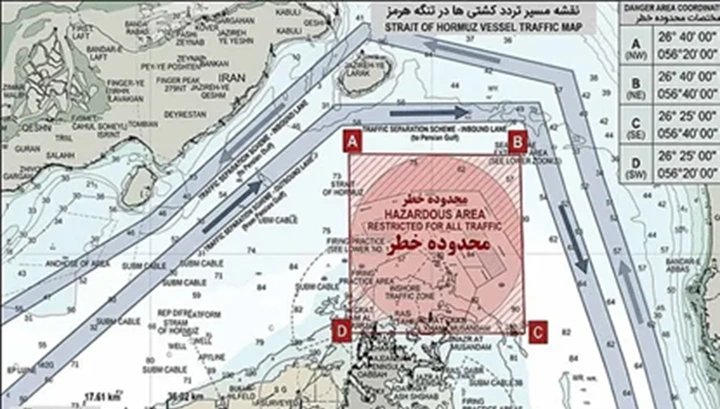

Iran’s map for oil tankers to guide them past sea mines in the Strait of HormuzCredit: ISNA
US forces struck Iranian military targets across western, northwestern, southern, and southwestern Iran on July 23 and 24.
US Central Command (CENTCOM) stated on July 23 that it struck Iranian military command centers, drone storage facilities, communications networks, coastal surveillance sites, and maritime capabilities.[35] CENTCOM added that the strikes sought to further reduce Iran’s ability to threaten commercial shipping in the Strait of Hormuz.[36] The United States struck Artesh military facilities in western and northwestern Iran. Satellite imagery showed that a US strike destroyed a hangar and another unspecified structure at the Artesh Air Force 3rd Tactical Airbase (TAB) in Kabudarahang, Hamedan Province, on July 21.[37] US forces separately struck the Artesh Ground Forces 164th Mobile Assault Brigade barracks in Piranshahr, West Azerbaijan Province, on July 24.[38] The 164th Mobile Assault Brigade is subordinate to the 64th Urmia Infantry Division and is based in Piranshahr.[39] The brigade specializes in heliborne assaults, night raids, controlling roads, mountain warfare, offensive demolition, and urban warfare.[40]
US forces also expanded their strike campaign into northern Iran on July 24.[41]
Iranian officials confirmed that US forces struck the IRGC Navy Hazrat Seyyed ol Shohada Headquarters in Zibakenar, Gilan Province.[42] The facility houses the IRGC Navy’s Seyyed ol Shohada Commando College, which trains naval infantry and commando forces.[43]
US forces separately continued targeting Iranian communications and military infrastructure in southern and western Iran. Geolocated footage from July 23 showed that a US strike targeted the Telecommunications Regulatory Authority building in Bandar Abbas, Hormozgan Province.[44] US forces previously targeted this building on July 16.[45] Geolocated imagery from July 24 also showed that US forces destroyed a communications facility in Ilam Province.[46] Geolocated imagery from July 23 showed that US forces struck tunnels beneath a military garrison town associated with the Artesh Air Force 10th TAB and Konarak Naval Base in Sistan and Baluchistan Province on July 21.[47]
The United States also continued striking targets in Iran’s Khuzestan Province. Satellite imagery showed several buildings burning at a military installation in western Ahvaz after the July 23 strikes.[48] Khuzestan Province Deputy Governor for Security and Law Enforcement stated on July 24 that US missiles struck locations around Ahvaz, killing four people and injuring five others.[49] Thermal imagery also indicated a possible strike on a likely Iranian Ghadir over-the-horizon (OTH) radar northeast of Ahvaz.[50] Ghadir radars can detect aircraft from about 1,100 kilometers away, which would have enabled this radar system to detect aircraft as far west as parts of central and western Iraq.[51] US and Israeli forces targeted at least six Ghadir OTH radars across Iran in June 2025.[52] Regime media confirmed strikes and explosions near Andimeshk and Omidiyeh in Khuzestan Province on July 24.[53]
Iran claimed to deploy more advanced drones and drone tactics on US bases in Gulf states to overwhelm US and Gulf states’ air defense systems. Armed Forces General Staff-run media reported on July 24 that the IRGC struck a very large ammunition depot located on the Ali al Salem base in Kuwait using “advanced destructive drones†in “successive attacks.â€[64] The reported attack is consistent with Iran’s demonstrated ability to conduct coordinated and sophisticated drone operations against US targets. Iran penetrated and damaged a Central Intelligence Agency (CIA) outpost via a two-drone attack in March.[65] The first drone breached the facility’s exterior, creating an opening, and the second drone exploited that vulnerability by flying through the breach and detonating inside the site, according to a US intelligence official speaking to Reuters on July 22.[66] US intelligence also assessed that Russia may be helping Iran target US sites in the region through adapted Shahed-136s with access to Russian satellite navigation systems.[67] Ukrainian President Volodymyr Zelensky previously told CNN on March 15 that he had seen intelligence that confirms that Iran has used Russian-produced Shahed drones “with Russian details†to attack US bases in the region.[68] These “details†reportedly include equipping Shaheds with Verba shoulder‑fired man-portable air-defense systems (MANPADS) to increase the Shahed’s capacity to target enemy aircraft.[69]


 DRC opposition urges Tshisekedi to abandon constitutional changes
Ultimate Uganda
DRC opposition urges Tshisekedi to abandon constitutional changes
Ultimate Uganda
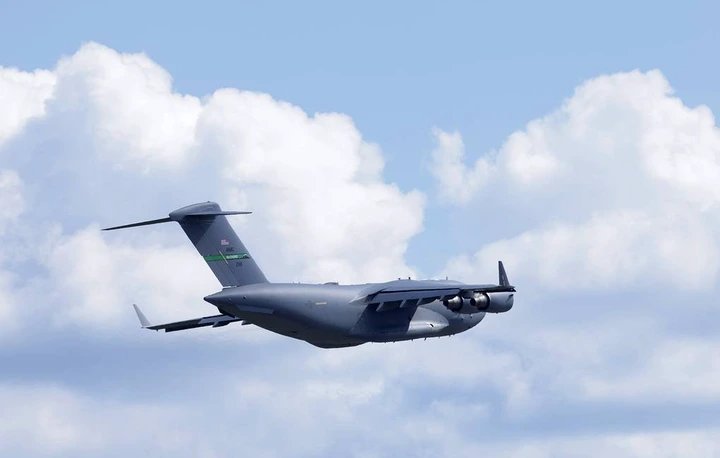 US military transport plane lands in Moscow
Ultimate Uganda
US military transport plane lands in Moscow
Ultimate Uganda
 Putin puppet slaps UK with terrifying 2-word warning over drone factories
Ultimate Uganda
Putin puppet slaps UK with terrifying 2-word warning over drone factories
Ultimate Uganda
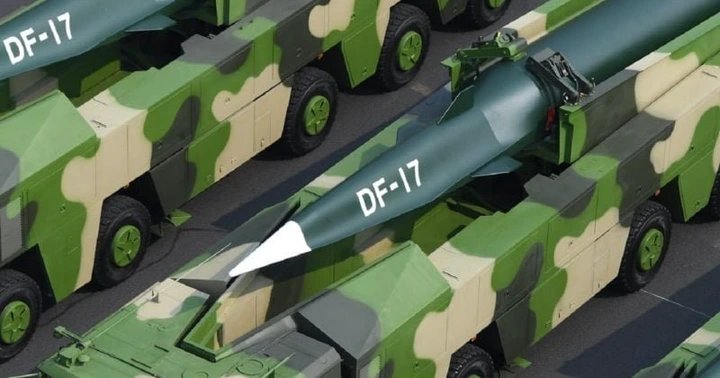 China develops hypersonic weapon to hunt US command aircraft thousands of miles away
Ultimate Uganda
China develops hypersonic weapon to hunt US command aircraft thousands of miles away
Ultimate Uganda
0 Comments