
City Tycoon Kirumira ‘Summoned’ Over Railway Grounds Land
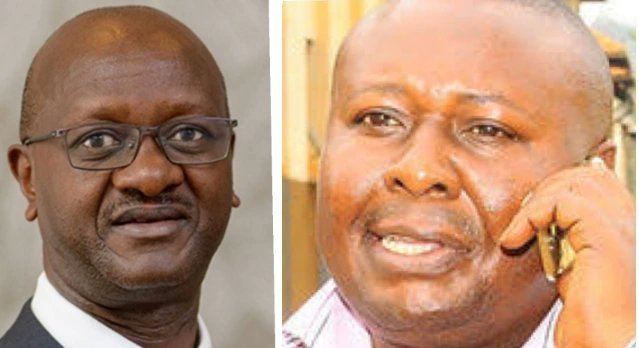

KAMPALA — One of Kampala’s most recognizable public spaces, the sprawling green expanse known simply as the Railway Grounds, has become the center of an escalating parliamentary investigation after legislators were told that the prime parcel of land now carries a private land title in the name of city businessman Godfrey Kirumira.
The revelation emerged during a tense appearance by the top management of the Uganda Railways Corporation (URC) before Parliament’s Committee on Physical Infrastructure, where lawmakers subjected the corporation’s leadership to hours of probing over the management of public assets, financial accountability and the disappearance of railway property.
By the time the session ended on Thursday, committee chairperson Mwine Mpaka directed that Kirumira personally appear before the committee to explain how he acquired ownership of the land and to show cause why the title should not be cancelled and why criminal proceedings should not be recommended if wrongdoing is established.
The inquiry has also widened to include officials from Kampala Capital City Authority (KCCA) and the Ministry responsible for Kampala Affairs, whom Members of Parliament want to explain their roles in what legislators described as the controversial transfer of one of the capital’s most valuable public properties.
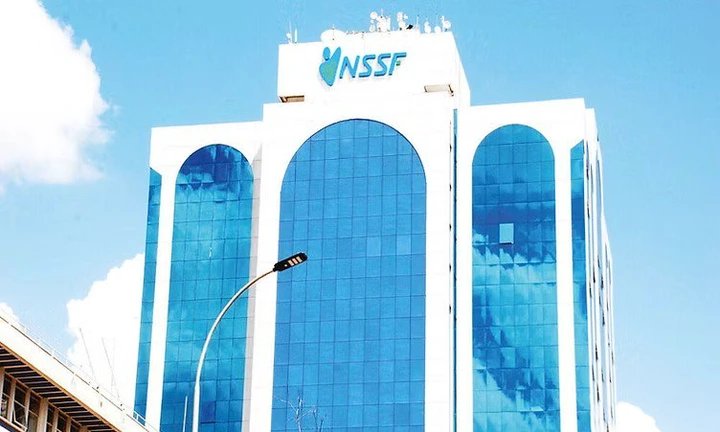
The Railway Grounds occupy a strategic location on Jinja Road, adjacent to Victoria University and directly opposite Social Security House. For decades, the open green field has served as one of Kampala’s best-known public gathering spaces, hosting Jua kali exhibitions, music concerts, charity events, anti-corruption marches and celebrations marking various international calendar days.
It is one of the few remaining large public open spaces in the heart of Kampala, making it both commercially attractive and symbolically important. The prospect that such a property could have quietly passed into private ownership immediately transformed what began as a routine accountability session into one of Parliament’s most closely watched investigations.
The controversy burst into the open after Mwine Mpaka confronted the URC delegation, led by Managing Director Benon M. Kajuna, with information indicating that a private land title had already been issued over the property.
Rather than immediately confirming or denying the reports, Kajuna initially told lawmakers that he was unaware of the development and needed time to verify the information, suggesting that the matter had only come to his attention during the parliamentary proceedings.
His response failed to satisfy committee members.
Led by Bunyole County MP Eng James Waluswaka, lawmakers pressed the managing director to provide direct answers, warning that Parliament expected complete honesty from officials appearing before the committee.
The exchanges quickly grew increasingly tense as legislators questioned how such a significant public asset could change hands without the accounting officer of the corporation providing a clear explanation.
As pressure mounted, Kajuna acknowledged that while the land is supposed to belong to Uganda Railways Corporation, KCCA had in recent years exercised control over it.
Mwine Mpaka insisted that the committee wanted a complete and truthful account of events rather than responsibility being shifted from one government institution to another.
It was during those exchanges that committee members were informed that a private land title had indeed been created in the name of Godfrey Kirumira.
The disclosure prompted sharp criticism from lawmakers, who questioned how such a valuable property in the heart of Kampala’s central business district could leave public ownership.
Several MPs argued that the corporation’s leadership had failed in its responsibility to safeguard government assets and accused the management of appearing powerless while valuable public land slipped into private hands.
The committee subsequently resolved that Kirumira should personally appear before Parliament to explain the circumstances surrounding the acquisition of the title.
At the same time, MPs directed that officials from both KCCA and the Kampala Affairs Ministry be summoned to account for decisions that may have contributed to the transfer of the land.
Throughout the hearing, legislators repeatedly questioned the effectiveness of Kajuna’s leadership, arguing that the corporation appeared unable to protect assets entrusted to it.
Bukoto Central MP Richard Sebamala attempted to defend the managing director, arguing that Kajuna had served in office for only about one year and therefore should not shoulder responsibility for every historical problem affecting the corporation.
His intervention, however, was swiftly challenged by fellow committee members.
One female legislator questioned why Sebamala appeared determined to defend URC management rather than scrutinize their actions, prompting heated exchanges inside the committee room.
Another female MP alleged that Sebamala had been gratified by members of the corporation’s leadership, a claim that Mwine Mpaka immediately directed her to withdraw.
The Railway Grounds issue was only one among several matters that left legislators expressing frustration with the corporation’s management.
Attention soon shifted to expenditure amounting to Shs25bn on staff capacity-building workshops.
Committee members demanded documentation identifying staff members who attended the trainings, details of the consultants hired to conduct them and evidence that the programmes delivered value for money.
URC officials were unable to immediately produce the requested records.
The inability to account comprehensively for the expenditure triggered fresh criticism from lawmakers.
Mwine Mpaka questioned why management considered spending Shs25bn on workshops a greater priority than investing in railway safety infrastructure, particularly barriers that could reduce accidents involving moving trains.
The chairman observed that fatal railway accidents have become increasingly common and argued that public safety should rank above administrative seminars and training sessions.
The hearing became even more dramatic when the committee’s vice chairperson recounted an incident in which a moving train reportedly split the President’s convoy into two, claiming that the President narrowly survived the occurrence.
The incident was cited as further evidence, according to MPs, of operational failures within the corporation.
Legislators said the episode reflected weaknesses in planning, communication and railway management that demanded urgent attention.
Questions also turned to railway assets that have disappeared over the years.
Budyebo County MP Sebuga Kimeze asked management to explain how a total of 398 railway wagons had reportedly been stolen or gone missing without formal complaints being lodged with Police or other security agencies.
URC officials responded that a joint tripartite committee involving URC, KRC and TRC had been established to pursue recovery efforts.
They added that former Minister Gen Katumba Wamala had taken a close interest in the matter and had engaged fellow ministers from both Kenya and Tanzania on possible recovery mechanisms.
Lawmakers were unconvinced.
They demanded documentary evidence demonstrating that the recovery process remained active.
The officials, however, were unable to immediately provide written records supporting those assertions.
Instead, MPs were informed that whenever a railway wagon cannot be traced for 90 days, it is formally classified as missing property.
The committee interpreted the response as inadequate, arguing that assets of such value required far stronger systems of accountability, documentation and recovery.
Another line of questioning focused on the corporation’s land holdings across Uganda.
Committee members requested a complete inventory of URC land.
Officials said the corporation owns approximately 20,000 acres documented under 62 land titles, adding that some of those titles are currently held by the Privatization Unit within the Ministry of Finance.
Lawmakers pressed for more detailed documentation, indicating that Parliament intends to examine how every parcel has been managed and whether additional public land could have been exposed to similar risks.
As the hearing progressed, frustration inside the committee room became increasingly evident.
Eng James Waluswaka warned URC officials that Parliament would not allow corruption or negligence involving public property to continue unchecked.
He declared that this was a PLU-led Parliament and cautioned that public officials found engaging in corrupt conduct would face serious consequences.
Waluswaka also praised committee chairperson Mwine Mpaka, describing him as a determined leader who consistently follows investigations through to their conclusion despite his calm public demeanor.
Hoima Woman MP Asinasi Nyakato joined other legislators in pressing management with detailed questions regarding governance, accountability and asset protection.
Some legislators went even further, suggesting that Parliament should recommend the disbandment of Uganda Railways Corporation in the same way Uganda National Roads Authority (UNRA) was dissolved, arguing that the corporation had failed to justify its continued existence despite enjoying a statutory monopoly.
The criticism was directed not only at Kajuna but also at other members of the corporation’s top leadership, including Stephen Wakasenza, Michael Lagara, Isaac Natukunda, Grace Opoka, Eng. Prosper Musiime Vans and CFO Nina L. Nassuna.
By the close of Thursday’s proceedings, it had become clear that Parliament’s inquiry into Uganda Railways Corporation is only beginning.
The committee signaled that senior officials should expect additional appearances in the coming days, weeks and months as lawmakers seek answers over land ownership, missing railway property, financial management and institutional oversight.
For now, however, attention has shifted squarely to the Railway Grounds themselves—a piece of land that generations of Kampala residents have known as a public space but which Parliament now wants to establish how it came to bear a private title.
Whether the investigation ultimately results in the cancellation of the disputed title, criminal prosecutions or broader institutional reforms remains to be seen. What is already clear is that the inquiry has reopened difficult questions about the protection of Uganda’s public land, the stewardship of government agencies and the accountability of officials charged with safeguarding some of the country’s most valuable assets.
Judging by the tone of Thursday’s proceedings, Mwine Mpaka and his committee are showing little sign of letting the matter fade quietly. Previous parliamentary investigations led by the committee have culminated in interdictions and criminal prosecutions, including inquiries into the cooperatives billions scandal whose accused officials continue to face proceedings before the Anti-Corruption Division of the High Court.
With Godfrey Kirumira now expected to appear before Parliament alongside officials from KCCA and the Kampala Affairs Ministry, the battle over the Railway Grounds has evolved from a dispute over a single land title into a broader national conversation about the future of public property and the institutions entrusted to protect it.
Other tycoons including Hassan Basajjabalaba, Patrick Bitature and Mestil Hotel owner were named in the Uganda Railways land scandals in previous parliamentary investigations. (See Details Here, There and Over There).


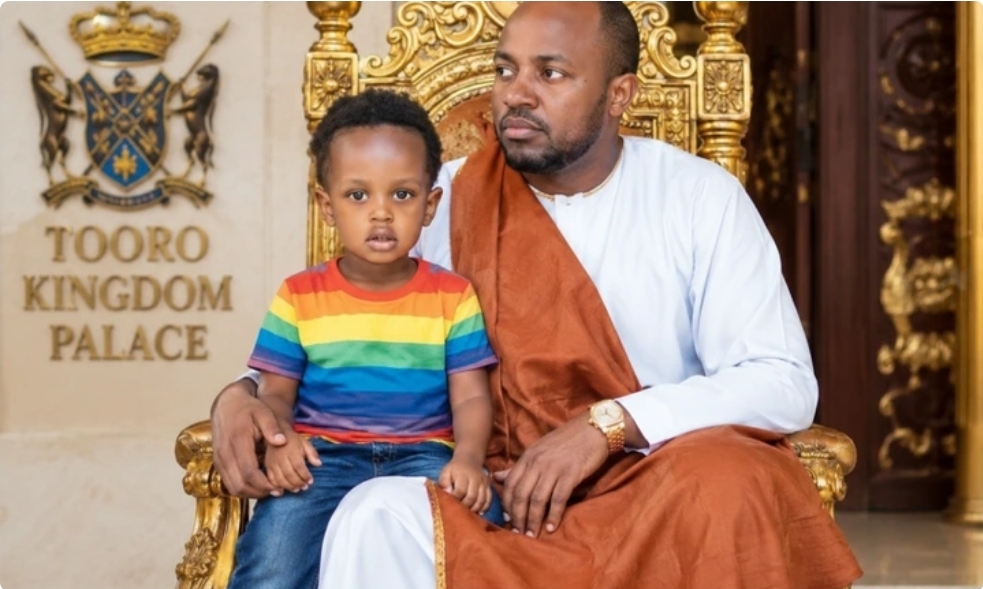 The women who have been in King Oyo’s life
Ultimate Uganda
The women who have been in King Oyo’s life
Ultimate Uganda
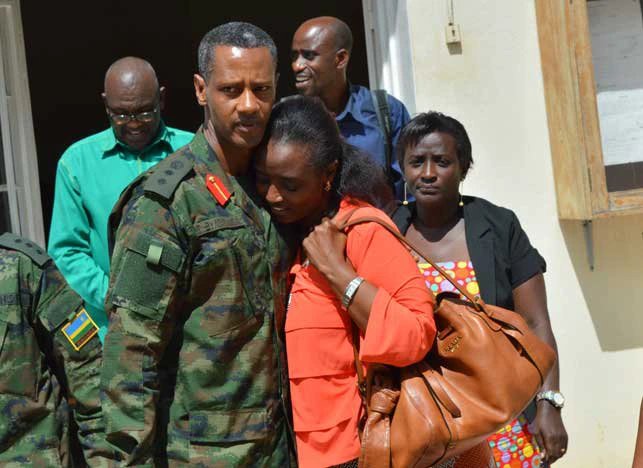 Ex Kagame Guard Commander Tom Byabagamba Dies in Rwandan Prison After 12 Years
Ultimate Uganda
Ex Kagame Guard Commander Tom Byabagamba Dies in Rwandan Prison After 12 Years
Ultimate Uganda
 Government begins salary payments for public sector workers – Reform Committee
Ultimate Uganda
Government begins salary payments for public sector workers – Reform Committee
Ultimate Uganda
 Temangalo land: NSSF, Nzenyi reach agreement
Ultimate Uganda
Temangalo land: NSSF, Nzenyi reach agreement
Ultimate Uganda
0 Comments