
Govt rejects nearly 4,000 qualified teachers as wage ceiling collides with staffing crisis
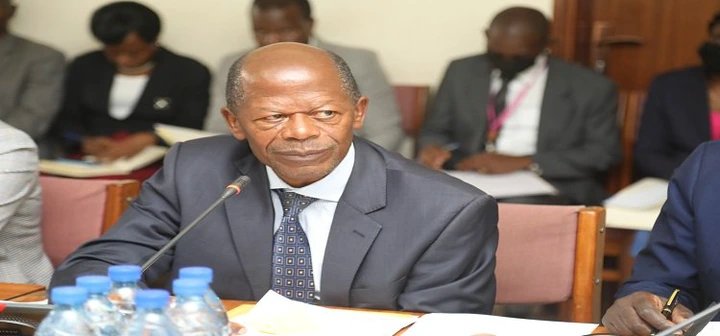

Minister Muyingo appeared before the committee to update the MPs on the progress of Seed Secondary Schools
Uganda has certified more than 5,300 teachers as fit for government employment but can hire fewer than a quarter of them, exposing the gap between a chronic shortage of teachers and the wage bill available to pay them.
Of the 6,665 candidates who sat oral interviews for jobs at 43 new government secondary schools, 5,332 — about 80% — qualified for employment, according to Education Service Commission (ESC) data. Yet only 1,333 positions were on offer, meaning roughly 4,000 teachers judged good enough for the classroom will leave empty-handed. The commission began issuingappointments on Thursday with a first batch of 377 teachers posted to 13 schools in Buganda and Busoga.
The commission secretary, Dr Asuman Lukwago, was candid that the cut-off was set by money, not merit. Had more openings existed, he said, far more of this year’s applicants would have been taken on, describing the cohort as stronger than in previous rounds and better at applying what they had learned. Recruitment, he stressed, is pegged to the demand and wage set by the education ministry — not to the actual shortage in schools. He urged those who missed out to reapply when vacancies are next advertised.
The scale of what is left unfilled dwarfs the current intake. The 2025 State of Human Resource in Public Service report, produced by the Ministry of Public Service, counts 87,080 vacant teaching posts, and other estimates put unfilled positions across primary and secondary schools above 100,000. The Uganda Human Capital Development and Growth Review 2025, produced jointly by the government and the World Bank, went further, projecting that meeting demand with quality by 2040 will require about 360,000 additional teachers, a 440% rise in the education budget, more than double the current classroom stock and nearly four times as many textbooks. The pressure is driven by population growth of roughly 3% a year, among the fastest in the world. The report, launched last July by First Lady and Education and Sports Minister Janet Museveni at State House Nakasero, put the average pupil-teacher ratio at 53:1 in primary schools and 21:1 in secondary, but warned that rural schools fare far worse.
Teachers’ representatives said the exercise proved the workforce exists — the funding does not. Aaron Mugaiga, secretary general of the Uganda Professional Science Teachers’ Union (UPSTU), said the strong interview results showed universities and colleges were producing well-prepared graduates, but that most would go undeployed because of the limited slots. He pressed the government to fill gaps in existing schools and to prioritise science teachers, noting that more A-level students are choosing science combinations since the new lower secondary curriculum took effect.
For the 377 who made the first list, the commission said notification letters are ready for collection at its Kampala registry, on presentation of national identification and other documents. The chairperson, Prof Samuel Luboga, warned candidates against paying anyone for the letters. “Do not pay money to secure these documents. The entire exercise is free, and we ask you to report anyone asking for money,†he said. Their names then go to the ministry, which issues appointment letters and posting instructions setting out each teacher’s school, subjects, teaching load and pay before local governments add them to the payroll. Recruits serve six months on probation and are confirmed as permanent and pensionable only after a satisfactory appraisal by their headteacher.
The recruits are the staffing end of a wider building drive. Under the World Bank-funded Uganda Intergovernmental Fiscal Transfers Programme (UGIFT), the government set out to construct, equip and open 259 seed secondary schools in sub-counties that had none; 210 are now operational, with the last 49 due for handover by the close of the 2025/2026 financial year after a sh70b supplementary budget rescued works stalled by funding shortfalls. Each school can hold up to 1,500 students, adding a potential 64,500 learners to the Universal Secondary Education programme, whose per-learner grant was recently raised to sh165,000 at O-level and sh270,000 at A-level. The government currently runs 1,524 schools enrolling 1.3 million learners, all but 99 of them under universal education.


 Government will not gazette Kijanangoma as King of Tooro for now - Attorney General insists
Ultimate Uganda
Government will not gazette Kijanangoma as King of Tooro for now - Attorney General insists
Ultimate Uganda
 King Oyo’s Body to Arrive Thursday
Ultimate Uganda
King Oyo’s Body to Arrive Thursday
Ultimate Uganda
 Besigye, Lukwago expected to meet Gen. Salim Saleh today at Kapeeke
Ultimate Uganda
Besigye, Lukwago expected to meet Gen. Salim Saleh today at Kapeeke
Ultimate Uganda
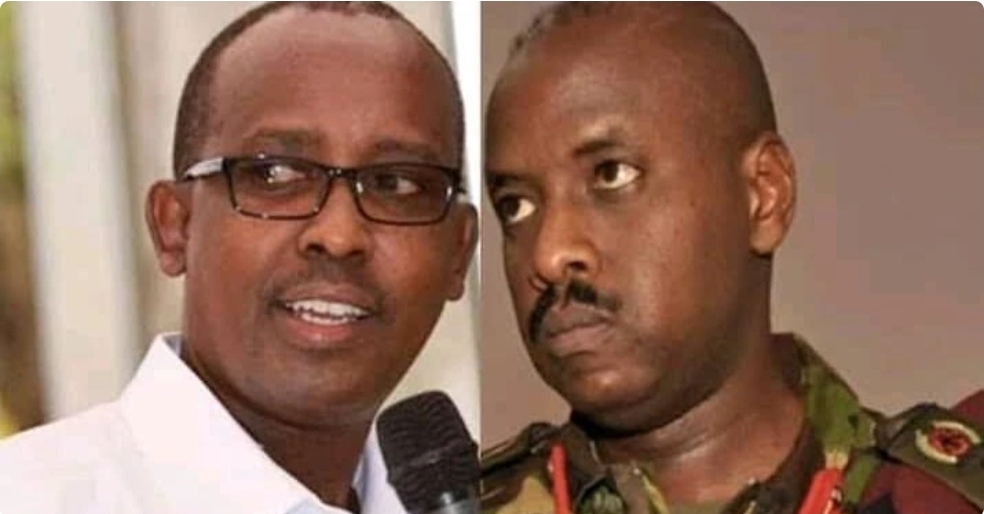 Rwabwogo Advised to ‘Eat His Bishop’ As MK Prepares to Enter State H’se: PREZ MUSEVENI ON HIS WAY OUT
Ultimate Uganda
Rwabwogo Advised to ‘Eat His Bishop’ As MK Prepares to Enter State H’se: PREZ MUSEVENI ON HIS WAY OUT
Ultimate Uganda
0 Comments