
480 Ugandan Youths Get Second Chance to Join University Through FAWE Bridging Programme
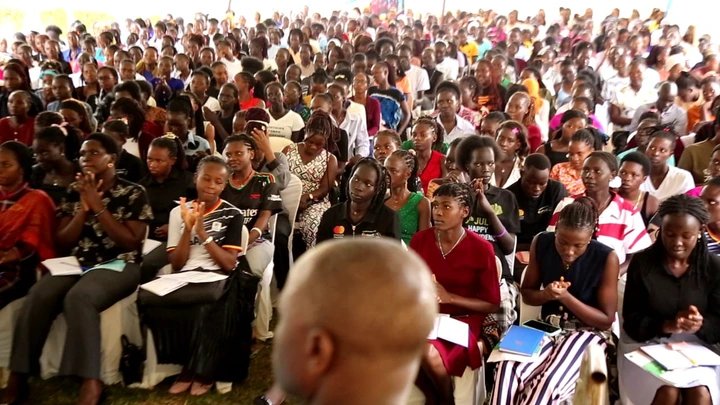

More than 480 young Ugandans who missed out on direct university admission have been given a second chance to pursue degree programmes after completing a one-year bridging course under the Forum for African Women Educationalists (FAWE) Uganda.
A total of 482 learners completed the Higher Education Access Certificate (HEAC), an accredited programme that enables students who do not meet the standard university entry requirements to qualify for admission into degree programmes, particularly in Science, Technology, Engineering and Mathematics (STEM) fields.
The graduates attended a transition workshop at Uganda Technical College Lira ahead of joining universities across the country.
Speaking during the event, FAWE Uganda Deputy Executive Director Susan Opok Tumusiime said the programme was established to address the growing number of young people who are excluded from higher education despite having the potential to succeed.
“These are students who got one principal pass and two subsidiaries, one principal pass and a failure, or even three subsidiaries. Under the normal system, many of them would not access university education,†Tumusiime said.
She noted that Uganda’s higher education enrolment remains low at about 6.8 per cent, compared to the Sub-Saharan African average of 15 per cent, partly because many learners fail to meet direct admission requirements.
Under the Second Chance Pathways for Marginalised Girls and Young People in Higher Education project, funded by the Mastercard Foundation, FAWE Uganda is supporting learners from disadvantaged backgrounds to access university education through the bridging programme.
Tumusiime said the latest cohort of 482 students completed the one-year programme at 14 universities across the country and are now ready to transition into degree programmes.
“Many of these students have performed exceptionally well, with some attaining cumulative grade point averages above 4.5. This demonstrates that they had the potential all along but lacked the opportunity,†she said.
She encouraged beneficiaries, especially female students, to remain focused on their studies and avoid activities that could affect their academic progress.
“We are telling the girls to prioritise their education and future aspirations. We want them to complete their studies and become empowered women who can transform their communities,†Tumusiime said.
FAWE Uganda Board Chairperson Margaret Atim said the organisation is committed to ensuring that vulnerable learners, especially girls, complete their education journey.
“These are intelligent young people who were disadvantaged by circumstances beyond their control. Through this programme, they now have another opportunity to realise their dreams,†Atim said.
She added that the graduates are expected to pursue degree programmes and eventually contribute to national development through professional careers.
The Principal of Uganda Technical College Lira, Jacob Akunubere, said many learners miss out on university opportunities due to challenges such as limited learning resources, financial constraints and inadequate access to quality teaching.
“Failure does not always mean lack of ability. This programme has proved that when students are given another chance, many of them excel,†Akunubere said.
He called for increased awareness about the programme, noting that many students and parents are still unaware of alternative pathways to university education.
Demand for the scholarships continues to exceed available opportunities. FAWE officials revealed that the first intake admitted about 500 learners from more than 8,600 applicants, while the second cohort attracted over 9,100 applications.
The Higher Education Access Certificate is accredited by the National Council for Higher Education and the Ministry of Education and Sports and provides an alternative pathway for students who do not qualify for direct university admission.
FAWE Uganda says the programme, which is being implemented in 65 districts, aims to support 2,000 young people to access higher education by 2030.


 Government will not gazette Kijanangoma as King of Tooro for now - Attorney General insists
Ultimate Uganda
Government will not gazette Kijanangoma as King of Tooro for now - Attorney General insists
Ultimate Uganda
 King Oyo’s Body to Arrive Thursday
Ultimate Uganda
King Oyo’s Body to Arrive Thursday
Ultimate Uganda
 Besigye, Lukwago expected to meet Gen. Salim Saleh today at Kapeeke
Ultimate Uganda
Besigye, Lukwago expected to meet Gen. Salim Saleh today at Kapeeke
Ultimate Uganda
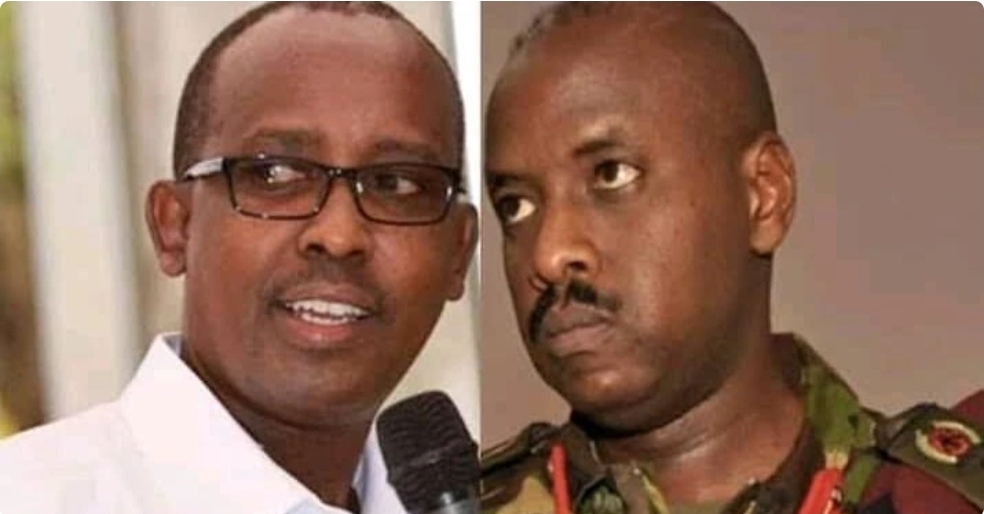 Rwabwogo Advised to ‘Eat His Bishop’ As MK Prepares to Enter State H’se: PREZ MUSEVENI ON HIS WAY OUT
Ultimate Uganda
Rwabwogo Advised to ‘Eat His Bishop’ As MK Prepares to Enter State H’se: PREZ MUSEVENI ON HIS WAY OUT
Ultimate Uganda
0 Comments