
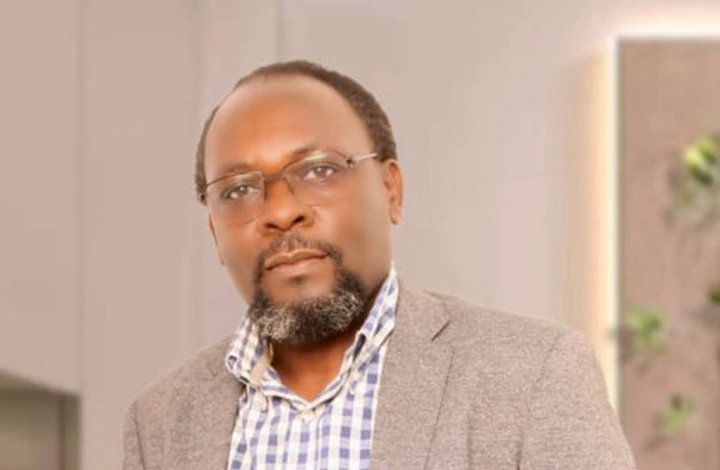
Twiine Mansio Charles: Rigged System: The Secret Straw Poll Exposing the UN’s Structural Prejudice Against Africa

There is a deep, frustrating contradiction at the heart of global diplomacy that becomes glaringly obvious whenever the United Nations attempts to choose its next leader. Yesterday, July 30th, 2026, the United Nations Security Council met behind closed doors to conduct its first secret straw poll to select the successor to Secretary General António Guterres. While the exercise was framed as an essential step toward international leadership, it served primarily as a stark reminder that despite decades of public commitments to democracy, transparency, and global equality, ultimate power remains firmly locked inside an obsolete 1945 post war settlement.
The United Nations Security Council is composed of fifteen member states, but authority within the chamber is divided into a rigid, two tiered hierarchy. Ten seats are reserved for non permanent members elected for rotating two year terms by the UN General Assembly. The remaining five seats belong permanently to the victors of World War II: China, France, Russia, the United Kingdom, and the United States, collectively known as the P5. The veto power is an exclusive privilege granted solely to these five permanent members. In the context of executive decision-making, a veto means that if a single P5 country casts a negative ballot on a substantive matter, the initiative is killed instantly. When applied to the selection of the Secretary General, one nation’s opposition can unilaterally overrule the collective preference of the remaining 192 sovereign states, reducing global consensus to a nullity.
Under Article 97 of the UN Charter, the General Assembly, which represents all 193 member states, does not hold an open, democratic election for the top diplomat of the world. Instead, the General Assembly acts as a passive ratifying body, forced to wait until the Security Council agrees on a single candidate to recommend. During the Council’s informal straw polls, diplomats mark secret ballots for each candidate as encouraged, discouraged, or no opinion expressed. In the initial non-binding tallies of yesterday, Costa Rica’s Rebeca Grynspan led the field with 10 encourage votes, 1 discourage, and 4 no opinions. She was followed by Guyana’s Carolyn Rodrigues Birkett with 9 encourage votes, 2 discourages, and 4 no opinions, and Argentina’s Rafael Grossi with 7 encourage votes, 2 discourages, and 6 no opinions.
Meanwhile, Africa’s candidates met immediate structural resistance. Senegal’s former President Macky Sall received 6 encourage, 7 discourage, and 2 no opinion votes, while Uganda’s Olara Otunnu, a seasoned diplomat and former UN Under Secretary General, garnered 2 encourage, 5 discourage, and 8 no opinion votes. While these initial rounds utilized uniform ballots to obscure which votes came from permanent members, upcoming voting rounds will introduce color coded ballots. The moment a P5 member casts a red ballot, it signals a definitive veto that immediately eliminates a candidate, regardless of how many non permanent members or General Assembly delegates support them.
This system exposes a profound structural prejudice against the African continent. Africa consists of 54 sovereign nations, forming the largest single regional voting bloc in the UN General Assembly, and is home to over 1.4 billion people. Yet, Africa holds zero permanent seats and zero veto power on the Security Council. An entire continent representing nearly twenty percent of humanity is effectively stripped of direct structural leverage over global security decisions and executive appointments. Statesmen with world class executive credentials, such as Macky Sall and Olara Otunnu, find their candidacies judged not on their leadership, moral integrity, or continental backing, but on whether their independence aligns with the geopolitical interests of the five ruling powers.
Scholars, international legal experts, and reform advocates have long condemned this arrangement, routinely describing the selection process as a farce, a waste of time, and a hollow illusion of multilateralism Analysts point out that despite public town halls and General Assembly dialogues, the actual decision remains an exercise in backroom bargaining among the permanent five. P5 members routinely prioritize geopolitical predictability and compliance over independent merit, ensuring that no leader who challenges imperial interests can survive the selection.
This institutional bias has drawn sharp condemnation from prominent African leaders. Kenyan President William Ruto forcefully challenged the composition of the Security Council directly before the United Nations General Assembly, declaring the complete exclusion of Africa from permanent membership to be inherently unfair, outdated, and unacceptable. Ruto warned world leaders that the current structure of the Security Council is anachronistic relic of 1945 that disregards the legitimate rights of 54 nations, emphasizing that granting Africa permanent seats with veto rights is not a favor, but an urgent requirement for the credibility of global governance.
Ultimately, the straw poll yesterday demonstrates the persistent gap between the founding ideals of the United Nations and its operational realities. When a single nation can veto the candidate preferred by the international majority, the selection of global leadership ceases to be a democratic process and reverts to power politics. For Africa and the wider Global South, these dynamics underscore the urgent necessity to reevaluate strategic multilateral relationships and demand structural equity rather than settling for minor procedural adjustments within a rigged system.


 The women who have been in King Oyo’s life
Ultimate Uganda
The women who have been in King Oyo’s life
Ultimate Uganda
 Ex Kagame Guard Commander Tom Byabagamba Dies in Rwandan Prison After 12 Years
Ultimate Uganda
Ex Kagame Guard Commander Tom Byabagamba Dies in Rwandan Prison After 12 Years
Ultimate Uganda
 Government begins salary payments for public sector workers – Reform Committee
Ultimate Uganda
Government begins salary payments for public sector workers – Reform Committee
Ultimate Uganda
 Temangalo land: NSSF, Nzenyi reach agreement
Ultimate Uganda
Temangalo land: NSSF, Nzenyi reach agreement
Ultimate Uganda
0 Comments