
Balaam Pledges to Protect Patients' Privacy During Anti-Corruption Hospital Inspections
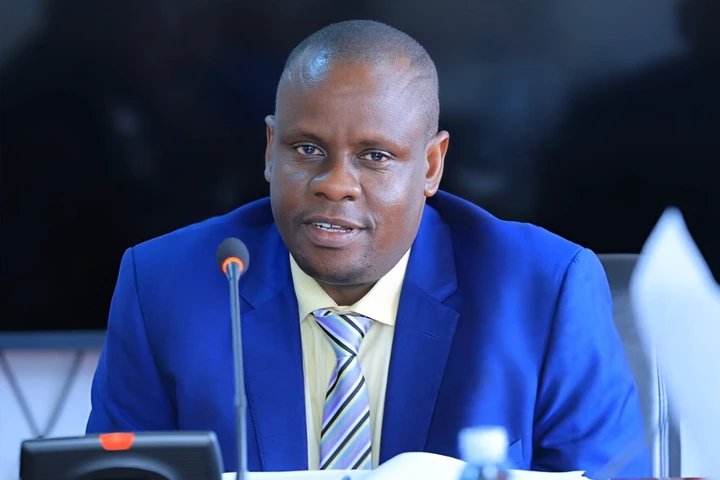

Local Government Minister Balaam Barugahara has pledged that patients will no longer be exposed during government anti-corruption inspections of health facilities, responding to concerns raised by the Uganda Medical Association over privacy, due process and the conduct of recent hospital inspection tours.
Local Government Minister Balaam Barugahara has assured the Uganda Medical Association (UMA) that patients will no longer be exposed during government anti-corruption inspections of public health facilities, following criticism that recent operations compromised patient privacy and due process.
In a statement issued on Friday, Balaam said future inspections under the government's nationwide "Expose the Corrupt" campaign would safeguard patients' dignity while maintaining pressure on corrupt public officials.
"Exposing patients should not happen again, and privacy must be fully respected and protected," he said.
Discover more
government
Corporate & Financial Crime
government's
The minister's remarks come a day after UMA wrote a six-page letter expressing concern over how recent inspections of government health facilities have been conducted.
The association welcomed government's efforts to fight corruption, absenteeism and poor service delivery but warned that some inspection methods risk violating patients' rights and denying health workers due process.
Balaam defended the inspection campaign, describing it as a coordinated government effort involving multiple agencies to improve accountability in public service.
He said the ongoing inspections bring together officials from the Ministry of Local Government, the Ministry of Health, the Ministry of Works and Transport, the Office of the President, State House Legal, the State House Anti-Corruption Unit, the Office of the Director of Public Prosecutions (DPP), the Criminal Investigations Directorate (CID), local leaders, Members of Parliament and district chairpersons.
"Our common objective is to strengthen service delivery, promote accountability, eliminate corruption in public institutions, and ensure that public resources serve the people for whom they are intended," he said.
Response to UMA concerns
In its July 30 letter, UMA President Prof Frank Asiimwe acknowledged that corruption, extortion, ghost workers, fraudulent recruitment and abandonment of duty have undermined healthcare delivery and should be addressed.
"Corruption, extortion, fraudulent recruitment, ghost workers, and abandonment of duty rob Ugandans of care they are entitled to, and every proven case deserves punishment," Asiimwe wrote.
However, the doctors' association argued that some inspection teams had entered hospitals accompanied by security personnel and television cameras, publicly confronting health workers before investigations were completed.
UMA warned that such practices could undermine constitutional guarantees of fair administrative action and the right to a fair hearing.
"Due process is not optional," the association stated, arguing that complaints from patients should trigger investigations rather than immediate public declarations of wrongdoing.
The association was particularly critical of filming inside hospital wards, saying patients receiving treatment deserve privacy and dignity.
"A hospital ward is not a construction site to be toured for the cameras. It is where people are sick, undressed, afraid, and at their most exposed," the letter said.
The concerns followed recent high-profile inspections, including an impromptu visit by Health Minister Dr Chris Baryomunsi to Mbarara Regional Referral Hospital, where television cameras accompanied officials investigating complaints of alleged extortion, absenteeism and poor patient care.
Responding to the concerns, Balaam called on professional medical associations to play a more active role in ensuring ethical conduct among their members.
"Professional associations should continue to educate their members and reinforce the highest standards of professionalism and integrity," he said.
He urged medical professionals to help eliminate theft of government medicines and illegal charges imposed on patients in public health facilities.
"Please work closely with your members to ensure that medicines meant for the public are not misused or stolen, and that patients in government hospitals are not subjected to illegal charges. Where concerns arise, we encourage timely corrective action through established professional and legal processes to uphold accountability and restore trust," he said.
The minister cited the government's engagement with engineers' professional bodies as an example of how collaboration can improve accountability.
"When we issued a similar message to the Engineers' Professional Association, the results were encouraging. So far, four district engineers have appeared before the Anti-Corruption Court, and many engineers in the districts we have inspected have significantly improved their performance and compliance," he said.
Balaam added that professional associations have a critical responsibility to guide their members and uphold ethical standards in public service.
"The health of Ugandans is not negotiable. Public service must always be guided by honesty, accountability, and compassion," he said.
Beyond inspection procedures, UMA argued that many shortcomings blamed on individual health workers stem from broader weaknesses in Uganda's health system.
The association cited staffing shortages, inadequate medical supplies and limited diagnostic capacity as major constraints affecting service delivery.
It noted that some regional referral hospitals are reportedly operating with only about 23 per cent of the staff they require, making it difficult to maintain optimal services.
UMA also cautioned against automatically classifying absent health workers as negligent without first reviewing duty rosters, leave schedules and compensatory rest arrangements.
"Rest and leave are not absenteeism," the association said.
To improve oversight while protecting patients and health workers, UMA proposed a joint inspection framework involving the Ministries of Local Government and Health, professional councils and the association itself.
Among its recommendations are restricting cameras in clinical areas, verifying duty rosters before declaring workers absent, involving senior clinicians in inspection teams, investigating complaints before arrests are made, and documenting systemic challenges such as medicine stock-outs and staffing shortages.
"Inspections that protect patients, follow evidence, and confront the real causes of service failure will strengthen the health system," Prof. Asiimwe said.
Balaam's latest assurance that patients will no longer be exposed appears to address one of UMA's most strongly worded concerns, although it remains to be seen whether future inspection exercises will fully incorporate the broader reforms proposed by the medical association.


 Government will not gazette Kijanangoma as King of Tooro for now - Attorney General insists
Ultimate Uganda
Government will not gazette Kijanangoma as King of Tooro for now - Attorney General insists
Ultimate Uganda
 King Oyo’s Body to Arrive Thursday
Ultimate Uganda
King Oyo’s Body to Arrive Thursday
Ultimate Uganda
 Besigye, Lukwago expected to meet Gen. Salim Saleh today at Kapeeke
Ultimate Uganda
Besigye, Lukwago expected to meet Gen. Salim Saleh today at Kapeeke
Ultimate Uganda
 Rwabwogo Advised to ‘Eat His Bishop’ As MK Prepares to Enter State H’se: PREZ MUSEVENI ON HIS WAY OUT
Ultimate Uganda
Rwabwogo Advised to ‘Eat His Bishop’ As MK Prepares to Enter State H’se: PREZ MUSEVENI ON HIS WAY OUT
Ultimate Uganda
0 Comments